Conrad and Evelyn Gordon Residence, Wilsonville, Oregon (1956) (S.419)
Exterior Photographs By Douglas Steiner, May 2007 (Silverton, Oregon)
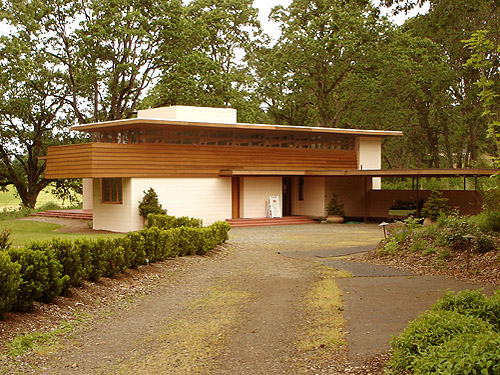
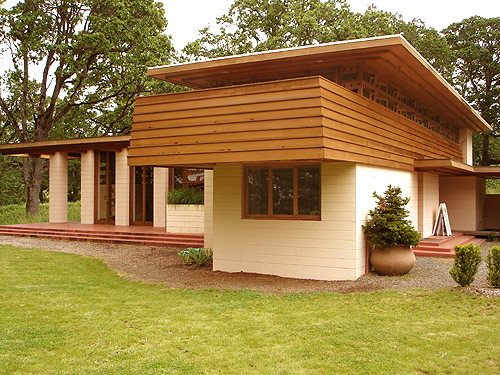
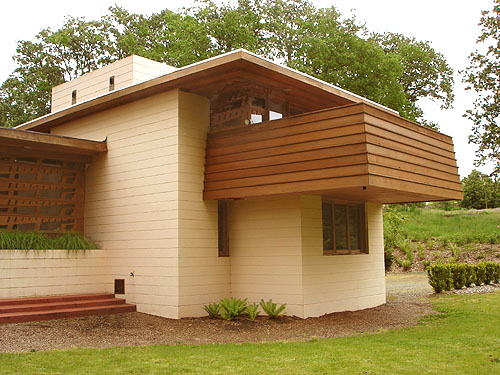
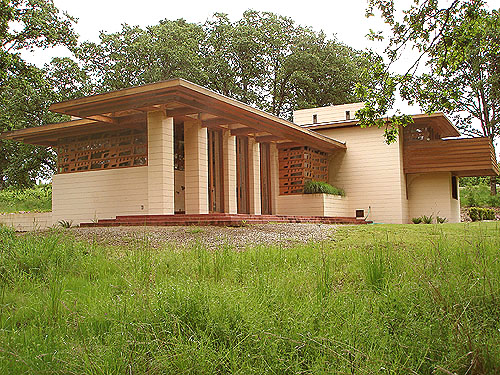
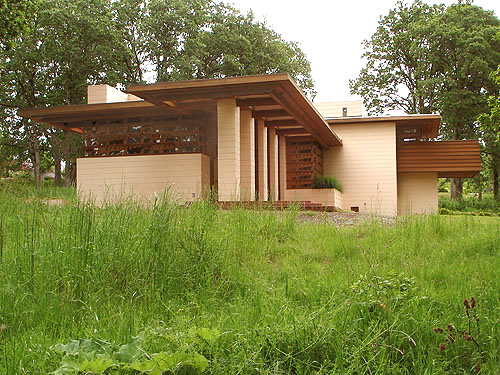
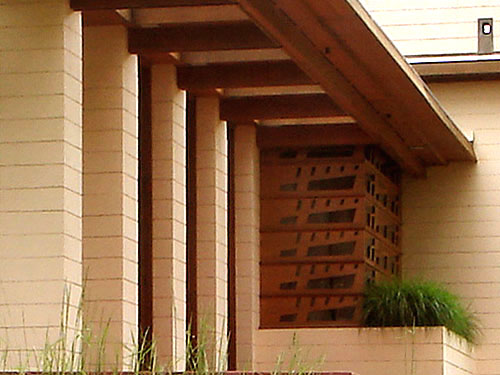
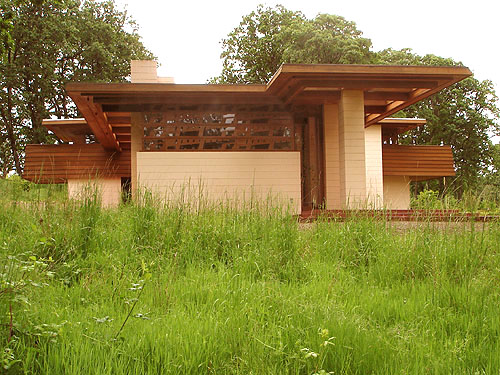
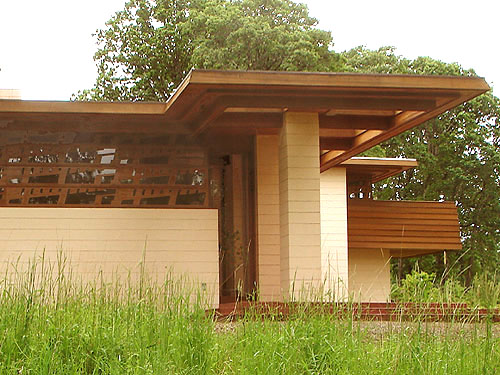
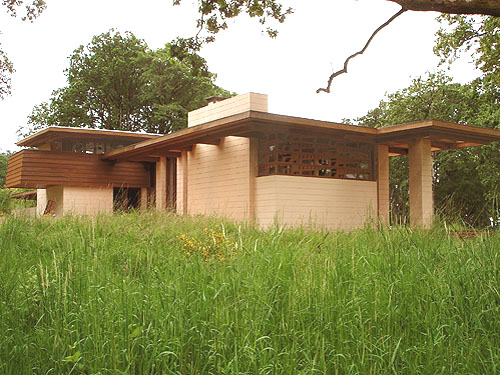
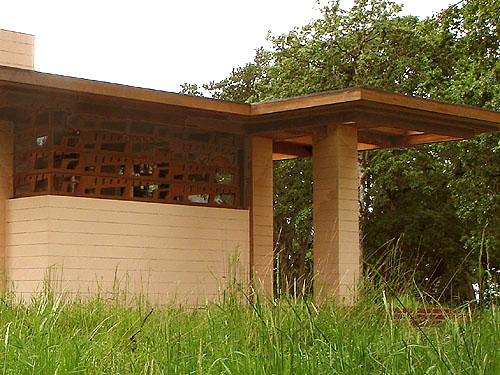
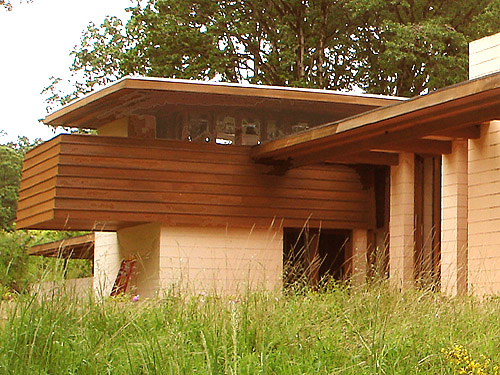
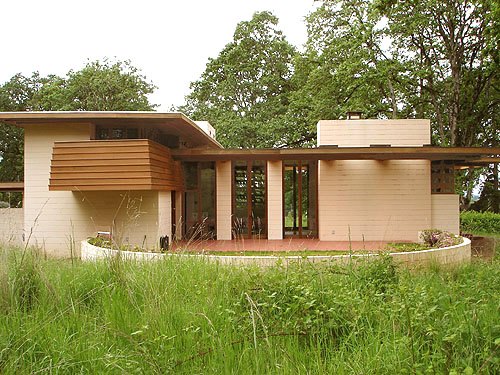
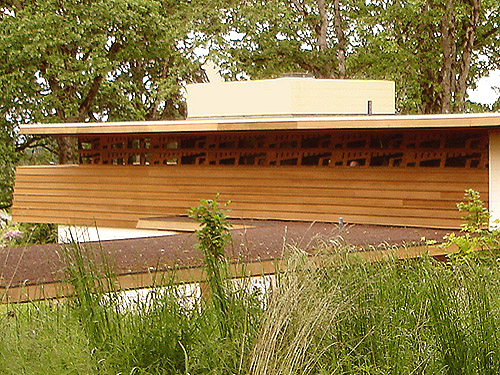
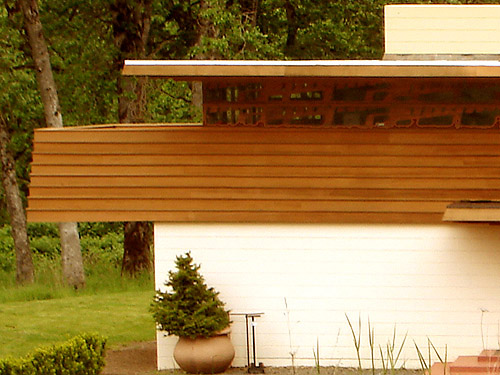
Living in the great Northwest, I have had the opportunity to visit the Gordon House many times. There are many classic Wright details. The basic materials are concrete blocks, local cedar and a red concrete floor with radiant heat, designed on a seven foot grid. There are three sets of double wood framed glass doors on the East and West side of the Living Room. They open outward and are one and a half stories tall. Two cantilevered balconies on the second floor with walls that step inward as they rise. Cantilevered and trellised roof overhangs. Rows of vertical block piers. There are windows with perforated cut-wood light screens. The hidden entrance. Flush vertical joints and raked horizontal joints. The vertical cedar siding is the exact height of the concrete block and lines up with the joints. 1: Viewed from the South West. Lower level L-R: Office, entry to Work Space, Main “hidden” entry, Master Bedroom. Upper level L-R: Cantilevered balcony and two Bedrooms. Carport is on the right.
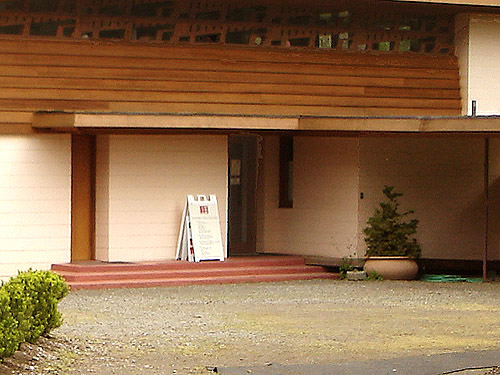
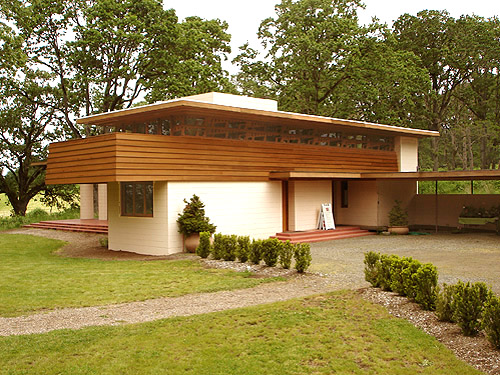
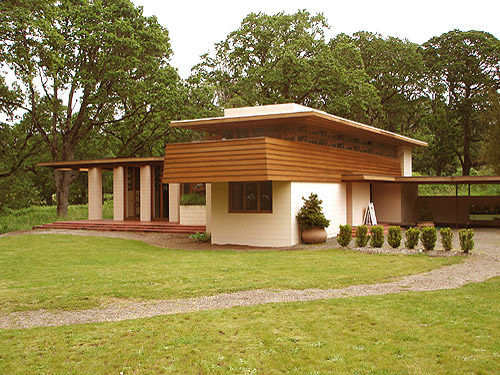
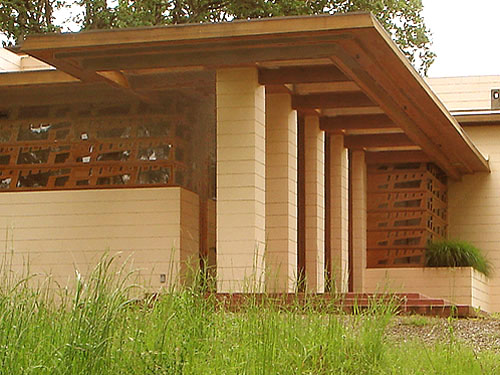
2: Hidden entrance is the door on the right. 3: Viewed from the South West. Windows in the lower level office (left) open outward. 4: Four of the five concrete piers are seen on the left.
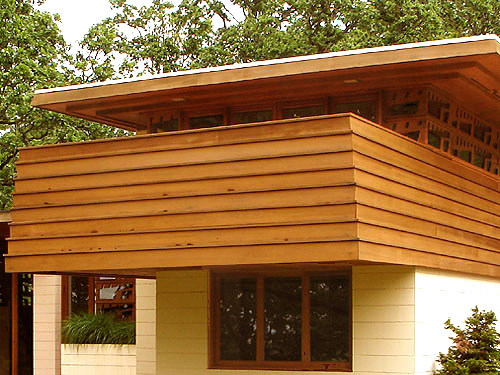
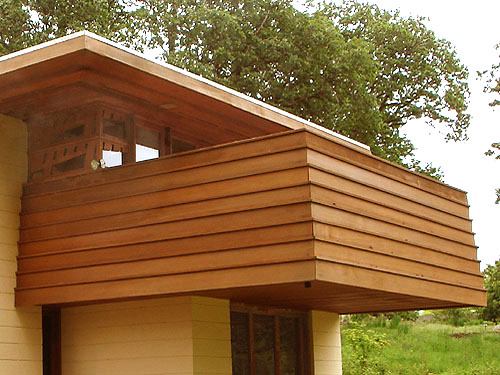
5: Cantilevered balcony on the second floor, walls step inward as they rise.
6: Vertical cedar siding is the exact height of the concrete block and lines up with the joints. Horizontal raked joints are visible.
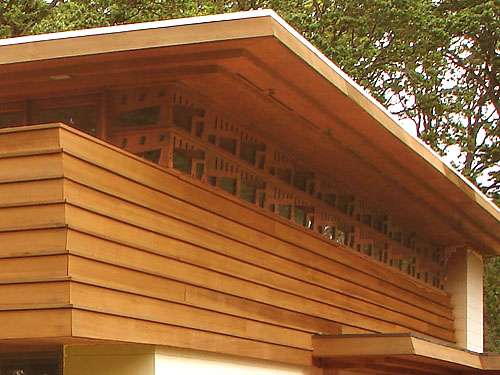
7: Local cedar was used for all interior and exterior vertical siding and trim. Gallery windows with cut-wood light screens are visible on the upper level.
8: Viewed from the North West. Dining Room on the left with cut-wood light screens and built in exterior planter.
9: Cantilevered roof overhang and cut-wood light screens offer privacy and soften the exterior light.
10: Viewed from the North West. The cut-wood light screens in the Living Room on the left and Dining Room soften the exterior light and cast patterned shadows on the interior.
11: The two story Work Space is just to the right of the Dining Room. The top is visible just above the roof. Raked horizontal joints add to the horizontal feel. Living Room fireplace chimney is visible above the roof on the left.
12: The cantilevered trellised roof extends seven foot out over the Terrace. Of the five vertical columns, one is actually detached from the Living Room.
13: Dining Room with cut-wood light screens and built in exterior planter.
14: Viewed from the North, the two cantilevered balconies on the second floor have walls that step inward as they rise. The expansive cantilevered and trellised roof overhangs are spectacular.
15: The seven foot cantilevered and trellised roof overhangs seem to float in the air.
16: Viewed from the North East, the Living Room fireplace takes on massive proportions.
17: The cantilevered trellised roof extends seven foot out over the Terrace. Of the five vertical columns, one is actually detached from the Living Room.
18: The Master Bedroom on the lower level has double doors that open outward onto the Terrace.
19: Viewed from the East, there are three sets of double wood framed glass. They open outward and are one and a half stories tall. There are three additional sets of double doors on the West side of the Living Room.
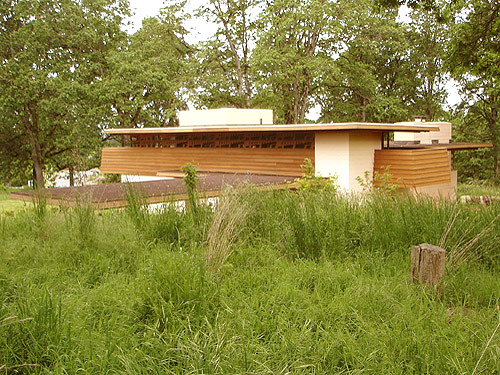
20: Viewed from a hill just to the South East. The ground of the original site was flat.
21: Viewed from the South East, the cut-wood light screens are visible in the center Gallery and Bedrooms on either end of the second floor.
22: Viewed from the South, the two story Work Space is visible just above the roof.
23: The cut-wood light screens nearly surrounding the upper Bedroom on the left and offer privacy and soften the exterior light.
Text and Photographs by Douglas M. Steiner, Copyright 2007 BACK HOME ARTIFACTS AUDIO BOOKS PERIODICALS PHOTOS POSTCARDS POSTERS STAMPS STUDIES ASSISTING ABOUT SEARCH
©Copyright 2008