- Wright Studies
Nakoma Country Club/Nakoma Memorial Gateway (1923/1924 - 2001)
Dariel and Peggy Garner. In the 1970’s, the Garners created a small computer software company for the banking industry. It grew from 1 office to 16 offices across the country. Tiring of the hectic schedule, they sold the company, retired and moved to a remote area of La Paz on Mexico’s Baja Peninsula. There they discovered that watercress grew naturally and plentifully in the area and were soon harvesting it for distribution to Southern California stores and restaurants. Their entrepreneurial spirit blossomed into a 6,000 acre farm pioneering gourmet baby and specialty vegetables, supplying niche-market produce to North America and the rest of the world.
Upon retiring a second time in the early 1990s, they set out in search of the ideal place to build their dream home. After exploring the country, they found it in the High Sierras on Gold Mountain in Northern California. They purchased 1,280 acres, two squaremiles, about an hour northwest of Reno and Lake Tahoe. Unwilling to retire, plans were made for a resort, golf course and subdivision. Of the 427 building sites, 27 sold within the first month. Two-acre wooded lots started at $70,000.
The Garners contacted the Frank Lloyd Wright Foundation and began working with the Taliesin Architects in 1995. During a planning meeting they were shown the original Nakoma clubhouse plans. “When they showed us Mr. Wright’s design for Nakoma, we fell in love with it,” said Peggy. They eventually made the clubhouse the centerpiece of the Taliesin-planned residential community.
As legend has it, while cleaning up some of the debris left on the property, Peggy picked up an old envelope that had a Frank Lloyd Wright stamp on it. That sealed their decision to build the Nakoma clubhouse.
Planning...
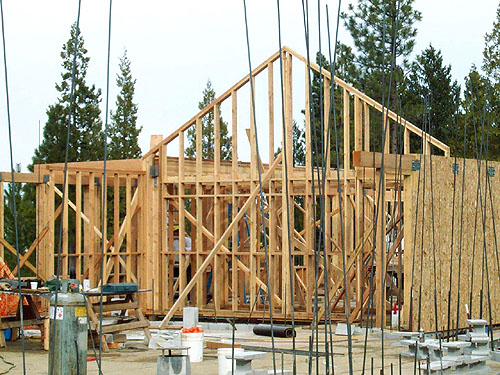
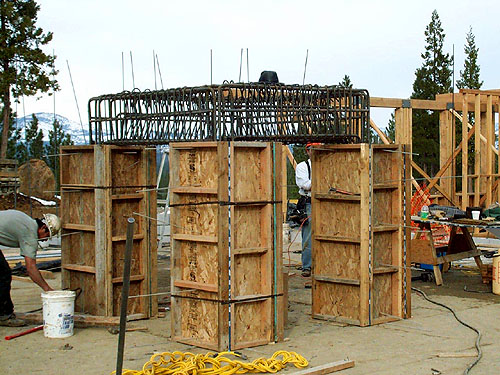
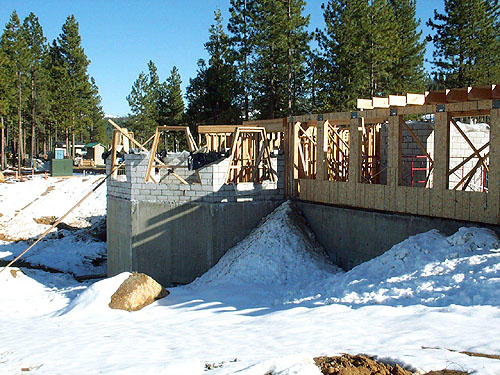
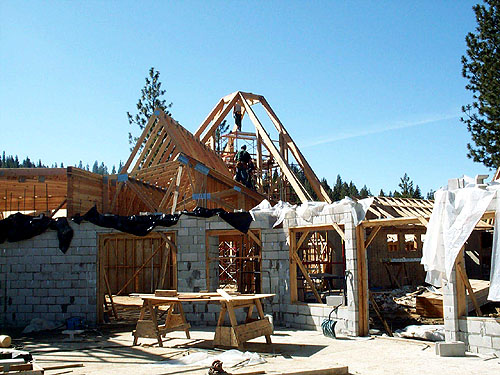
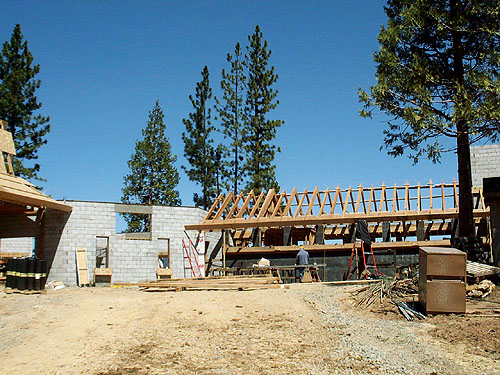
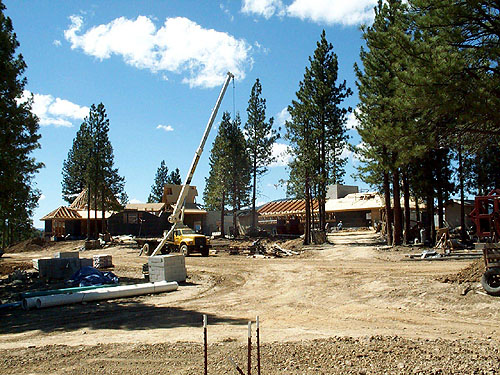
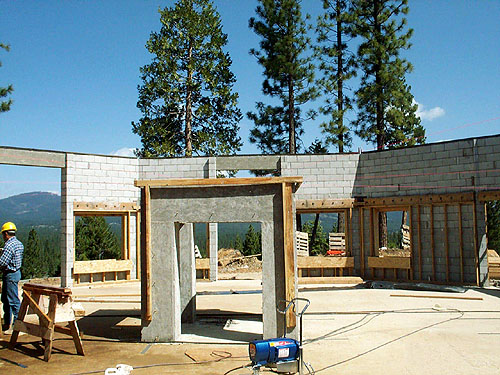
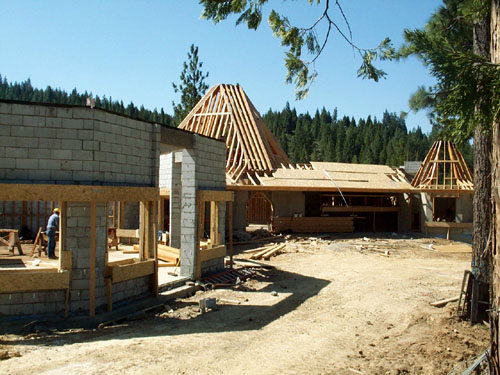
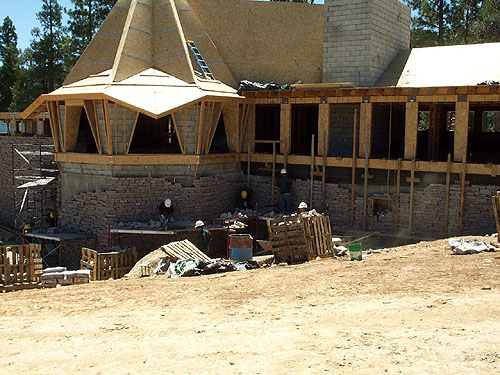
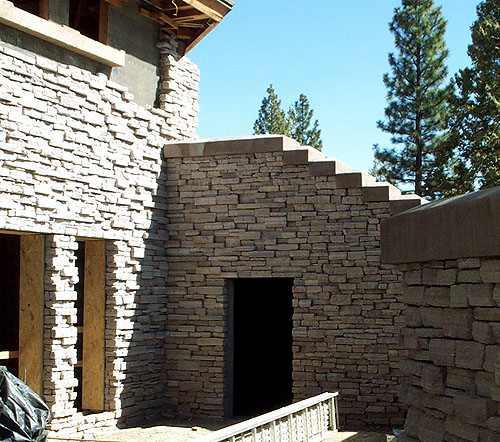
December 1999: Drawing for the Nakoma Golf Resort Clubhouse by the Taliesin Architects began on May 13, 1999. Construction sets were dated December 19, 1999. All images courtesy of the Taliesin Architects. February 2000: Ground was broken, foundations were poured and work began on the main level. The East wall of the Dining Room is erected and the East wing takes shape. Viewed from the Southwest. February 2000: The framework for the Dining Room Fireplace begins. Member's Dining Room is on the right. March 2000: Octagonal Private Dining Room is on the left, Hall and Member's Dining Room is on the right. Concrete block construction on the right forms the Member's Dining Room Fireplace on the far right. Viewed from the Northwest. March 2000: Viewed from the Dining Room looking toward the Pro-Shop "Tee-Pee" just beginning to take shape. The pointed "Ridge" runs between the Dining Room and Pro-Shop. The blocked opening on the left leads to the Lobby. Looking toward the Southwest. April 2000...
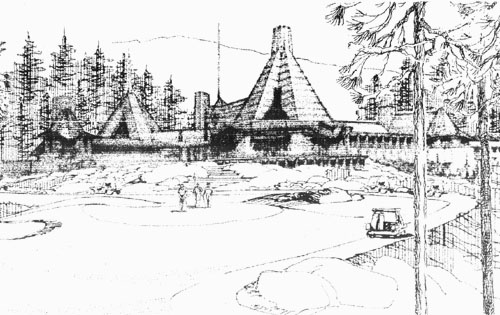
Planning. In 1923, Frank Lloyd Wright presented drawings for a clubhouse to the Nakoma Country Club, which was adjacent to the Nakoma subdivision in Madison, Wisconsin. Indian symbolism could be found throughout Wright’s design of the clubhouse. A year late, after Wright presented drawings to the club members, the Wisconsin State Journal called the Wright clubhouse “the most unique building of its kind in America.”
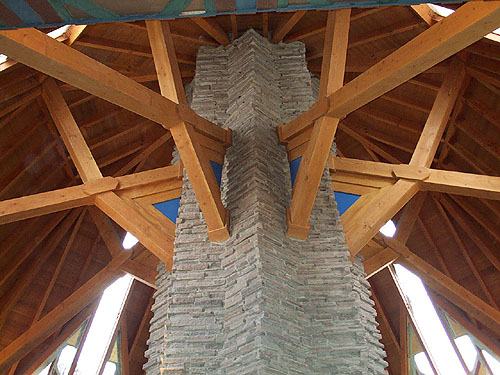
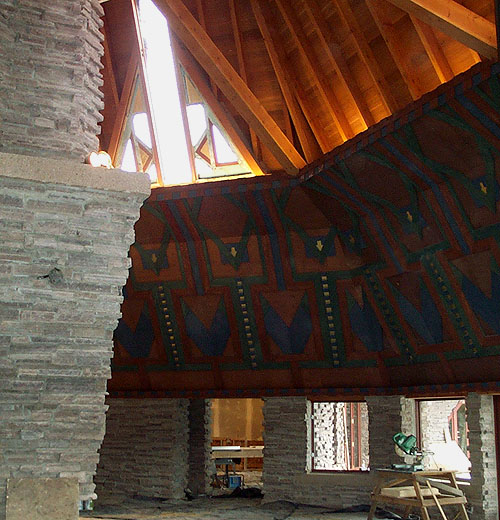
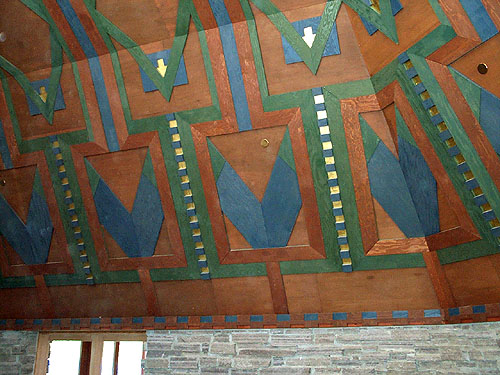
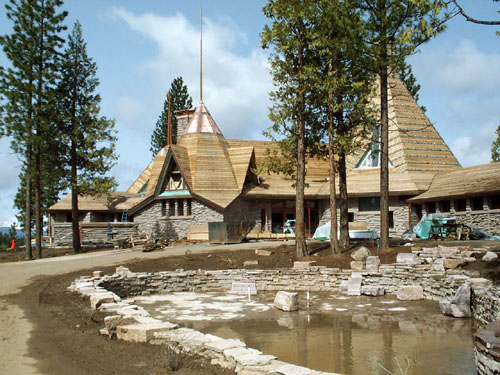
Teepee spires of wood and copper rose above walls covered in stone, laid horizontally to mimic the look of natural sedimentary strata. Inside, in signature Wright fashion, low-ceilinged entrances and hallways opened to soaring spaces. At the center of Wright’s design was the octagonal “Wigwam Room.” Exposed beams created geometric patterns. Towering ceiling walls were adorned in art glass windows and decorative abstract Indian designs. Built-in seating and custom floor coverings embellished natural flagstone flooring. Centered in the room was the “campfire,” a fireplace open on all four sides.
The Taliesin Architects retrieved several versions of Wright’s Nakoma design from the archives. One of the Nakoma plans for the clubhouse utilized textile blocks. Wright was experimenting with concrete textile block designs in 1923. The results were four homes built in California: Millard (La Miniatura), Storer, Freeman and Ennis residences. Another plan used stone laid in the same manner as Fallingwater (right) and Taliesin. It specified local sandstone stacked horizontally, giving the appearance of natural unquarried stone. After weighing their options, the Garnersdecided to execute the stone version. It had a natural, organic blend with the mountainous setting. Rose colored volcanic stone similar to native stone found on their property in the Sierra Nevadas was selected for the clubhouse.
This was not the first attempt by the Taliesin Architects to resurrect the Nakoma Clubhouse. The first was in 1967, within their design for “The Spring Green,” an unrealized 4,000 acre, all season resort along the Wisconsin River, for the Wisconsin River Development Corporation.
From the initial meeting with the Garners, it took six years to adapt the Nakoma drawings and create a full set of plans, obtain permits and construct the building, which opened in 2001. Arnold Roy, Taliesin Architects’ project manager, joined Taliesin in 1952 and studied under Frank Lloyd Wright. “Except for required code upgrades, and a reallocation of interior space,” said Roy, “this is the building envisioned by Mr. Wright.” At its heart is the Wigwam Room, a 120-seat dining area furnished with Wright-inspired carpets and octagonal chairs upholstered in Imperial Triangles fabric, first used by Wright in the 1922 Imperial Hotel, Tokyo.
Nakoma’s interior design was coordinated by another Wright protégé and longtime Taliesin architect, John Rattenbury. “Nakoma looks so at home with the pine trees and mountain setting, it’s almost as if Providence decreed that this marvelous building be created here,” said Rattenbury.
Construction...
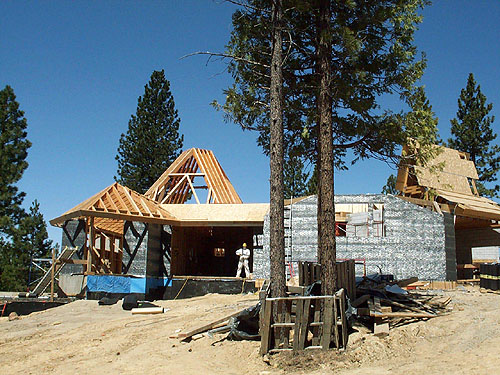
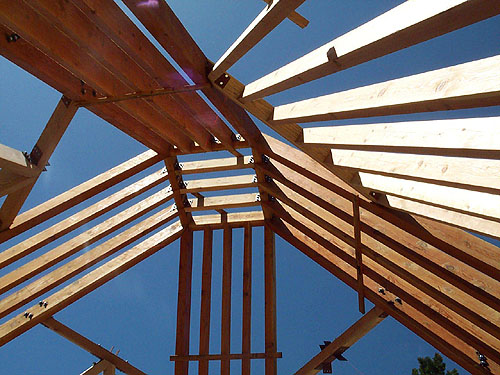
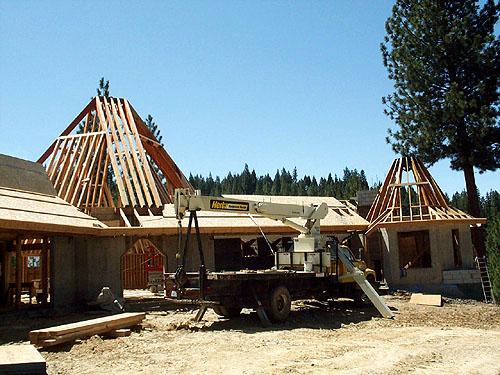
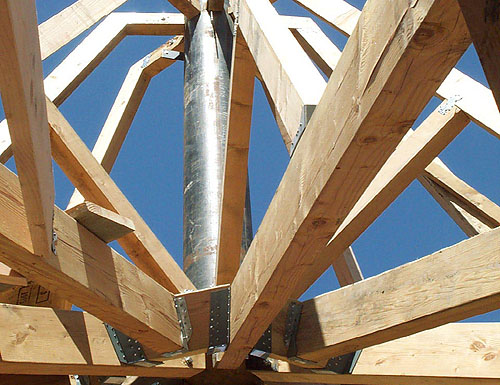
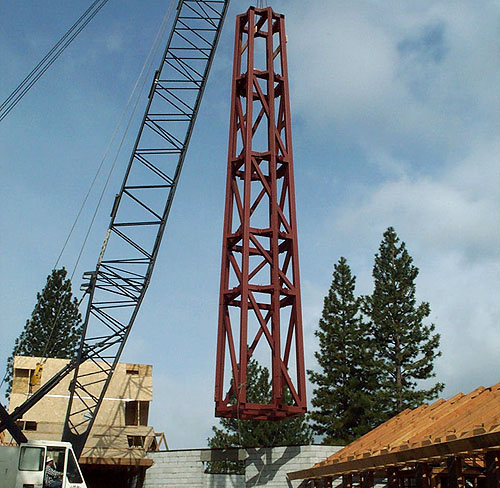
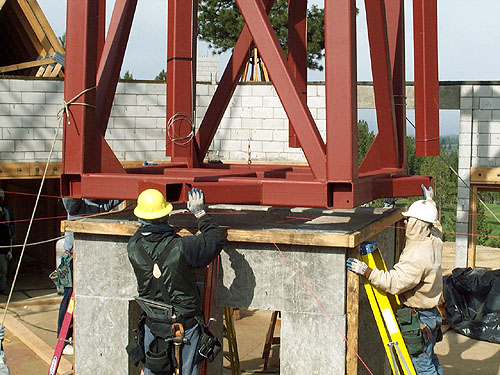
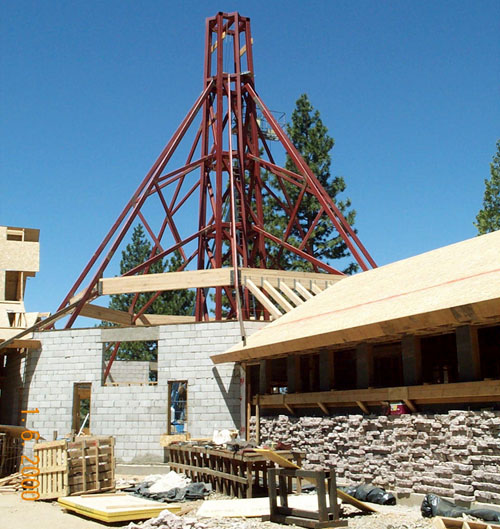
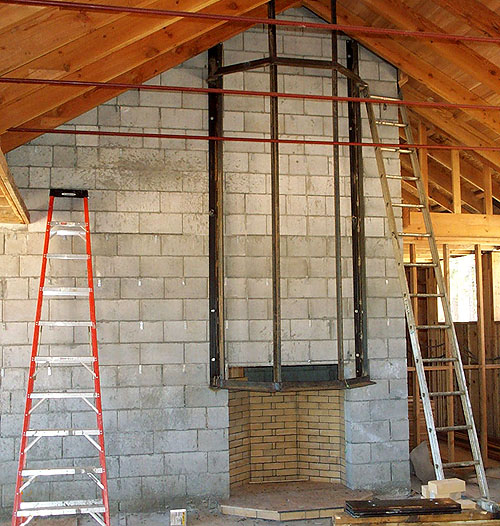
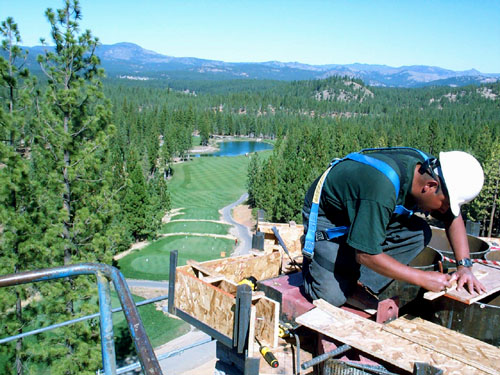
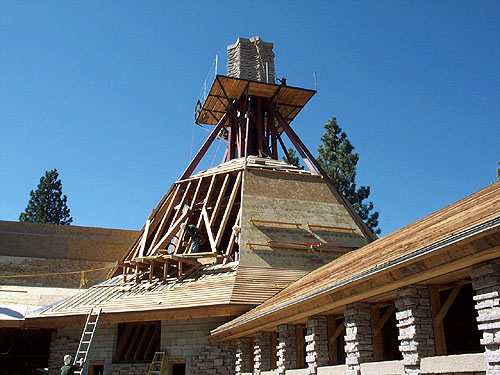
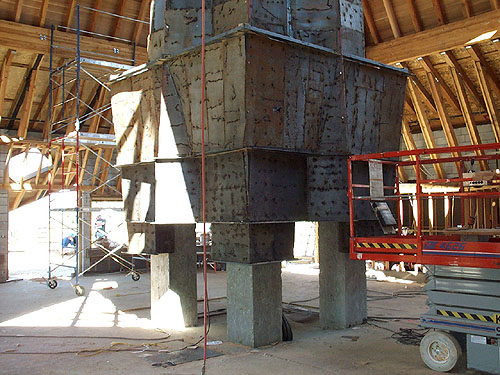
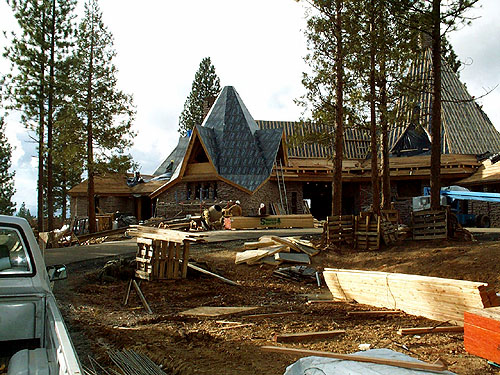
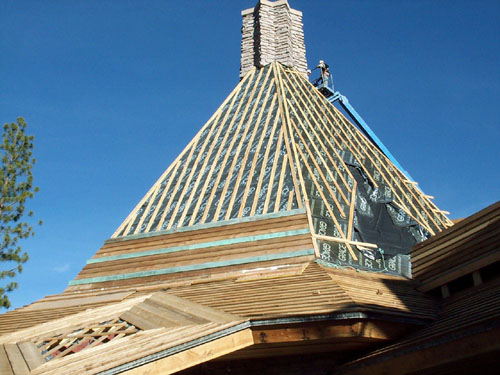
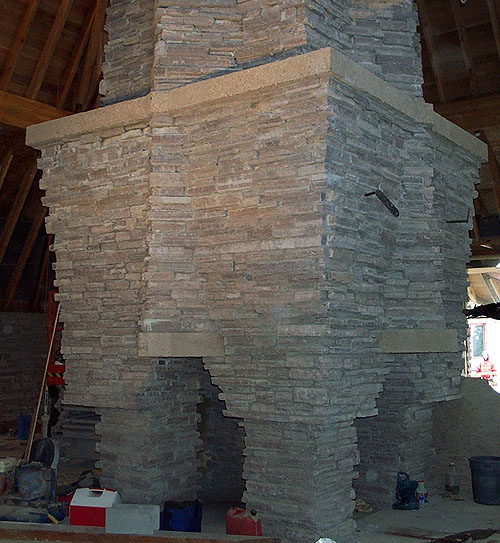
. April 2000: The Pro-Shop is on the left, entrance to the Nineteenth Hole Lounge is in the center. The pointed "Ridge" on the far right covers the main entrance. Viewed from the Southeast. April 2000: The main entrance is on the far left. The Dining Room concrete block wall will be faced with stone. The Member's Dining Room is taking shape on the right, the Fireplace is visible on the far right. Viewed from the South. April 2000: Construction continues on the frame work for the Pro-shop "Tee-Pee". April 2000: Walls of the West wing are finished, sheeting is covering the roof. The Pro-Shop is on the left, Wedding Chapel is on the far right. Viewed from the North. April 2000: Framework is completed for the roof of the Private Dining Room. Cylinder holds the massive spire of the Private Dining "Tee-pee". May 2000: Viewed from the Southeast. The Pro-Shop is on the left, Entrance and Dining Room in the center, Member's and Private Dining on the right. May 2000: Concrete block walls of the Dining Room are complete. Concrete base of the Fireplace is prepared for the Fireplace framework. May 2000: Concrete block walls of the Dining Room on the left are completed. Pro-shop is in the center, Wedding Chapel is on the far right. Viewed from the Northeast. May 2000: Crane lifts steel framework for he Dining Room Fireplace. May 2000: Steel framework for he Dining Room Fireplace is lowered into place atop the concrete base. May 2000: Excavation has created the "Nakoma Basin", the reflecting pool for Nakoma and Nakomis. Concrete pads wait for the placement of the Nakoma and Nakomis statues. June 2000...
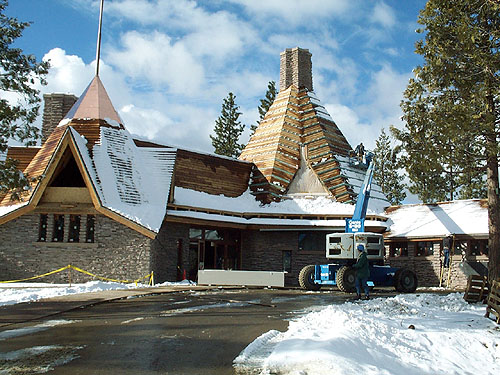
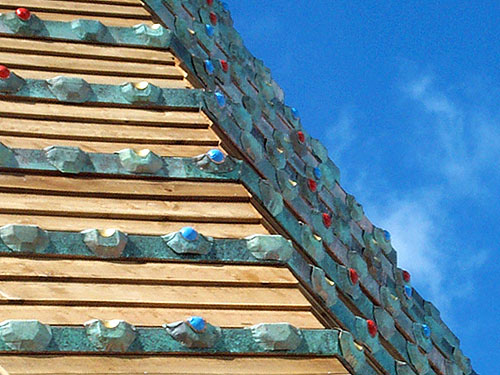
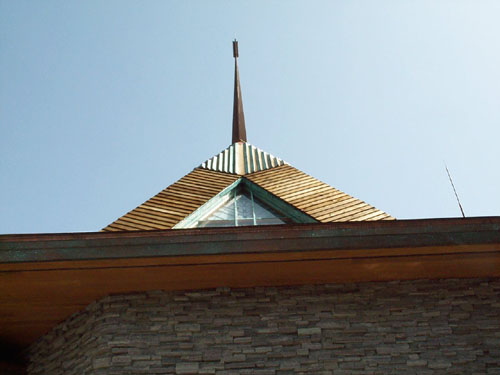
Construction of the Clubhouse. With the dedication of 80 skilled laborers, who came to call themselves the “Nakoma Craftsmen,” the clubhouse was completed in 16 months. Finished in natural stone, red cedar, copper and decorative beading, Nakoma is laid out in a series of octagons, squares and rectangular shapes. The five spires of the 24,000 square foot, $13 million clubhouse soar skyward. The largest teepee, the wigwam, is 56 feet wide and 60 feet high.
The architects at Taliesin used the floor plan and elevations from the original drawings, but adapted the interior spaces to accommodate the resort’s requirements. The original wigwam, with its built-in seating designed for gathering and relaxing, became the main dining room overlooking the golf course. It offered breathtaking views of the Sierra Nevada range. When the women’s locker room was moved to the basement, the space was redesigned as the members’ dining room. The adjacent Loggia, the wide open corridor, doubled as extra dining. The tea pavilion, a parlor for women, became the private dining room. A band of hand-chipped stone encircles the entire room, capping the low stone wall, creating stone windowsills.
The area originally specified as the men’s locker room was also moved downstairs and redesigned as the gift and pro shop. The Nineteenth Hole Lounge remains. Secondary teepees crown each of the smaller rooms.
The clubhouse is a series of contrasting shapes andspaces. Of the five teepees the Wigwam is the most spectacular and the focus of Wright’s design. Above its walls, the immense roof soars to an enclosed interior height of 40 feet above a natural flagstone floor. At the center of the dining room is the majestic stone fireplace designed with two rotated squares. The hearth opens on four sides. Surrounding the room above the walls on all eight sides is a 17-foot high, intricate Indian-motif frieze accented by giant clerestory art glass windows.
The remaining spires, wigwams and teepees are striking variations of the Indian theme. Some are decorated with hand-painted ceramic beads. Others are crowned with copper and topped with spires.
Rose-colored volcanic stone similar to the native stone found on the property would have taken years for permits and extraction. Identical rock was located in Mexico and 300 truckloads were imported. All the art glass windows and frieze work was completed on site. The interior and exterior ceramic treatments were baked in kilns built on the property.
John Rattenbury oversaw all the interior designs and details, including the dining room chairs and tables, art glass windows, custom hand-knotted carpets from China, even the dining room place settings. He followed the details from Frank Lloyd Wright’s original plans whenever possible. Dedication ceremonies were held in May, 2001.
The Dragon...
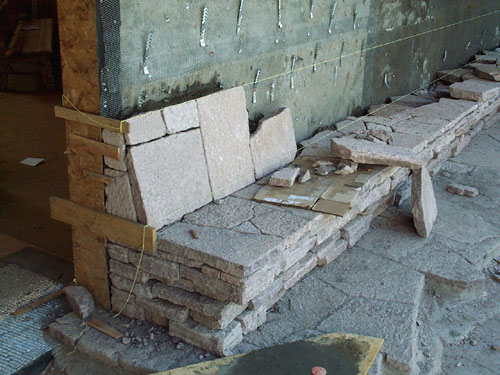
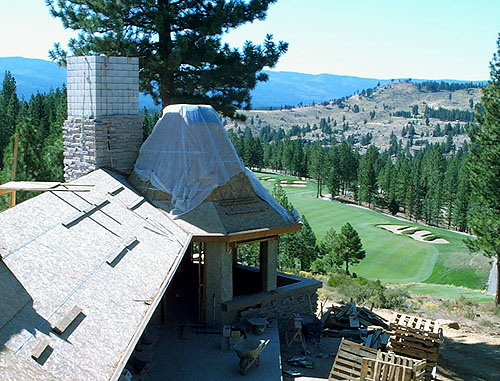
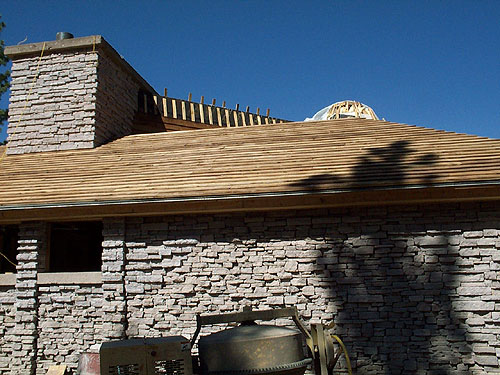
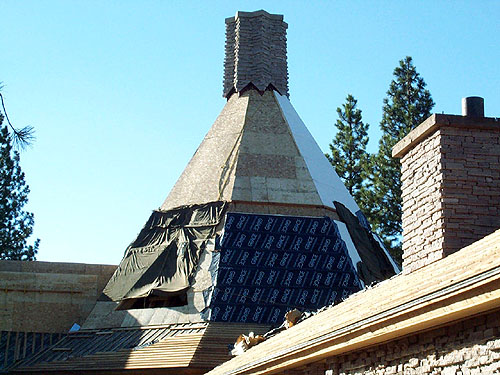
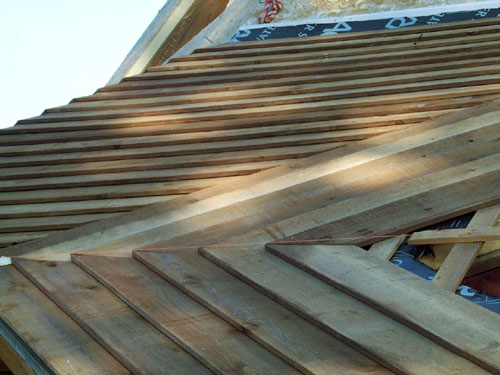
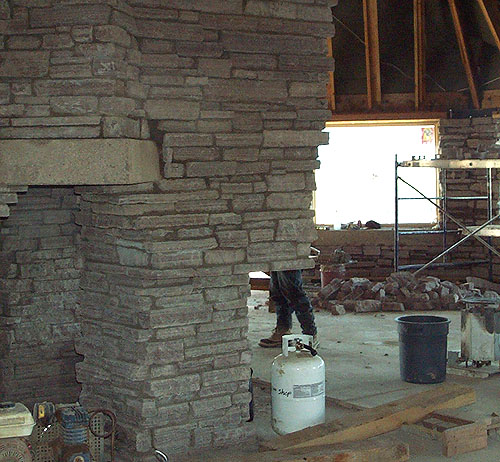
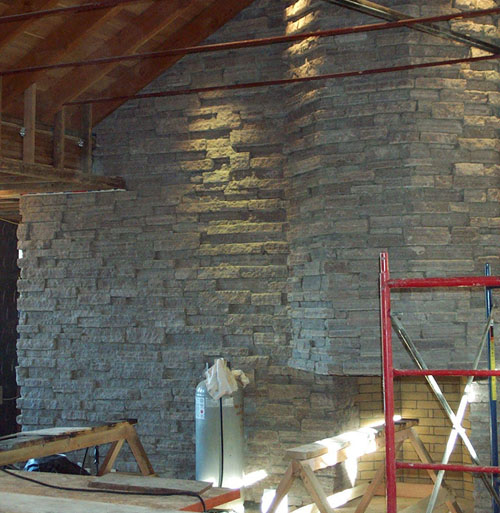
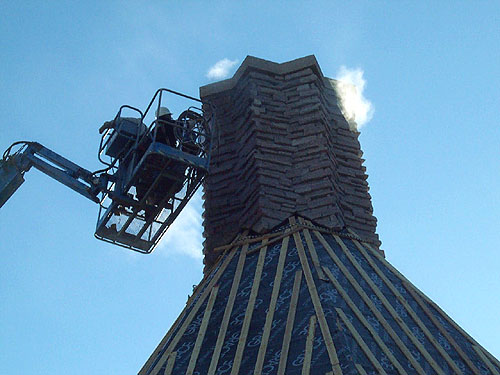
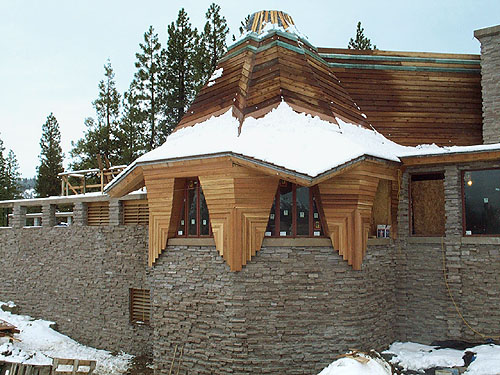
. June 2000: Additional steel is added to support the chimney and roof of the Dining Room. Exterior stonework has begun on the exterior of the Member's Dining Room on the right. Viewed from the Southeast. June 2000: Stonework continues on the North side of the Private Dining on the left, and Member's Dining Room on the right. The "Tee-Pee" that tops the Private Dining Room takes form, along with the "Ridge" that runs toward the Member's Dining Fireplace. Viewed from the Northwest. June 2000: The Member's Dining room is enclosed, and the framework for the fireplace is set in place. Viewed from the Northwest. September 2000: Wrightesque Built-in seating on the exterior wall of the Pro-Shop offer spectacular views of the golf course and Sierra Nevada Mountains. September 2000: Stonework progresses on the Wedding Chapel's Fireplace chimney. The first green can be seen in the background. September 2000: Workmen put the finishing touches on the massive Dining Room chimney that rises 60 feet above the Club House. The tenth green can be seen in the background. October 2000: As the Dining Room roof is enclosed, it is finished with pressure treated horizontal strips. Viewed from the East. October 2000: Exterior stonework of the Member's Dining Room walls and chimney as well as the roof near completion. Viewed from the Southeast. October 2000: Preparation continues on the Dining Room Fireplace. October 2000: Exterior stonework nears completion on the Entrance of the lower level Spa, situated beneath the Southeast end of the Pro-Shop. Viewed from the West. October 2000: The Dining Room roof is enclosed. The Member's Dining Room is on the right. Viewed from the Southeast. November...
The Dragon Golf Course. Although it would be another year before the clubhouse was completed, the Dragon Golf Course’s dedication ceremony was held on May 27, 2000. The Garners wanted a tough course, which they achieved. It took three years to complete the course designed by Robin Nelson of Mill Valley, California. The name said it all: “The Dragon.”
Reviews were outstanding. The May/June 2001 issue of Ski Magazine featured the Dragon, calling it a “one-of-a-kind environmentally sensitive fire-breather... Its liberally contoured greens are very demanding,” saying it was one of four courses in the U.S. to visit. In Bob Highfill’s article “Slaying the Dragon,” he said, “The Dragon is a scenic masterpiece that will challenge any player” (June 2001, The Record, Stockton, CA). It was voted an “All Star Course” by Golf For Women Magazine, the nation’s most read women’s golf magazine. In 2001, it was nominated for Golf Digest’s “Best New Course of the Year. The Dragon is an exceptional golf experience.” AudiWorld featured the resort in their November, 2001 issue.
Nakoma Trading Post, the resort’s award-winning golf-and-retail shop, was voted a top 25 resort golf shop in the U.S. by Golf World Business magazine and “2002 Merchandiser of the Year” by the Northern California Golf Association, which included Pebble Beach. Nakoma Resort was also invited to become a member of the elite “Small Luxury Hotels of the World.”
In 2003, Nakoma’s Dragon Golf Course sponsored a $10,000 Pro-Am challenge. It was singled out for distinction in the July issue of Golf Insider, the industry’s leading golf travel rating publication. Of the several courses it rated, the Dragon scored the highest. It was recognized for its high performance, quality offerings and unique status. In September, Nakoma was featured twice on the Golf Channel with a 30 minute special “Golf With Style,” earning acclaim for their varied and exquisite amenities. Jeff Shelley of Golfweek rated the Dragon a solid ‘6’, which ranked it in the upper 15% of the finest courses in the U.S. Golf for Women magazine was so impressed with the course surroundings they ranked the Dragon among their “Top 100 Fairways for Women” in 2003.
In 2004, Fairways & Greens magazine ranked the Nakoma Resort one of the “Top Golf Resorts of the West.” But by the end of 2004’s season, cracks were appearing in the Dragon’s armor. In August, the Golf Course Industry by-line read: “Can golf with Wright be wrong? Oh, you betcha. You might think that the Garner’s resort has everything it takes to be a huge success. So what’s the problem? The golf course can be as ferocious as its name implies. While some golfers relish the challenge it presents, others find it excessively penal, and they’re not likely to come back...”
Within the first three years of play, par was never broken, even when hosting PGA professional tournaments.
The Dragon is Wounded...
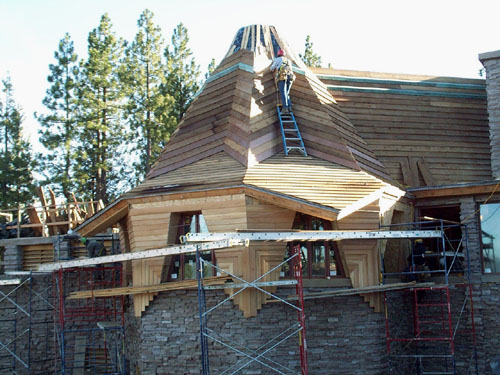
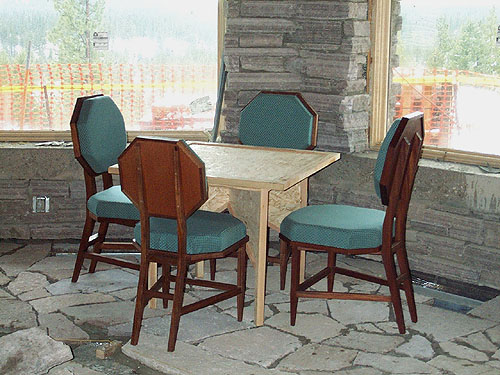
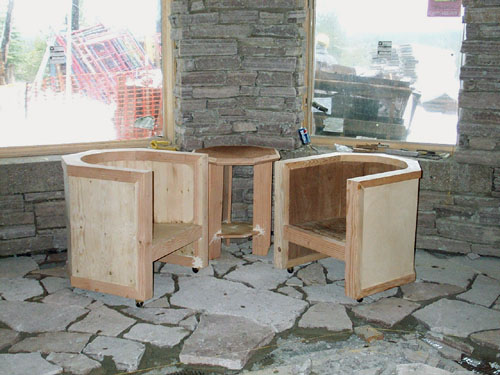
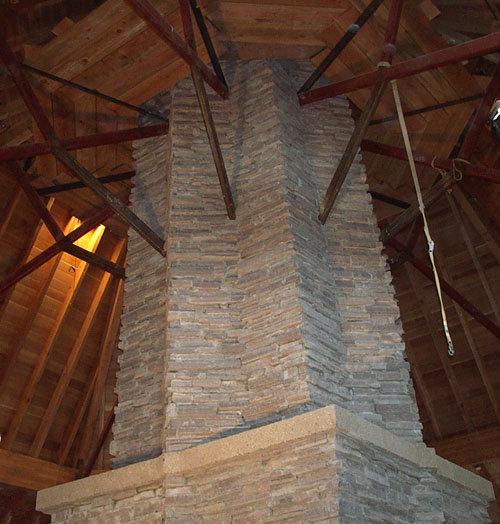
. November 2000: Detail of the Dining Room horizontal roofing strips. Viewed from the North. November 2000: Wright's "Tee-Pee" topped Clubhouse takes shape. The Pro-Shop wing is on the far left, Entrance opening, and Dining Room on the far right. Viewed from the East. December 2000: The enclosed Dining Room is prepared for final horizontal strips and copper "beads". Viewed from the West. December 2000: Stonework continues on the Dining Room Fireplace and interior walls. December 2000: Stonework is completed on the Member's Dining Room Fireplace. December 2000: Workmen finish stonework on the massive Dining Room Chimney. December 2000: Note: the unique design of the window trim to the left and right side of the windows, also matches details of a design for the fireplace. Work nears completion on the roof of the Private Dining Room and "Ridge". Windows are being installed. Viewed from the Northwest. December 2000: Dining Room table and chairs. Work begins on the custom furniture designed by the Taliesin Architects, adapted from Wright's original plans. Work progresses on the flagstone flooring. John Rattenbury oversaw all the interior designs and details which included dining room chairs and tables, following the details from Wright's original plans whenever possible. December 2000: Barrel Chairs and End Table. Furniture and cabinetry work in the Nakoma Clubhouse was adapted from Wright's original plans and designed by Taliesin Architects. December 2000: Stonework for the Dining Room Fireplace is completed. December 2000: Stonework for the Dining Room Fireplace is completed. All that remains is the stone hearth. December 2000: As snow falls, work is hampered on the outside, but does not cease. The Private Dining Room waits its copper crown and spire. Viewed from the Northwest. January...
The Dragon is Wounded. By December 2004, the Garners ceased making payments on their loans. By October of 2005, Mr. Garner relinquished his equity interest to Ms. Garner, making her the resort’s controlling member. She failed to find other investors and the resort went into bankruptcy. In April, 2006 the resort and golf course went up for auction. It was announced in the local paper that the 880 acre property had been purchased at the bankruptcy auction. The sale fell through, hopes were dashed, and the resort closed in 2006.
The resort reopened in 2008, operating while in Chapter 7, and attempted to find a buyer. Gone were the $149 green fees, free bottles of water and engraved bag tags.
The demise of the Nakoma is reminiscent of Browne's Bookstore, designed by Wright in 1907. Francis Fisher Browne was one of Chicago’s most successful literary publisher’s at the turn of the century. Bookstores at the time were always placed on the ground floor and visible from main thoroughfares. Browne threw conventional wisdom out the window and placed his bookstoreon the seventh floor. The concept for the interior was unique, he wanted the feel of a living room, complete with a fireplace. Like the overwhelming praise Nakoma received, Browne’s was praised as one of the premier bookstores “on this side of the water.”
In hindsight, Browne should have stayed with conventional wisdom. Even with Frank Lloyd Wright’s design and Browne’s leadership, the bookstore struggled to run profitably. Four years after opening it was announced that “Browne’s Bookstore will remove to commodious quarters on the street floor... and by this move will take its place among the many high-class shops which line this exclusive thoroughfare. Browne’s Bookstore has been known as one of the most artistically arranged bookstores in the country...” In the end, the move did not help. In April 1912 the directors decided to close the bookstore.
Whether it was the bite of the Dragon, or unrealistic expectations which brought about Nakoma’s demise, it was not for lack of trying.
The Dragon is tamed...
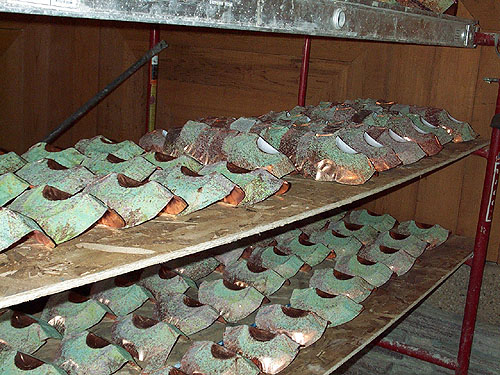
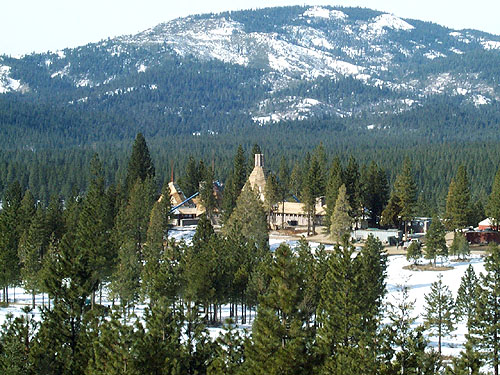
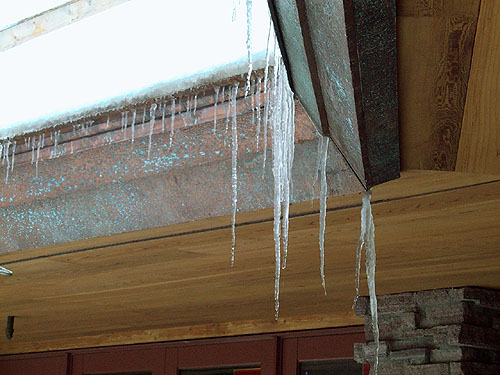
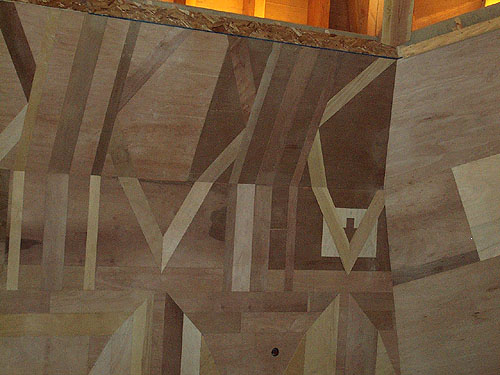
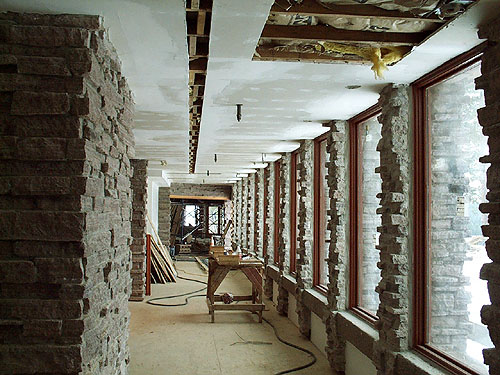
. January 2001: Finishing touches are made to the decorative "bead" holders that adorn the exterior "tee-pees. Ceramic beads were created and fires on the property. January 2001: Tee-pees are topped and workmen add decorative "bead" holders and ceramic beads to the main tee-pee. February 2001: As if designed for this location, the Nakoma Clubhouse blends with its surroundings. The ridges of Penman Peak are visible in the background. Viewed from the Southeast. February 2001: Icicles by design. Fascia is coated with copper paint, speckled with a light blue-green finished, creating a patina like effect. Icicles add a natural design element during the winter time. "I wanted a home where icicles by invitation might beautify the eves... icicles came to hang staccato from the eaves." Frank Lloyd Wright, "An Autobiography", 1943. February 2001: Work progresses on Wright's Indian inspired pattern which decorates the interior Dining Room tee-pee walls. February 2001: Windows are installed in the Loggia (Lajēa: a gallery or corridor open on one side). Drywall is being installed. Viewed from the Private Dining Room. The Member's Dining Room is to the left. The Dining Room is at the far end. March...
The Dragon is Tamed. The Dragon picked off potential buyers one by one. After nearly six years in bankruptcy, it was announced in April, 2010 that the Nakoma Resort and Golf Course had been purchased by the Schomac Group, Inc.
The new owners prepared for a July reopening. They refurbished the course, seven miles of cart paths, the clubhouseand luxurious villas. Robin Nelson, the course’s renowned architect, toured the course providing input for retaining its challenge, while taming the Dragon. Their goal was to soften the course, making it friendlier to a wider field of players. One thing that remained constant were the breathtaking views of the Sierra Nevada range.
The Gold Mountain community...
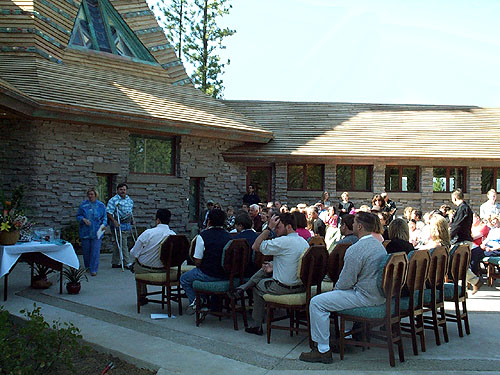
. March 2001: Steel beams are covered in wood, creating the illusion of solid wood beams. Stained glass clerestory windows are installed. March 2001: The Dining Room interior nears completion. March 2001: Detail of Wright's Indian inspired pattern. March 2001: Detail of the decorative "bead" holders and ceramic beads of the main tee-pee. April 2001: Reflecting Pool nears completion as does the exterior of the Clubhouse. April 2001: The copper crown and spire add the finishing touches to the Pro-Shop. Stained glass windows have been installed. Patina enhanced paint has been added to the fascia. Viewed from the Southwest. May 2001: Dedication ceremonies for the Nakoma Golf Resort Clubhouse were held in May, 2001.
The Gold Mountain Community. When the Garners subdivided their property, they wove 427 building sites throughout the 18 hole golf course creating an environmentally sensitive, gated, golf and recreational community. Community guidelines mandated non-reflective building materials and a palette in harmony with nature. Fencing and lawns were not permitted, retaining a natural look. At least two materials were required to be used on each side of the exterior.
Some homes were designed with acid-aged copper trim in Frank Lloyd Wright inspired patterns. By 2002, 40 homes had been designed by Taliesin architects. Half were adapted from a handful of standardized plans, which were supplied to buyers at no charge.
Text by Douglas M. Steiner, Copyright 2012. All photographs courtesy of the Taliesin Architects.
BACK
HOME ARTIFACTS AUDIO BOOKS PERIODICALS PHOTOS POSTCARDS POSTERS STAMPS STUDIES ASSISTING ABOUT SEARCH
SEARCH WEB SITE To donate or pass on information, comments or questions: info@wrightlibrary.com ©Copyright 2001, 2014