|
|
|
|
|
1960 |
C 1960
 |
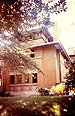
Theodore Baird Residence, Amherst, Mass.,
Circa 1960 (1940 - S.277). View of the Baird Residence from the Southeast.
Designed by Frank Lloyd Wright in 1940. It was constructed of brick, cypress
and glass. William Wesley Peters acted as the general contractor. This was
the only Usonian design where the walls and glazing were prefabricated at a
factory, transported and assembled on site. The Baird Residence is the only
house in Massachusetts designed by Frank Lloyd Wright. Mounted to gray
board. Label pasted to board: "W 20, USA Arch. Wright. Amherst,
Massachusetts. T. Baird House, 1940. Ext. Andrews Photo 2836." Photographed
by Wayne Andrews. Acquired from the
archives of the University of Minnesota. Original 9.5 x 7.5 B&W Photograph. |
1458.90.0420 |
1960
 |
Dallas Theatre Center, Dallas Texas, Interior
1960 (1955 -S.395). Interior view of the Dallas Theatre Center. Designed by
Frank Lloyd Wright in 1955. The Dallas Theater Center opened with
registration and classes on September 9, 1959 and its first production on
December 27, 1959. This is the only Theater ever executed by Frank Lloyd
Wright. The design for this theater was first conceived for the
New Theatre for Woodstock, New York (1931 Project). In 1938 Wright designed
the Pfeiffer Chapel (S.251) at the Florida Southern College and utilized the
original Woodstock floor plan. In 1949 the "New Theatre" was revived again
in Hartford, Connecticut, but was never executed. The concept for the "New
Theatre for Woodstock" was finally executed in Dallas as the Dallas Theater
Center. The original cushioned seats and backs were upholstered in a
textured, golden-colored fabric and the metal frame was painted a neutral
color. The golden-colored fabric in the seats blended with the interior of
the theatre. 10 x 7 Color photograph. |
1458.122.1021 |
1960
 |
1) Dallas Theatre Center, The Kalita Humphrey
Theater, Exterior 1960 (1955 -S.395). Exterior view of the Dallas Theatre
Center from the East. The design for this theater was first conceived by
Frank Lloyd Wright for the New Theatre for Woodstock, New York (1931
Project). In 1938 Wright designed the Pfeiffer Chapel (S.251) at the Florida
Southern College and utilized the original Woodstock floor plan. In 1949 the
"New Theatre" was revived again in Hartford, Connecticut, but was never
executed. The concept for the "New Theatre for Woodstock" was finally
executed in Dallas and the Dallas Theater Center opened on September 9, 1959
and its first production was on December 27, 1959. Hand written on face: "F.
L. Wright: Kalita Humphreys Theatre, Dallas, Texas (1960)." Stamped on
Verso: "Photo Wayne Andrews." Hand written on verso: " W. 20c. USA Arch
Wright." and "2155." Photographed by
Wayne Andrews. Original 8 x 10 B&W
photograph. |
1458.78.0220 |
1960
 |
2) Dallas Theatre Center, The Kalita Humphrey
Theater, Exterior 1960 (1955 -S.395). Exterior view of the Dallas Theatre
Center from the Northeast. The design for this theater was first conceived
by Frank Lloyd Wright for the New Theatre for Woodstock, New York (1931
Project). In 1938 Wright designed the Pfeiffer Chapel (S.251) at the Florida
Southern College and utilized the original Woodstock floor plan. In 1949 the
"New Theatre" was revived again in Hartford, Connecticut, but was never
executed. The concept for the "New Theatre for Woodstock" was finally
executed in Dallas and the Dallas Theater Center opened on September 9, 1959
and its first production was on December 27, 1959. Hand written on face:
"Frank Lloyd Wright." Stamped on Verso: "Photo Wayne Andrews." Hand written
on verso: " W. 20c. USA Arch Wright." and "2156." Photographed by
Wayne Andrews. Original 8 x 10 B&W photograph. |
1458.79.0220 |
1960
 |
3) Dallas Theatre Center, The Kalita Humphrey
Theater, Exterior 1960 (1955 -S.395). Exterior view of the Dallas Theatre
Center from the North. The design for this theater was first conceived by
Frank Lloyd Wright for the New Theatre for Woodstock, New York (1931
Project). In 1938 Wright designed the Pfeiffer Chapel (S.251) at the Florida
Southern College and utilized the original Woodstock floor plan. In 1949 the
"New Theatre" was revived again in Hartford, Connecticut, but was never
executed. The concept for the "New Theatre for Woodstock" was finally
executed in Dallas and the Dallas Theater Center opened on September 9, 1959
and its first production was on December 27, 1959. Hand written on face:
"Frank Lloyd Wright." Stamped on Verso: "Photo Wayne Andrews." Hand written
on verso: " W. 20c. USA Arch Wright." and "2157." Photographed by
Wayne Andrews. Original 8 x 10 B&W photograph. |
1458.80.0220 |
1960
 |
4) Dallas Theatre Center, The Kalita
Humphrey Theater, Exterior 1960 (1955 -S.395). Exterior view of the Dallas
Theatre Center from the Northwest. The design for this theater was first
conceived by Frank Lloyd Wright for the New Theatre for Woodstock, New York
(1931 Project). In 1938 Wright designed the Pfeiffer Chapel (S.251) at the
Florida Southern College and utilized the original Woodstock floor plan. In
1949 the "New Theatre" was revived again in Hartford, Connecticut, but was
never executed. The concept for the "New Theatre for Woodstock" was finally
executed in Dallas and the Dallas Theater Center opened on September 9, 1959
and its first production was on December 27, 1959. Small sign next to the
door in the center: "Dallas Theater Center Closed To The Public Until Sept.
12th." Hand written on face: "F. L. Wright:
Kalita Humphreys Theatre, Dallas, Texas (1960)." Stamped on Verso: "Photo
Wayne Andrews." Hand written on verso: " W. 20c. USA Arch Wright." and
"2158." Photographed by Wayne
Andrews. Original 8 x 10 B&W photograph. |
1458.81.0220 |
1960
 |
5) Dallas Theatre Center, The Kalita Humphrey
Theater, Exterior 1960 (1955 -S.395). Exterior view of the Dallas Theatre
Center from the Northwest. The design for this theater was first conceived
by Frank Lloyd Wright for the New Theatre for Woodstock, New York (1931
Project). In 1938 Wright designed the Pfeiffer Chapel (S.251) at the Florida
Southern College and utilized the original Woodstock floor plan. In 1949 the
"New Theatre" was revived again in Hartford, Connecticut, but was never
executed. The concept for the "New Theatre for Woodstock" was finally
executed in Dallas and the Dallas Theater Center opened on September 9, 1959
and its first production was on December 27, 1959. Mounted to gray board.
Label pasted to board: "W 20 US Arch. Wright, Frank L. Dallas, Texas. Kalita
Humphreys Theatre, 1960. Exterior. Photo by
Wayne Andrews. 2159."
Photographed by Wayne Andrews. Acquired from the archives of the University
of Minnesota. Original 8 x 10 B&W photograph. |
1458.85.0420 |
1960
 |
6) Dallas Theatre Center, The Kalita
Humphrey Theater, Exterior 1960 (1955 -S.395). Exterior view of the Dallas
Theatre Center from the Northwest. The design for this theater was first
conceived by Frank Lloyd Wright for the New Theatre for Woodstock, New York
(1931 Project). In 1938 Wright designed the Pfeiffer Chapel (S.251) at the
Florida Southern College and utilized the original Woodstock floor plan. In
1949 the "New Theatre" was revived again in Hartford, Connecticut, but was
never executed. The concept for the "New Theatre for Woodstock" was finally
executed in Dallas and the Dallas Theater Center opened on September 9, 1959
and its first production was on December 27, 1959. Small sign next to the
door bottom left: "Dallas Theater Center Closed To The Public Until Sept.
12th." Hand written on face: "F. L. Wright:
Kalita Humphreys Theatre, Dallas, Texas (1960)." Stamped on Verso: "Photo
Wayne Andrews." Hand written on verso: " W. 20c. USA Arch Wright." and
"2160." Photographed by Wayne
Andrews. Original 8 x 10 B&W photograph. |
1458.82.0220 |
1960
 |
7) Dallas Theatre Center, The Kalita Humphrey
Theater, Exterior 1960 (1955 -S.395). Exterior view of the Dallas Theatre
Center from the Southwest. The design for this theater was first conceived
by Frank Lloyd Wright for the New Theatre for Woodstock, New York (1931
Project). In 1938 Wright designed the Pfeiffer Chapel (S.251) at the Florida
Southern College and utilized the original Woodstock floor plan. In 1949 the
"New Theatre" was revived again in Hartford, Connecticut, but was never
executed. The concept for the "New Theatre for Woodstock" was finally
executed in Dallas and the Dallas Theater Center opened on September 9, 1959
and its first production was on December 27, 1959. Hand written on face: "F.
L. Wright: Kalita Humphreys Theatre, Dallas, Texas (1960)." Stamped on
Verso: "Photo Wayne Andrews." Hand written on verso: " W. 20c. USA Arch
Wright." and "2161." Photographed by
Wayne Andrews. Original 8 x 10 B&W
photograph. |
1458.83.0220 |
1960
 |
8) Dallas Theatre Center, The Kalita Humphrey
Theater, Interior 1960 (1955 -S.395). Interior view of the Dallas Theatre
Center from the South. The revolving stage it to the far right. The design
for this theater was first conceived by Frank Lloyd Wright for the New
Theatre for Woodstock, New York (1931 Project). In 1938 Wright designed the
Pfeiffer Chapel (S.251) at the Florida Southern College and utilized the
original Woodstock floor plan. In 1949 the "New Theatre" was revived again
in Hartford, Connecticut, but was never executed. The concept for the "New
Theatre for Woodstock" was finally executed in Dallas and the Dallas Theater
Center opened on September 9, 1959 and its first production was on December
27, 1959. Hand written on face: "F. L. Wright: Kalita Humphreys Theatre,
Dallas, Texas (1960)." Stamped on Verso: "Photo Wayne Andrews." Hand written
on verso: " W. 20c. USA Arch Wright." and "2154." Photographed by
Wayne Andrews. Original 8 x 10 B&W photograph. |
1458.84.0220 |
1960
 |
Dallas Theatre Center's Kalita
Humphreys Theater, 1955 (S.395). Caption reads: "(DN1) Dallas, Tex., Jan. 26
- Dallas Theater Center - This is the Dallas Theater Center which opened its
first production on December 27, 1959. The building is situated in one of
Dallas' most beautiful, wooded areas, on a hill of trees and stone
overlooking the fashionable Turtle Creek area. Costing more than a million
dollars to build, it was the only theater the late Frank Lloyd Wright ever
designed. (AP Wirephoto) (cel31445ho) 1960." The design for this theater was
first conceived for the New Theatre for Woodstock,
New York (1931 Project). In 1938 Wright
designed the Pfeiffer Chapel (S.251) at the Florida Southern College and
utilized the original Woodstock floor plan. In 1949 the
"New Theatre"
was revived again in Hartford, Connecticut, but was never executed. The
concept for the "New Theatre for Woodstock" was finally executed in Dallas
and the Dallas Theater Center opened with registration and classes on
September 9, 1959 and its first production on December 27, 1959. This is the
actual print that was used and published in the Detroit Times on March 6,
1960. Photographed by the Associated Press. Original B&W 9 x 6.75. |
1458.27.1109 |
1960
 |
Dallas Theatre Center 1960 (1955
-S.395). View of the Dallas Theatre Center from the East. The design for
this theater was first conceived by Frank Lloyd Wright for the New Theatre
for Woodstock, New York (1931 Project). In 1938 Wright designed the Pfeiffer
Chapel (S.251) at the Florida Southern College and utilized the original
Woodstock floor plan. In 1949 the
"New Theatre"
was revived again in Hartford, Connecticut, but was never executed. The
concept for the "New Theatre for Woodstock" was finally executed in Dallas
and the Dallas Theater Center
opened with registration and classes on September 9, 1959 and its first
production on December 27, 1959. Clipping pasted to verso: "Exactly a year
has passed since the death, at 90, of the great son of Wisconsin, the
foremost architect of the 20th century, Frank Lloyd Wright. But the
extensive obituary columns did not mean the end to the fantastic, in
enormously publicized career. The life of the man is ended, true. The work
of the man goes on and on. Some $20,000,000 in contracts for 33 clients
remain to be fulfilled by his colleagues. "He was as much a crusading social
thinker as he was a designer," the editors of House Beautiful magazine avow.
"And 100 years from now he will undoubtedly loom like a titan on the 20th
century scene." The storms which raged around the peppery little egotist for
most of his 70 year In architecture show no indication of abating..."
Stamped on clipping: "Su Apr 10 1960." Original 6 x 4 B&W photograph. |
1458.73.0819 |
1960
 |
Dallas Theatre Center 1960 (1955
-S.395). Aerial view of the Dallas Theatre Center from the Northwest. The
design for this theater was first conceived by Frank Lloyd Wright for the
New Theatre for Woodstock, New York (1931 Project). In 1938 Wright designed
the Pfeiffer Chapel (S.251) at the Florida Southern College and utilized the
original Woodstock floor plan. In 1949 the
"New Theatre"
was revived again in Hartford, Connecticut, but was never executed. The
concept for the "New Theatre for Woodstock" was finally executed in Dallas
and the
Dallas Theater Center
opened with registration and classes on September 9, 1959 and its first
production on December 27, 1959. Clipping pasted to verso: "Exactly a year
has passed since the death, at 90, of the great son of Wisconsin, the
foremost architect of the 20th century, Frank Lloyd Wright. But the
extensive obituary columns did not mean the end to the fantastic, in
enormously publicized career. The life of the man is ended, true. The work
of the man goes on and on. Some $20,000,000 in contracts for 33 clients
remain to be fulfilled by his colleagues. "He was as much a crusading social
thinker as he was a designer," the editors of House Beautiful magazine avow.
"And 100 years from now he will undoubtedly loom like a titan on the 20th
century scene." The storms which raged around the peppery little egotist for
most of his 70 year In architecture show no indication of abating..."
Stamped on clipping: "Su Apr 10 1960." Original 6 x 4.75 B&W photograph.
|
1458.74.0819 |
C 1960
 |
Kersey C. DeRhodes
Residence, South Bend, Indiana, Circa 1960 (Not Dated) (1906 - S.125). View
of the DeRhodes House from the Street. Designed by Frank Lloyd Wright in
1906. The DeRhodes house floor plan is nearly identical to the Barton
Residence, Buffalo, New York (1903 - S.103). Mr. DeRhodes past away in 1994.
Mrs. DeRhodes continued to lived in the house until her death in 1952. Upon
her death, the house was given to the First Methodist Church. In 1954, it
was sold to the Masonic lodge and used as the as the Avalon Grotto Clubhouse
from 1954 until 1978 when it was returned to a residence. There is a neon
sign in the front window that reads “Avalon Grotto”.
Label affixed to verso: “Mead Art Building, Amherst College. Number A-Am,
So87, mlal. American Architecture. South Bend, Indiana. K. C. de Rhodes
(sic) residence, 1906. Exterior; front. Frank Lloyd Wright, architect.”
Original 9.5 x 7.5 B&W Photograph. |
1458.143.1024 |
C 1960-70
 |
Samuel Eppstein
Residence, Galesburg, Michigan, Circa 1960-1970 (Not Dated) (1948 - S.296).
View of the Eppstein Residence from the North during the winter. Snow
blankets the ground. The terrace is semi-circular is shape. Designed by
Frank Lloyd Wright in 1948, it was part of the Galesburg Country Homes.
Other Wright homes in th/e community included the Weisblat (1948 - S.294),
Pratt (1948 - S.295) and Meyer (1948 - S.297). That same year, 26 miles
away, Wright design//ed home in Parkwyn Village, Levin (1948 - S.298),
McCartney (1949 - S.299), Brown (1949 - S.300) and Winn (1950- S.301).
The Eppstein
Residence is a Usonian-style house, built using Wright’s textile block
construction. But unlike the four California textile block houses, the
Eppstain had a plain surface and were rectangular. The Californbia textile
blocks were 16" x 16" x 4.25". In comparison, the Eppstein block 16" W x 12"
H x 3.25" D. The later Usonian Automatic houses, 1951-1955, were 24" x 12".
Hand written on
verso: “Frank Lloyd Wright - Eppstein House.” Photographer unknown. Original
10 x 8 B&W photograph. |
1458.142.1024 |
Circa 1960
 |
Florida Southern College, Annie
Pfeiffer Chapel (1938 - S251) Lakeland, Florida circa 1960. Viewed from the
Northeast. This was the first Wright building at Florida Southern College.
The ground breaking ceremony was held on May 24, 1938. Dedicated or the
Annie Pfeiffer Chapel was held on March 9, 1941. The Esplanades, covered
walkways, can be seen in the foreground. Stamped on verso: "News Bureau.
Fla. So. College, Lakeland, Fla." Original 8 x 10 B&W photograph. |
1458.43.0113 |
Circa 1960
 |
Florida Southern College, Polk
County Science Building, Lakeland, Florida Circa 1960 (1953 - S.256). Viewed
from the West, Wright called it the Cosmography Building. The round dome is
the Planetarium which is on the Southeastern end of the building. Clipping
pasted on verso miss identifies the building as the Annie Pfeiffer Chapel.
The Polk County Science Building was the last Wright designed structure
built on the Florida Southern College campus and was completed on March 11,
1958. Original 10 x 8 B&W photograph. |
1458.44.0113 |
1960
 |
General Locations of Frank Lloyd Wright
Buildings. Map locating Wright homes and buildings. Reproduction of map
published in
Frank Lloyd Wright, Writings and
Buildings, Kaufmann, 1960, p.328-329.
Hand written on verso: "From Meridian Books, Inc., Publisher of 'Frank Lloyd
Wright, Writings & Buildings,' 1960." And "Frank Lloyd Wright - Buildings
Designed by Him.)" Stamped on verso: "May 26 1960." Acquired from the
archives of the Milwaukee Sentinel. Original 8 x 10 B&W photograph. |
1458.116.1020 |
C 1960
 |
A. D. German Warehouse, Richland Center,
Wisconsin, Circa 1960 (Not Dated) (1915 - S.183). Viewed from the Southeast.
Designed by Frank Lloyd Wright in 1915. Text on the front of the building:
“Stock and Gro Warehouse.” A sign to the right of the lettering reads “For
Sale or Lease.” Text on sleeve: “Mod: Arch: AM: Wright FL: Richland Center,
Wis: Bus: A.D. German Warehouse. Ext: 1915. Sandak AAAC 418/84. 002947. Holy
Cross.” Acquired from the archives of The College of Holy Cross. Original
35mm Color slide, sandwiched between glass, plastic mount. |
1458.137.1223 |
1960
 |
Guggenheim Museum 1960 (1956 -
S.400). Viewed from the Southwest of the entrance and spiral walls. The
Guggenheim opened on October 21, 1959. Stamped on verso: "Mar 29 1960."
Label pasted to verso: "The Solomon R. Guggenheim Foundation, 120 Broadway,
New York 5, N. Y., Rector 2-9770. Exterior of the new Solomon R. Guggenheim
Museum, as viewed across Fifth Avenue from 88th Street. The
gallery is on the right and the administration building on the left."
Published in "Guggenheim, New York,"
Stoller, 1999, page ii-iii. Photographed by Ezra Stroller. 10 x 7 B&W
photograph. |
1458.46.0914 |
1960
 |
Guggenheim Museum 1960 (1956 -
S.400). Viewed from the North, from eighty-ninth street, of the entrance and
spiral walls. The Guggenheim opened on October 21, 1959. Photographed by
Ezra Stroller. 8 x10 B&W photograph. |
1458.47.0914 |
1960
 |
Guggenheim Museum Exterior Circa
1960 (1956 - S.400). Viewed from the North, from eighty-ninth street, of the
entrance and spiral walls. The Guggenheim opened on October 21, 1959. Note:
Two trees in the foreground have filled out since the opening in October
1959. Label pasted to verso: "The Solomon R. Guggenheim Museum, 1071 Fifth
Avenue, New York 28, N. Y. Exterior of the Solomon R. Guggenheim." Original
10 x 8 B&W photograph. |
1458.50.0216 |
1960
 |
Guggenheim Museum, New York, New York, Entrance 1960 (1956 - S.400). View of
the front elevation with the entrance to the right. Designed by Frank Lloyd
Wright in 1956, the Guggenheim was completed and opened on October 21, 1959.
Low shrubs can be seen in the planter to the left. Stamped on verso: “Fox
Full Focus Print. Fox Co. San Antonio, Texas. September 1960.” Original 4 x
2.75 B&W photograph. |
1458.149.0626 |
1960
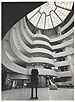 |
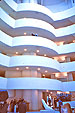
Guggenheim Museum Interior Circa
1960 (1956 - S.400). The sculpture in the foreground is "St. Sebastian, No.
2," 1957, by Eduardo Paolozzi, b. 1924, Leith, Scotland; d. 2005, London.
The sculpture in the background to the right is "The Miracle (Seal [I]) (Le
Miracle)," 1930-32, by Constantin Brancusi, b. 1876, Hobitza, Romania; d.
1957, Paris. Both were part of the Guggenheim collection. Label pasted to
verso: "The Solomon R. Guggenheim Museum, 1071 Fifth Avenue, New York 28, N.
Y. Interior of the Solomon R. Guggenheim." Original 8 x 10 B&W photograph.
|
1458.51.0216 |
1960
 |
Guggenheim Museum Interior 1960 (1956 -
S.400). Interior of the Solomon R. Guggenheim, photographed soon after the
grand-opening of the Guggenheim Museum. The sculpture in the foreground is
"St. Sebastian, No. 2," 1957, by Eduardo Paolozzi, b. 1924, Leith, Scotland;
d. 2005, London. The sculpture in the background to the right is "The
Miracle (Seal [I]) (Le Miracle)," 1930-32, by Constantin Brancusi, b. 1876,
Hobitza, Romania; d. 1957, Paris. Both were part of the Guggenheim
collection. Label pasted to verso: "Guggenheim Museum - Interior #2. This
interior of the six-story spiral museum designed by Frank
Lloyd Wright, shows the dramatic, curved, quarter-mile ramp along
which an extensive collection of 20th century 'non-objective' art is
displayed. Located in uptown Manhattan, this museum is a two-fold attraction
because of its unique architecture and its art treasurers. If possible,
please credit The New York Convention and Visitors Bureau." Stamped on
verso: "Apr 19 1977." Published in "The Solomon R. Guggenheim Museum," 1960,
p.39. Original 8 x 10 B&W photograph. |
1458.55.1216 |
C 1960
 |
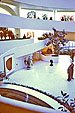
Guggenheim Museum Circa 1960 (1956 - S.400).
View of the interior looking down to the main floor and ramps from the upper
levels. On the mail level, just above the center, toward the entrance, is
the sculpture "St. Sebastian, No. 2," 1957, by Eduardo Paolozzi. To the
right of center is the sculpture "The Miracle (Seal [I]) (Le Miracle),"
1930-32, by Constantin Brancusi. It has not been moved since the grand
opening. By 1965, it had been moved from the main level, "Wright: il Museo
Guggenheim", Cresti, 1965. Both of these are visible in
S#1458.55. |
1458.77.0819 |
C 1960
 |
Guggenheim Museum Circa 1960 (1956 - S.400).
View of the interior looking down to the main floor and ramps from the upper
levels. On the mail level, just above the center, toward the entrance, is
the sculpture "St. Sebastian, No. 2," 1957, by Eduardo Paolozzi. To the
right of center is the sculpture "The Miracle (Seal [I]) (Le Miracle),"
1930-32, by Constantin Brancusi. It has not been moved since the grand
opening. By 1965, it had been moved from the main level, "Wright: il Museo
Guggenheim", Cresti, 1965. Clipping glued to verso: "Twentieth-century
masterpiece hang along this dramatic, curved quarter-mile ramp inside the
Solomon R. Guggenheim Museum." Stamped on clipping: "Mar 9 1986." Label
taped to verso: "Guggenheim Museum. This interior of the six-story spiral
museum designed by Frank Lloyd Wright, shows the dramatic, curved,
quarter-mile ramp along which an extensive collection of 20th-century art is
displayed. Located in uptown Manhattan, this museum is a two-fold attraction
because of its unique architecture and its art treasures." Original 10 x 8
B&W photograph. See S#1458.77 |
1458.121.1021 |
C 1960
 |
Guggenheim Museum Interior Circa 1960 (1956 -
S.400). Interior of the Solomon R. Guggenheim. View looking down toward the
pool and fountain. Possibly photographed soon after the grand-opening of the
Guggenheim Museum. The sculpture in the lower foreground was in a photograph
published in "The Guggenheim Museum,
Frank Lloyd Wright" 1960, pages 42, 47 and 68. Label pasted to face:
"University of California, Berkeley. 20th Century, United States. Wright, F.
L. Guggenheim Museum. New York City. 1956. Interior. Department of
Architecture." Acquired from the archives of the University of California,
Berkeley. Mounted to 14 x 11 gray board. Original 7.75 x 7.75 B&W
photograph. |
1458.67.1218 |
C 1960
 |
Guggenheim Museum Interior Circa 1960 (1956 -
S.400). Interior of the Solomon R. Guggenheim. View of the artwork displayed
along the ramp supports and outer walls. Photographed around the same time
as 1458.67. Label pasted to face:
"University of California, Berkeley. 20th Century, United States. Wright, F.
L. Guggenheim Museum. New York City. 1956. Interior. Department of
Architecture." Acquired from the archives of the University of California,
Berkeley. Mounted to 14 x 11 gray board. Original 7.75 x 7.75 B&W
photograph. |
1458.68.1218 |
C 1960
 |
Guggenheim Museum, New York, New York, Circa
1960 (1956 - S.400). Not dated. Set of 11 - 35mm slides. Distant view of the
Guggenheim Museum from the West. Designed by Frank Lloyd Wright from 1956.
Text on sleeve: "Wright, F. L. Guggenheim. 4-2. Guggenheim Museum. Ext.,
Distant view from the West. New York, NY, 1956-59. Wright, Frank Lloyd. U of
Virginia FAIC." Acquired from the archives of the University of Virginia.
35mm Color slide, sandwiched between glass, plastic mount.
|
1458.117.0920 (1 - 11) |
1960
 |
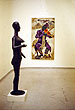
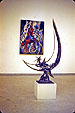
Guggenheim Museum, New York, New York, 1960
(1956 - S.400). Set of 10 - 35mm slides. View of the Guggenheim artwork
collection. Text hand written of sleeve: "Guggenheim - Chagall - Hiquily,
Black Goddess." "Black Goddess" by Hiquily is on the left. The Chagall is in
the background. Stamped on sleeve: "26. Oct 60." Kodachrome Transparency.
Acquired from the archives of the University of Virginia. 35mm Color slide.
|
1458.105.0720 - 1458.114.0720 |
C 1960
 |
1) Arthur Heurtley Cottage Remodeling,
Les Cheneaux, Marquette Island, Michigan, Circa 1960 (undated) (1902 -
S.075). In 1902 Frank Lloyd Wright designed a house for Arthur Heurtley in
Oak Park. Concurrently he remodeled a cottage for Heurtley on Marquette
Island, in Michigan. The renovation included alterations to the bedrooms and
bath on the first floor, and reconfiguring the basement to include a dining
room, kitchen and servant's quarters. Plans appear to indicate that the
"basement" was built into the slope. He also designed a fireplace for the
dining room. Mounted to
gray board. Label pasted to board: "W 20, USA Arch. Wright, F.L.. Les
Cheneaux, Mich. Heurtley Cottage. Exterior. C. D. Sheppard Neg."
Photographed by C. D. Sheppard. Acquired from the archives of the University
of Minnesota. Original 8 x 10 B&W Photograph. |
1458.92.0420 |
C 1960
 |
2) Arthur Heurtley Cottage Remodeling, Les
Cheneaux, Marquette Island, Michigan, Circa 1960 (undated) (1902 - S.075).
In 1902 Frank Lloyd Wright designed a house for Arthur Heurtley in Oak Park.
Concurrently he remodeled a cottage for Heurtley on Marquette Island, in
Michigan. The renovation included alterations to the bedrooms and bath on
the first floor, and reconfiguring the basement to include a dining room,
kitchen and servant's quarters. Plans appear to indicate that the "basement"
was built into the slope. He also designed a fireplace for the dining room. Mounted to
gray board. Label pasted to board: "W 20, USA Arch. Wright, F.L.. Les
Cheneaux, Mich. Heurtley Cottage. Exterior. C. D. Sheppard Neg."
Photographed by C. D. Sheppard. Acquired from the archives of the University
of Minnesota. Original 8 x 10 B&W Photograph. |
1458.93.0420 |
C 1960
 |
3) Arthur Heurtley Cottage Remodeling, Les
Cheneaux, Marquette Island, Michigan, Circa 1960 (undated) (1902 - S.075).
In 1902 Frank Lloyd Wright designed a house for Arthur Heurtley in Oak Park.
Concurrently he remodeled a cottage for Heurtley on Marquette Island, in
Michigan. The renovation included alterations to the bedrooms and bath on
the first floor, and reconfiguring the basement to include a dining room,
kitchen and servant's quarters. Plans appear to indicate that the "basement"
was built into the slope. He also designed a fireplace for the dining room. Mounted to
gray board. Label pasted to board: "W 20, USA Arch. Wright, F.L.. Les
Cheneaux, Mich. Heurtley Cottage. Exterior. C. D. Sheppard Neg."
Photographed by C. D. Sheppard. Acquired from the archives of the University
of Minnesota. Original 10 x 8 B&W Photograph. |
1458.94.0420 |
C 1960
 |
4) Arthur Heurtley Cottage Remodeling, Les
Cheneaux, Marquette Island, Michigan, Circa 1960 (undated) (1902 - S.075).
In 1902 Frank Lloyd Wright designed a house for Arthur Heurtley in Oak Park.
Concurrently he remodeled a cottage for Heurtley on Marquette Island, in
Michigan. The renovation included alterations to the bedrooms and bath on
the first floor, and reconfiguring the basement to include a dining room,
kitchen and servant's quarters. Plans appear to indicate that the "basement"
was built into the slope. He also designed a fireplace for the dining room. Mounted to
gray board. Label pasted to board: "W 20, USA Arch. Wright, F.L.. Les
Cheneaux, Mich. Heurtley Cottage. Exterior. C. D. Sheppard Neg."
Photographed by C. D. Sheppard. Acquired from the archives of the University
of Minnesota. Original 8 x 10 B&W Photograph. |
1458.95.0420 |
C 1960
 |
Stephen Hunt Residence II, Oshkosh,
Wisconsin, Circa 1960 (1917 - S.203.4). Viewed from the Northeast. Designed
by Frank Lloyd Wright in 1917. This was Hunt's second Wright designed house,
and one of Wright's American System Built Homes for Arthur L Richards. Label
pasted to board: "Arch. U.S.A. 20th cent. Frank
Lloyd Wright. Res. S.M.B. Hunt, Oshkosh, Wis. (1916). Wayne Andrews #2684.
Indiana University, Fine Arts Department." Photographed by
Wayne Andrews.
Acquired from the archives of the Indiana University. Original 9.5 x 7.5 B&W
Photograph. (S#1458.115) |
1458.115.0920 |
1960
 |
S.C. Johnson Headquarters, Racine, Wisconsin,
1960 (1936 - S.237). Red Skeleton visits S. C. Johnson Administration
Building designed by Frank Lloyd Wright in 1936. Photograph of Red Skelton
with his film crew. Red Skelton is portrayed behind the camera as his film
character, Clem Kadiddlehopper. The S. C. Johnson elevator (left) and column
(right) can be seen in the background. Hand written bottom right: “November
1960.” Stamped on verso: “Photographic Dept. Neg # 18885. S. C. Johnson &
Son, Inc., Racine, Wisconsin.” Original 10 x 8 B&W photograph. |
1458.141.1024 |
1960
 |
Herbert F. Johnson Wingspread
(1937 - S.239) 1960. Clipping pasted to verso: "Racine, Wis. - Aerial view
shows advanced design of Wingspread, huge 'prairie house' designed by the
late Frank Lloyd Wright and built near Racine in 1938. Its opening as a
conference center was announced by the Johnson Foundation, with the first
parley there to be a meeting of the Midwest Regional American assembly Nov.
17-20. Authorities on foreign relations will discuss who should be next
secretary of state. Home formerly was residence of H. F. Johnson, board
chairman of S. C. Johnson & Sons, Inc., wax manufacturers", stamped "Nov 12,
1960". Published in "The Johnson
Foundation, Wingspread" 1961. Acquired from the archives of the Chicago
Tribune. Original 10 x 6.9 B&W photograph. |
1458.37.1211 |
1960
 |
Herbert F. Johnson Wingspread
(1937 - S.239) 1960. View of the home from the South. The swimming pool is
on the right in the foreground, the center of the home with the tower is in
the background. Caption pasted to verso: "An exterior view of Wingspread,
above, shows clerestory roof of Frank Lloyd Wright designed building with
glass observation tower dominating the domed central portion of the
structure. The building at Wind Point, North of Racine, Wisconsin, will
serve as a conference center and as administrative headquarters for the
Johnson Foundation." Stamped on verso: "From the photographic dept. S. C.
Johnson & Son, Inc. Negative No. 18758-6." "Reference Dec 2 60, N. E. A."
Herbert F. Johnson (1899 - 1978) donated their home, Wingspread, to The
Johnson Family Foundation in 1959 as an international educational conference
facility. Original 10 x 8 B&W photograph. |
1458.52.0316 |
C 1960
 |
Herbert F. Johnson
Wingspread, Circa 1960 (1937 - S.239). View of the
cantilevered Master Bedroom, from the South East. During
construction of the SC Johnson & Son Administration Building
(1936 - S.237), H.F. Johnson commissioned Frank Lloyd Wright
to design his home in Wind Point, Wisconsin. "At the center of
four zones forming a cross, a spacious wigwam of a Living Room
stands. A tall central brick chimney stack with five
fireplaces on four sides divides this large vertical central
living space into four areas for the various domestic
functions: Entrance, Family Living, Library and Dining Room.
Extending from this great, dignified central wigwam are the
four wings. This extended zoned-wing-plan lies, very much at
home, quiet and integral with the prairie landscape which is,
through it, made more significant and beautiful." Frank Lloyd
Wright, An
Autobiography, 1943, p.476. Published in
Architecture in
Chicago & Mid-America, Andrews, 1968, p.122. Mounted
to gray board. Label pasted to board: "W 20, USA Arch. Wright,
F. L. Racine, Wisconsin. Wingspread (H.F. Johnson House.)
Bedroom Wing. Andrews Photo 2578." Photographed by
Wayne Andrews. Acquired from the archives of the University of
Minnesota. Original 9.5 x 7.5 B&W Photograph. |
1458.89.0420 |
1960
 |
Herbert F. Johnson Residence, Wingspread 1960
(1937 - S.239). View of the Living Room from the mezzanine. Hand written on
verso: "The Johnson Foundation has opened Wingspread the Frank Lloyd Wright
designed home, which will be used as the foundation administrative
headquarters and conference center. (SC Johnson and Son Corp.)." Clipping
pasted to verso: "The building is designed around a central room. A view
from the mezzanine shows just a section of the room. The spiral stair at
right leads to an observation tower." Stamped on clipping: "Nov 11 1960."
Acquired from the archives of the Milwaukee Sentinel. Original 8 x 10 B&W
photograph. |
1458.62.1217 |
1960
 |
Karen Johnson
Keland Residence, Racine, Wisconsin 1960 (1954 - S.368). View
of the Living Room from the balcony looking North. The doors
on the left open to the veranda. Designed by Frank Lloyd
Wright in 1954. Karen Johnson is the daughter of H. F.
Johnson, S.C. Johnson & Son
Administration Building (1936 - S.239). Her first
husband, Willard Keland, was president of the River
Development Corporation which built the
River Terrace Restaurant
(1953 - S.367). Stamped on verso: "May 13 1960." Hand written
on verso: "Racine, Wisc - Keland Home. Frank Lloyd Wright -
Homes Designed by Him." Acquired from the archives of the
Milwaukee Journal. Original 4 x 5 B&W photograph. |
1458.123.1121 |
1960
 |
Karen Johnson
Keland Residence, Racine, Wisconsin 1960 (1954 - S.368). View
of the Living Room from the Northwest. The doors on the left
open to the veranda. Fireplace is in the center, the kitchen
is tucked behind it. The dining area is in the foreground to
the right. The windows view the open patio. Designed by Frank
Lloyd Wright in 1954. Karen Johnson is the daughter of H. F.
Johnson, S.C. Johnson & Son
Administration Building (1936 - S.239). Her first
husband, Willard Keland, was president of the River
Development Corporation which built the
River Terrace Restaurant
(1953 - S.367). Stamped on verso: "May 13 1960." Hand written
on verso: "Racine, Wisc - Keland Home. Frank Lloyd Wright -
Homes Designed by Him." Acquired from the archives of the
Milwaukee Journal. Original 4 x 5 B&W photograph. |
1458.120.0921 |
1960
 |
Karen Johnson
Keland Residence, Racine, Wisconsin 1960 (1954 - S.368). View
of the balcony. The living room's vaulted ceiling can be seen
in the background. Designed by Frank Lloyd Wright in 1954.
Karen Johnson is the daughter of H. F. Johnson, S.C. Johnson & Son
Administration Building (1936 - S.239). Her first
husband, Willard Keland, was president of the River
Development Corporation which built the
River Terrace Restaurant
(1953 - S.367). Stamped on verso: "May 13 1960." Hand written
on verso: "Racine, Wisc - Keland Home. Frank Lloyd Wright -
Homes Designed by Him." Acquired from the archives of the
Milwaukee Journal. Original 4 x 5 B&W photograph. |
1458.125.1221 |
1960
 |
Karen Johnson
Keland Residence, Racine, Wisconsin 1960 (1954 - S.368). View
of the Playroom from the Southeast. The Veranda is to the
left. Designed by Frank Lloyd Wright in 1954. Karen Johnson is
the daughter of H. F. Johnson, S.C. Johnson & Son
Administration Building (1936 - S.239). Her first husband,
Willard Keland, was president of the River Development
Corporation which built the
River Terrace Restaurant
(1953 - S.367). Stamped on verso: "May 13 1960." Hand written
on verso: "Racine, Wisc - Keland Home. Frank Lloyd Wright -
Homes Designed by Him." Original 4 x 5 B&W photograph. |
1458.104.0820 |
C 1960
 |
Kenneth & Phyllis Laurent
Residence Exterior Circa 1960 (1949 - S.319). Designed by
Frank
Lloyd Wright in 1949, it was the third
"hemicycle" designed by Wright. The first was the Jacobs II (1944). He also
designed the Meyer (1948), Laurent (1949), Pearce (1950), Lewis (1952),
Marden (1952), Llewellyn Wright (1953), Cooke (1953), Rayward (1955) and the
Spencer (1956). Kenneth Laurent was a paraplegic, so the home was designed
with ease of accessibility for a wheelchair. Photographed by
Wayne Andrews
circa 1965. Mounted to gray board. Label pasted to board: "University of California, Berkeley. 20c
US. Wright, F.L.. Laurent House, 1951. Rockford, Illinois. Andrews 2825.
Department of Architecture." Photographed by
Wayne Andrews. Published in "Architecture in Chicago &
Mid-America," Andrews, 1968, p.129. Acquired from the archives of the
University of California, Berkeley. Mounted to 14 x 11 gray board. Original
9.5 x 7.5 B&W photograph. |
1628.64.1218 |
C 1960
|
Kenneth & Phyllis Laurent Residence Exterior
Circa 1960 (1949 - S.319). Viewed from the West. Designed by Frank Lloyd
Wright in 1949, it was the third "hemicycle" designed by Wright. The first
was the Jacobs II (1944). He also designed the Meyer (1948), Laurent (1949),
Pearce (1950), Lewis (1952), Marden (1952), Llewellyn Wright (1953), Cooke
(1953), Rayward (1955) and the Spencer (1956). Kenneth Laurent was a
paraplegic, so the home was designed with ease of accessibility for a
wheelchair. Mounted to gray board. Label pasted to board: "West 20, US Arch.
Wright. Rockford, Illinois. K. Laurent House, 1951. Ext: View A. Andrews
Photo 2825." Photographed by Wayne
Andrews. Published in "Architecture in Chicago &
Mid-America," Andrews, 1968, p.129. Acquired from the archives of
the University of Minnesota. Original 10 x 8 B&W Photograph. |
1458.86.0420 |
C 1960
 |
Kenneth & Phyllis Laurent Residence Exterior
Circa 1960 (1949 - S.319). Viewed from the West. Designed by Frank Lloyd
Wright in 1949, it was the third "hemicycle" designed by Wright. The first
was the Jacobs II (1944). He also designed the Meyer (1948), Laurent (1949),
Pearce (1950), Lewis (1952), Marden (1952), Llewellyn Wright (1953), Cooke
(1953), Rayward (1955) and the Spencer (1956). Kenneth Laurent was a
paraplegic, so the home was designed with ease of accessibility for a
wheelchair. Mounted to gray board. Label pasted to board: "West 20, US Arch.
Wright. Rockford, Illinois. K. Laurent House, 1951. Ext: View B. Andrews
Photo 2826. Photographed by Wayne
Andrews. Similar view published in "Architecture in Chicago &
Mid-America," Andrews, 1968/1973, p.129. Acquired from the
archives of the University of Minnesota. Original 10 x 8 B&W Photograph. |
1458.87.0420 |
1960
 |
Marin County Civic Center Aerial View 1960
(S.416-417 - 1957). Viewed from the Northeast. Designed by Frank Lloyd
Wright in 1957, ground was broken on February 15, 1960. The Administration
Building (phase one) was completed and dedicated October 13, 1962. Almost
three months since work has begun, earth has been moved, roads have begun to
be take shape, and work has begun on the on and off ramp between the
property and the freeway. Stamped on verso: "Date photographed May 4, 1960."
Stamped on face: "Aero Portraits. Aerial & Commercial Photography.
Sausalito, Calif." Lucile Fessenden Dandelet (1919-2007) earned her degree
in Photo-Journalism at Wellesley College. A resident of San Anselmo for five
decades, she specialized in architecture and has been recognized for her
photographs of Frank Lloyd Wright work. Ten photographs of the Marin County
CC were published in the December 1970 issue of Architectural Forum. An
exhibit of Dandelet work was held in 1974 and in 2004 at the Marin County's
Civic Center highlighting the construction from the first bulldozer on. Her
collection is now part of the permanent J. Paul Getty Museum Photographic
Collection. Original 10 x 8 B&W photograph. |
1458.56.0217 |
1960
 |
Marin County Civic Center Aerial View 1960
(S.416-417 - 1957). Viewed from the Northwest. Designed by Frank Lloyd
Wright in 1957, ground was broken on February 15, 1960. The Administration
Building (phase one) was completed and dedicated October 13, 1962.
Construction has begun on the center of the Administration Building. The on
and off ramp between the property and the freeway, begun in the earlier
image has been paved. Two houses located on the eastern corner of the
property have been removed. The large circular property has been leveled.
The lagoon has not yet been dug. Stamped on face: "Aero Portraits. Aerial &
Commercial Photography. Sausalito, Calif." Original 10 x 8 B&W photograph. |
1458.57.0217 |
C 1960
 |
Curtis Meyer Residence, Galesburg, Michigan,
C 1960 (1948 - S.297). Viewed from the Southeast. Designed by Frank Lloyd
Wright in 1948. The kitchen, dining and living rooms are on the lower level.
Bedrooms, bath and study are on the second level. The entrance, on the far
left out of the picture, enters the two-story circular drum, midway between
the first and second levels, with circular stairs leading up to the second
level and down to the lower. The Kitchen and study are in the foreground on
the left, Living room and bedrooms in the background. The Meyer Residence
was the second "hemicycle" designed by Wright. Ten in all: Jacobs II (1944),
Meyer (1948), Laurent (1949), Pearce (1950), Lewis (1952), Marden (1952),
Llewellyn Wright (1953), Cooke (1953), Rayward (1955) and the Spencer
(1956). Mounted to gray board. Label pasted to board: "West 20, US Arch.
Wright. Galesburg Village, Michigan. C. Mayer (sic) House, 1951. Ext.
Andrews Photo 2854. Photographed by Wayne
Andrews. Published in:
"Architecture in Michigan," Andrews, 1967, p.43; "Architecture in Chicago &
Mid-America," Andrews, 1968/1973, p.125. Acquired from the archives of the
University of Minnesota. Original 10 x 8 B&W Photograph. |
1458.88.0420 |
C 1960
 |
Dudley Spencer Residence, Wilmington,
Delaware, Circa 1960 (1956 - S.402). View of the Dudley Spencer Residence.
Designed by Frank Lloyd Wright in 1956. The first design, Scheme #1, an
L-shaped Usonian house with a living room roof that slopes upward, was
rejected by the Spencers. Scheme #2 was accepted. Scheme #2 is what Frank
Lloyd Wright called a solar Hemicycle. Very similar to the Laurent (1949)
and Pearce (1950) Residences. The Spencers moved into their home in 1959.
“Inside is Wright's trademark central hearth and built-in furniture designed
by the architect himself. The stone came from Avondale, Pennsylvania, and
Cumberland Ridge, Tennessee (where Wright had built a Usonian house of this
type of stone in 1950). The woodwork is Honduras mahogany, and steel
supports the cantilevered roof. The carport was added later.ť W. Barksdale
Maynard, Society of Architectural Historians, University of Virginia Press.
Photo courtesy of the Society of Architectural Historians. 10 x 8 B&W
photograph. |
1458.134.0523 |
1960
 |
Taliesin, Spring Green Catwalk and Living
Room from Below Circa 1960 (1925 - S.218). View looking up toward the
Catwalk on the left and the Living Room on the right. Photographed by
Wayne Andrews circa 1960, possibly 1945, but going by the Andrew's numbering
system, 1945s were numbered in the 900s. Photographed at the same time as
1458.65 and
1458.66 Label pasted to face:
"University of California, Berkeley. 20th Century - United States. Wright,
Frank Lloyd. Taliesin East. Spring Green, Wisconsin. 1925 -. Far View.
Andrews 2053. Department of Architecture." Published in "Architecture in
America" Andrews, 1960/1977, p.136. Acquired from the archives of the
University of California, Berkeley. Mounted to 14 x 11 gray board. Original
9.5 x 7.5 B&W photograph. |
1458.64.1218 |
1960
 |
Taliesin, Spring Green, Mr. Wright's Bedroom
Circa 1960 (1925 - S.218). View of Mr. Wright's Bedroom from the West. A
planter is built-in to both exterior corners. The corner of the pool can be
seen in the lower left. Stairs lead down to the Terrace, and the Balcony is
to the right. Photographed by
Wayne Andrews circa 1960, possibly 1945, but
going by the Andrew's numbering system, 1945s were numbered in the 900s.
Photographed at the same time as 1458.64
and 1458.65. Label pasted to face:
"University of California, Berkeley. 20th Century - United States. Wright,
Frank Lloyd. Taliesin East. Spring Green, Wisconsin. 1925 -. Mrs. Wright's
wing. Close-up. Andrews 2057. Department of Architecture." Acquired from the
archives of the University of California, Berkeley. Mounted to 14 x 11 gray
board. Original 9.5 x 7.5 B&W photograph. |
1458.65.1218 |
1960
 |
Taliesin, Spring Green, Mr. Wright's Bedroom
Circa 1960 (1925 - S.218). View of Mr. Wright's Bedroom from the southwest.
The fireplace mass for Mr. Wright's bedroom fireplace is on the left. A
planter is built-in to both exterior corners. Stairs lead down to the
Terrace, the Balcony is to the right. Photographed by
Wayne Andrews circa
1960, possibly 1945, but going by the Andrew's numbering system, 1945s were
numbered in the 900s. Photographed at the same time as
1458.64 and
1458.65. Label pasted to face:
"University of California, Berkeley. 20th Century - United States. Wright,
Frank Lloyd. Taliesin East. Spring Green, Wisconsin. 1925 -. Mrs. Wright's
wing. Far View. Andrews 2058. Department of Architecture." Published in
"Architecture in America" Andrews, 1960/1977, p.138. Acquired from the
archives of the University of California, Berkeley. Mounted to 14 x 11 gray
board. Original 9.5 x 7.5 B&W photograph. |
1458.66.1218 |
1960
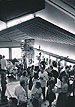 |
Taliesin, Spring Green Living Room 1960 (1925
- S.218). View looking down from the balcony. Guests are attending Frank
Lloyd Wright's traditional birthday celebration on the 8th of June. Although
he had past away, Taliesin continued to celebrate his birthday.
Olgivanna's
invitation read: "We are traditionally celebrating Mr. Wright's
birthday on June 8th at Taliesin. We would like to have you with us for 7
o'clock formal dinner and the concert which will follow. (Signed) Love
Olgivanna Lloyd Wright." Clipping pasted to verso: "Guests filled the main
living room, noted for a ceiling that soars to impressive height in a
variety of levels. Rich oriental rugs are set off by floors of stone and
polished wood." Hand written on verso: "Frank L:loyd Wright - Homes of
-
Taliesin." Stamped on verso: "1960 June 9" and "Theodore Rozumalski."
Photographed by Theodore Rozumalski. Original 7.25 x 10.25 B&W photograph. |
1458.76.0819 |
1960
 |
Taliesin West Circa 1960 (1937 - S.241). View
of Mr. Wright's office and the courtyard fountain from the east. The
fountain was added in 1956. Early photographs show the fountain as a bowl
(1259.59-4). By 1959, it matched this shape, "Frank
Lloyd Wright Select Houses 3" Pfeiffer,
1989, p.48. The light pole in the background has a flag. Mr. Wright's office
was also dramatically altered since 1940 (531.74).
Label pasted to face: "University of California, Berkeley. 20th Century,
United States. Wright, Frank Lloyd. Taliesin West. Phoenix, Arizona. Back of
study and water fountain 1938. Don Palmer photo. Department of
Architecture." Acquired from the archives of the University of California,
Berkeley. Mounted to 14 x 11 gray board. Original 9.25 x 7.5 B&W photograph. |
1458.69.1218 |
1960
 |
Taliesin West 1960 (1937 - S.241). Taliesin
Fellowship orchestra rehearse in the Cabaret Theater at Taliesin West.
Caption pasted to verso: "No curriculum. The late Frank Lloyd Wright wanted
his students to be "free to be what you are." He said his school of
architecture had no curriculum - "only an ideal based upon thought." Now his
work is being carried on at Taliesin West in Arizona. Here in orchestral
group - part of the school's many activities - rehearses at a theater On the
grounds. (For use Sunday, June 12 with Relman Morin's Scottsdale, Ariz., APN
story on Wright's legacy.) Stamped on verso: "Jun 13 1960." Original 10 x 8
B&W photograph. |
1458.75.0819 |
1960
 |
Taliesin West, Scottsdale, Arizona, 1960 (1937 - S.241). Set of four 35mm
slides. View of Mr. Wright's office, Pergola and Drafting Room from the
Northwest. The office is on the left, pergola in the center and drafting
room on the right. The slide is stamped "35. Aug 60." Original 35mm Color
Kodachrome Transparency slide and high res digital scan.
|
1458.118.0321 (1-4) |
1960
 |
Unity Temple, Oak Park, Illinois 1960 (1904 -
S.096). Viewed from the North from Lake Street of the exterior of Unity
Temple's main sanctuary. The entrance is on the right. Designed by Frank
Lloyd Wright in 1904. The walls were executed in poured concrete. Soft
indirect lighting floods the inner sanctuary from the upper stained glass
windows. The reader board reads: "Unitarian Universalist Church. Services
Resume September 11 (1960). Robert M. Rice, Minister." The large urn is
missing on the wall to the right of the entrance stairs. The metal plaque on
the far right by the entrance reads The Universalist Church. Published in
Architecture in
Chicago & Mid-America, Andrews, 1968, p.70. Mounted to
gray board. Label pasted to board: "W 20, USA Arch. Wright. Oak Park,
Illinois. Unity Temple. 1906. Ext: North. Andrews Photo 2815." Photographed
by
Wayne Andrews.
Acquired from the archives of the University of Minnesota. Original 9.5 x 8
B&W Photograph. |
1458.91.0420 |
1960
 |
Olgivanna Wright Visits Milan, Italy, 1960.
Olgivanna appears to be speaking. Clipping pasted to verso: "Milan Italy
-
UPI - The widow of Wisconsin architect Frank Lloyd Wright was guest of honor
on Thursday night at a dinner given by some of the man she had criticize
severely on the 24 hours earlier. The dinner was sponsored by Milan's
College of architects. Mrs. Olgivanna Wright is in Milan for the Triennale
art show here. In a speech at the show Wednesday night, she assailed
architects who "falsify" her late husband's ideas. She said her husband was
a great genius and only architects from his Taliesin centers in Wisconsin
and Arizona were his true followers and spiritual sons." Stamped on verso:
"Oct 14 1960." Original 8 x 10 B&W photograph. |
1458.71.0719 |
1960
 |
Wright in 1960. Caption on
verso: "Double Exposure. Rome: Almost real as life, a giant portrait of the
late American architect Frank Lloyd Wright is the camera target of a
shutterbug who is herself caught candidly on film in Rome. The Wright
portrait is part of an exhibition detailing his achievements and designs in
the last ten years of life. Wright died at the age of 89 in early 1959. (UPI
Photo) 12/22/60." Acquired from the archives of the Chicago Daily News.
Original 9 x 7 B&W print. |
1458.31.0310 |
| 1961 |
1961
 |
Gregor S. Affleck
House, 1961 (1940 - S.274), Bloomfield Hills, Michigan. Designed by
Frank
Lloyd Wright in
1940, the home was completed in 1941. Viewed from the Southeast, down in the
ravine. The Living Room and Balcony are cantilevered out over the ravine on
the left, the Dining Room, Workspace and Carport are on the right. Gregor
Affleck was born in born 1898. Elizabeth Affleck, born 1903. He was about 43
years when they moved into the home and would have been about 63 when this
photograph was taken, so he is most-likely the gentleman in the foreground.
They lived in the home until their deaths, Elizabeth in 1973 and Gregor in
1974. The home was donated to the Lawrence Institute of Technology in 1977.
Photographed in July, 1961 by Joe Clark. 10 x 6.25 B&W photograph. |
1483.24.0514 |
1961
 |
Gregor S. Affleck
House, 1961 (1940 - S.274), Bloomfield Hills, Michigan. Designed by Frank
Lloyd Wright in
1940, the home was completed in 1941. Viewed from the South, the three
bedrooms and two baths are on the left. The Loggia, with four sets of floor
to ceiling doors, and balcony are in the center. The Living Room and Balcony
are cantilevered out over the ravine on the right. Greger Affleck was born
in born 1898. Elizabeth Affleck, born 1903. He was about 43 years when they
moved into the home and would have been about 63 when this photograph was
taken, so he is most-likely the gentleman in the foreground. Hand written on
verso: "7-18-16." Stamped on verso: "Joe Clark, H.B.S.S., 20 Bartlett at
Woodward, Detroit 3, Michigan, TUlsa 3-3912, Photographic Ideas. Pictures
that tell a story." They lived in the home until their deaths, Elizabeth in
1973 and Gregor in 1974. The home was donated to the Lawrence Institute of
Technology in 1977. Original 13.5 x 9.25 B&W photograph. |
1483.23.0514 |
1961
 |
Annie Pfeiffer Chapel (1938 -
S.251) 1961. Viewed from the west. Wright's first visit to the Florida
Southern College campus was in May, 1938. The ground breaking ceremony for
the Annie Pfeiffer Chapel was held on May 24, 1938. Wright's second visit
was in December, 1938 to oversee construction of the Chapel. Dedicated or
the Annie Pfeiffer Chapel was held on March 9, 1941. Label taped to verso:
"Smooth, flowing lines and unusual features characterize the Annie
Pfeiffer
Chapel on the Florida Southern College campus at Lakeland designed by the
famous but controversial architect, the late Frank
Lloyd Wright.
Other buildings designed by Wright on this central Florida campus include
the Administration Building, Science Building, Library, and small chapel.
(36695-9-1-61) News Bureau of the Florida Development Commission,
Tallahassee. Florida State News Bureau." Stamped on verso: "Aug 3 1963."
Original 10 x 8 B&W photograph. |
1483.20.0113 |
1961
 |
Annunciation Greek Orthodox
Church Set of Four Prints 1961 (1956 - S.399). Designed by
Frank
Lloyd Wright in 1956, the ground breaking ceremony took place
a month after Wrights death on May 18, 1959, in Wauwatosa, a suburb of
Milwaukee. The church was dedicated on July 2, 1961. Set of four color
photographed in 1961 after the completion of the church. 1) View of the
church from the Southeast. 2) Stylized cross designed by
Frank
Lloyd Wright stands at the Entrance. 3) View of the
interior balcony and sanctuary. The alter is to the right. The stairway
wraps around a light tree. 4) Detail of the stairway light tree.
Stamped on verso: "October 1961." Four 5 x 7 color photographs.
|
1483.31.0415 (A-D) |
1961
 |
Hotel
Geneva Terrace, January 1961. Looking West along enclosed Southwest Terrace.
Originally Terrace was not enclosed. The Dining Room is on the right. The wall
sconces on right are original. Windows, ceiling light fixtures and the
radiator on the right were added after enclosure. Original 3.5 x 3.5
(Digital version)
Thank you to Allen Hermansen for providing an original copy.
(See Wright Study.) |
1483.11.0209 |
1961
 |
Hotel
Geneva Engine Room, January 1961. This panel controlled the Boiler System.
Notice the illustration on the right on the Boiler Systems. The Panel
indicates that there were two Boiler Systems. Original 3.5 x 3.5
(Digital version)
Thank you to Allen Hermansen for providing an original copy.
(See Wright Study.) |
1483.12.0209 |
1961
 |
Hotel
Geneva Boiler System, January 1961. The Boiler System was controlled by the panel in
the Engine Room. Al Hermansen indicated that it was a coal operated system.
The Hotel Geneva was kept open during the winter of 1961 as a test for the
Eisenhower Administration. They were looking at the site as a possibility for
the Air Force Academy. Many politicians and press visited. Coal trucks
delivered coal daily. It was built as a summer Hotel, hence there was no
insulation. Original 3.5 x 3.5
(Digital version) Thank you to Allen Hermansen for
providing an original copy. (See Wright Study.) |
1483.13.0209 |
1961
 |
Marin County Civic Center Model
1961 (S.416-417 - 1957). Clipping pasted to verso: "The Miami Herald,
Sunday, July 9, 1961. Dream of the late
Frank
Lloyd Wright for a
Marin County (California) Civic Center 'So flexible and simple as to be
almost unbelievable' is taking shape in the rolling hills north of San
Rafael. This artist's conception shows the $12 million center as it will
appear when completed. The circular structure at left is the auditorium. The
round center of the 'crippled V' type of building is the library. Behind the
curved arches of the wings are corridors running the full length of the
building. Glassed-in offices will open to them. United Press International
Photo." Stamped on verso: "Jun 28 1961." Acquired from the archives of the
Miami Herald. Original 7 x 9 B&W photograph. |
1483.22.0214 |
1961
 |
Roloson Rowhouses (1894 S.026)
1961. Photographed on June 26, 1961 by Chicago Daily News photographer
Robert Stiewe. Stamped on verso: "Daily News. Dec 13, 1961." Caption pasted on verso:
"Little-known landmarks, the 'Roloson houses' at 3213-19 S. Calumet, were
built by
Frank
Lloyd Wright in
the 1890s. For many years they were lost to architectural memory. Today they
stand in the midst of a bad slum marked almost entirely for clearance. Will
they too be cleared? Nobody knows." Acquired from the archives of the
Chicago Daily News. Original 10 x 8 B&W print. Two original 4x5 B&W
negative and one High Res 46 x 36" B&W photograph..
For more informamtion see our
Wright Study on Robert W. Roloson
Rowhouses. |
1483.15.0310 1483.17.0910
1483.27.0915 |
|
|
1962 |
1962
 |
Guggenheim Museum,
New York, New York, Circa 1962 (1956 - S.400). View of the
Guggenheim Museum from the Northwest. Designed by Frank Lloyd
Wright from 1956. Guggenheim opened on October 21, 1959. Label
pasted to verso: “Guggenheim. The Solomon R, Guggenheim
Museum. Guggenheim Exterior. Photo: Robert E. Mates.” Robert
E. Mates served as a long-time photographer for the Solomon R.
Guggenheim Museum through the tenure of two museum directors:
Hilla von Rebay and James Johnson Sweeney. Mates started work
in the Museum Photographic department under the supervision of
Hannes Beckman and was eventually promoted to the head of the
department. Mates documented the history of the Guggenheim
Museum. His collection. Housed in the archives at the
Guggenheim Museum, span the years between 1939-2004.
Stamped on verso: “Library. June 26 1986. Houston, Texas.”
Although dated 1986, it was most likely photographed circa
1962. There is a 1961-1963 Ford T-Bird parked out front to the
far right. Acquired from the archived of the Houston Library.
Original 10 x 8 B&W photograph. |
1526.68.0324 |
1962
 |
Guggenheim Museum Circa 1962 (1956 - S.400).
Exterior view of the Guggenheim Museum from the Southwest. Hand written on
verso: "New York City Museums. 5-16-86." Label pasted to verso: "Guggenheim.
The Solomon R, Guggenheim Museum. Photo: Robert E. Mates." Robert E. Mates
served as a long-time photographer for the Solomon R. Guggenheim Museum
through the tenure of two museum directors: Hilla von Rebay and James
Johnson Sweeney. Mates started work in the Museum Photographic department
under the supervision of Hannes Beckman and was eventually promoted to the
head of the department. Mates documented the history of the Guggenheim
Museum. His collection. Housed in the archives at the Guggenheim Museum,
span the years between 1939-2004. Original 10 x 8 B&W photograph. |
1986.80.0218 |
1962
 |
Guggenheim Museum,
New York, New York, 1962 (1956 - S.400). View of Zia Mohyeddin
with the Guggenheim Museum in the background. Designed by
Frank Lloyd Wright in 1956. Zia Mohyeddin was a Pakistani
actor, born in idea. He trained at the Royal Academy of
Dramatic Arts in London from 1953-1956. Clipping taped to
verso: "A New Eastern Star. Zia Mohyeddin pauses to read a
card from his sister. Behind him looms the odd-shaped
Guggenheim Museum, the Frank Lloyd Wright architectural
achievement, which is just around the corner from the actor's
hotel. 3-24-62." Original 8 x 10 B&W photograph. |
1526.64.0721 |
1962
 |
Guggenheim Museum, New York, New York, 1962 (1956 - S.400).
View of the installation of Rodin's "Burghers of Calais" in
front of the Guggenheim Museum. Clipping taped to verso: "New
York: Workmen affix Rodin's "Burghers of Calais" into place in
the sunken garden in front of Guggenheim Museum on New York's
Fifth Avenue, July 16th. The four-ton statue represents
Eustache de Saint Pierre and his fellow burgers delivering the
key to Calais to Edward III of England in 1884. 7/16/62. Original 8 x 10 B&W photograph. |
1526.66.1222 |
1962
 |
Imperial Hotel, Tokyo, Japan, Circa 1962
(1915 - S.194). View of the front entrance from across the
reflecting pool. Text on building: “Imperial Hotel.” The 1958
Annex can be seen in the background above the roof line. Frank
Lloyd Wright was commissioned and began designs in 1915. Early
preliminary drawings are dated 1913. Construction began in
1917 and on July 4, 1922 the first section of Wright’s
Imperial Hotel opened. In August 1923 the hotel was complete.
On September 1, 1923 a major earthquake destroyed Tokyo. The
Imperial Hotel stood. A Tribute to Wright.
Clipping taped to verso: “Maturity News Service. Week of Nov.
14, 1988. The original Imperial Hotel, designed by Frank Lloyd
Wright, completed in 1923.” Stamped on verso: “Houston
Chronicle Library.” Acquired from the archives of the Houston
Chronicle. Original 8 x 6 B&W photograph. |
1526.69.1924 |
1962
 |
Charles L. Manson House, Wausau,
Wisconsin, 1962 (1938 - S.249). Viewed from the Southeast.
Designed by Frank Lloyd Wright in 1938. Constructed of brick
and cypress, the house is built on a sloping lot. Wright
accounts for the change in typography by stair-stepping down
to different levels. From the carport, stairs lead down to the
entry and front door. From the interior entryway, stairs lead
down again to the gallery level. At the end of the gallery,
stairs lead down again to the living room level. Floor to
ceiling door in the living room lead out to the terrace. From
the terrace, stairs lead down to the grass. A portion of the
house in the center has a second level and includes a bedroom
and dark room. Standard Usonian sandwich walls are three
layers thick, a center layer of plywood, faced on both sides
by finished horizontal board and batten wood. The Manson
sandwich walls are five layers thick. Three center layers of
plywood, faced on both sides by horizontal board and batten
cypress. Wright eliminated most 90 degree corners, utilizing
30- and 60-degree angles enabling the feel of the house to
flow from one end to the other. Original 5 x 3.5 B&W
photograph. |
1526.04.0207 |
1962
 |
Charles L. Manson House, Wausau,
Wisconsin, 1962 (1938 - S.249). Viewed from the Southeast.
Designed by Frank Lloyd Wright in 1938. Constructed of brick
and cypress, the house is built on a sloping lot. Wright
accounts for the change in typography by stair-stepping down
to different levels. From the carport, stairs lead down to the
entry and front door. From the interior entryway, stairs lead
down again to the gallery level. At the end of the gallery,
stairs lead down again to the living room level. Floor to
ceiling door in the living room lead out to the terrace. From
the terrace, stairs lead down to the grass. A portion of the
house in the center has a second level and includes a bedroom
and dark room. Standard Usonian sandwich walls are three
layers thick, a center layer of plywood, faced on both sides
by finished horizontal board and batten wood. The Manson
sandwich walls are five layers thick. Three center layers of
plywood, faced on both sides by horizontal board and batten
cypress. Wright eliminated most 90 degree corners, utilizing
30- and 60-degree angles enabling the feel of the house to
flow from one end to the other. Original 5 x 3.5 B&W
photograph. |
1526.05.0207 |
1962
 |
Marin County Civic Center
Administration Building Under Construction Near Completion Circa 1962 (S.416
- 1957). Viewed from the Northwest. Designed by Frank Lloyd Wright in 1957,
ground was broken on February 15, 1960. The Administration Building (phase
one) was completed and dedicated October 13, 1962. Work is still taking
place on the exterior. Tower is still under construction. Roads are in place
but unpaved. Parking retaining walls on the right are in place and ground
has been leveled. Stamped on face: "Dandelet." Stamped on verso: "Dandelet.
Marin County, California." Original 10 x 8 B&W photograph. |
1526.21.0217 |
1962
 |
Marin County Civic Center
Administration Building Under Construction Near Completion Circa 1962 (S.416
- 1957). Viewed from the North. Designed by Frank Lloyd Wright in 1957,
ground was broken on February 15, 1960. The Administration Building (phase
one) was completed and dedicated October 13, 1962. Work is still taking
place on the exterior. Tower is still under construction. Stamped on face: "Dandelet."
Stamped on verso: "Dandelet. Marin County, California." Original 10 x 8 B&W
photograph. |
1526.22.0217 |
1962
 |
Marin County Civic Center
Administration Building Under Construction Near Completion Circa 1962 (S.416
- 1957). Viewed from the Northwest. Designed by Frank Lloyd Wright in 1957,
ground was broken on February 15, 1960. The Administration Building (phase
one) was completed and dedicated October 13, 1962. Work is near completion
on the exterior. Work is still taking place on the tower, but it also is
near completion. Curbs and sidewalks have been installed. Stamped on verso:
"Dandelet Photographs. 126 Redwood Road - San Anselmo, Calif." Original 10 x
8 B&W photograph. |
1526.23.0217 |
1962
 |
Marin County Civic Center
Administration Building Under Construction Near Completion Circa 1962 (S.416
- 1957). Viewed from the West. Designed by Frank Lloyd Wright in 1957,
ground was broken on February 15, 1960. The Administration Building (phase
one) was completed and dedicated October 13, 1962. Work appears to be very
near completion on the exterior, but scaffolding can still be seen around
the tower. Only one to two vehicles appear in the parking area. Stamped on
face: "(C) Dandelet." Stamped on verso: "Dandelet Photographs. 126 Redwood
Road - San Anselmo, Calif." Original 10 x 7.5 B&W photograph. |
1526.24.0217 |
1962
 |
Marin County Civic Center
Administration Building Under Construction Near Completion Circa 1962 (S.416
- 1957). Viewed from the West. Designed by Frank Lloyd Wright in 1957,
ground was broken on February 15, 1960. The Administration Building (phase
one) was completed and dedicated October 13, 1962. Work appears to be very
near completion on the exterior, but scaffolding can still be seen around
the tower. Only one to two vehicles appear in the parking area. Stamped on
face: "(C) Dandelet." Stamped on verso: "Dandelet Photographs. 126 Redwood
Road - San Anselmo, Calif." Original 10 x 7.5 B&W photograph. |
1526.25.0217 |
1962
 |
Marin County Civic Center
Administration Building Under Construction Near Completion Circa 1962 (S.416
- 1957). Viewed from the street below up through the floors to the skylight
above. Designed by Frank Lloyd Wright in 1957, ground was broken on February
15, 1960. The Administration Building (phase one) was completed and
dedicated October 13, 1962. It almost appears to have scaffolding seen at
the bottom right. Similar view (1962) published in "Frank
Lloyd Wright Marin County Civic Center,"
1962, page 3. Similar view (1962) also published on the cover of "Frank
Lloyd Wright Architect," Riley,1994.
Stamped on face: "Dandelet." Stamped on verso: "Dandelet Photographs. 126
Redwood Road - San Anselmo, Calif." Original 10 x 8 B&W photograph.
|
1526.26.0217 |
1962
 |
Marin County Civic
Center Model (S.416-417 - 1957). Label pasted on face: "10/13/62 - San
Rafael, Calif.: A little north of here, in hills of Marin County, one of the
last works of the late architectural genius Frank
Lloyd Wright was
dedicated 10/13. The Marin County Civic Center, which Wright said 'will be a
cornerstone in the culture of the nation,' was called everything from
another Taj Mahal to a glorified Hollywood diner, long before ground was
broken for project in 1/61. Artist's conception of Civic Center is shown in
6/21/61 file. UPI Dispatch on Marin County Civic Center By Wiley Maloney."
Acquired from the archived of the Chicago Tribune. Original 9 x 7 B&W
photograph. |
1526.12.0811 |
1962
 |
Marin County Civic
Center 1962 (S.416-417 - 1957). Photographed upon completion of the
Administration Building. Frank
Lloyd Wright began
designing the Marin County Civic Center in 1957. He presented plans in
March, 1958. Ground was broken on February 15, 1960 for the first section of
the building, the Administration building. The Administration Building was
completed and dedicated on October 13, 1962. The Northeast corner of the
southern wing, viewed from the east where the southern wing intersects the
center circular section. Published in "An Architecture for Democracy," Green,
1990, p.35. Stamped on verso: "Photographed by Karl H, Riek Studio."
Original 8 x 10 B&W photograph. |
1526.19.0215 |
1962
 |
Marin County Civic
Center 1962 (S.416-417 - 1957). Photographed upon completion of the
Administration Building, prior to landscaping. Frank
Lloyd Wright began
designing the Marin County Civic Center in 1957. He presented plans in
March, 1958. Ground was broken on February 15, 1960 for the first section of
the building, the Administration building. The Administration Building was
completed and dedicated on October 13, 1962. View of the south end of the
southern wing. Stamped on verso: "Associated Press Photo." Original 10 x 8
B&W photograph. |
1526.20.0215 |
1962
 |
Marin County Civic
Center Administration Building Under Construction Near
Completion 1962 (S.416 - 1957). Viewed from the West. Designed
in 1957, ground was broken on February 15, 1960. The
Administration Building (phase one) was completed and
dedicated October 13, 1962. Work appears to be very near
completion on the exterior, but scaffolding can still be seen
around the tower. Stamped on face: “32. Jul 62” Printed on
verso: “Kodachrome II Transparency. Processed by Kodak.”
Original 35mm Color Slide. |
1526.70.1024 |
1962

 |
S.C. Johnson Headquarters Circa 1962. Two views from the Northeast. The
Research Tower complex is in the foreground, the Tower is in the background.
Similar view in "Frank Lloyd Wright and the Johnson Wax Building," Lipman,
1986, page 172. The second and third floor addition over the east wing of
the Research Tower courtyard was designed by Taliesin Associated Architects
in 1961. SC Johnson substituted Pyrex tubing for Plexiglas sheeting. The car
to the right appears to be a 1960 Ford Falcon. There is a 1961 Thunderbird
just past the VW in the foreground. Clouds vary in the two original 10 x 8
B&W photographs. |
1526.16.1114 1526.17.1114 |
C 1962
 |
S.C. Johnson Headquarters
Circa 1962 (1936 - S.237). View of the inner courtyard from the Northwest.
The Research Tower is just to the right. From the automobiles in the
photographs dates circa 1962. Label pasted to face: "University of
California, Berkeley. 20th Century - United
States. Wright, F.L.. Johnson's Wax Bldg. 1936-9. Racine, Wisconsin. Parking
area. Neg.19256-3. Department of Architecture." Acquired from the archives
of the University of California, Berkeley. Mounted to 14 x 11 gray board.
Original 9 x 7 B&W photograph. |
1526.32.1218 |
1962
 |
Taliesin, Spring
Green Living Room (Taliesin III 1925 - S.218) 1962. Portrait of Wright's
mother is about the fireplace. Label pasted on verso: "Chicago's American.
Date: Aug 15, 62. Photographer Howard Borvig. Subject & Location: Taliesin
-
Frank Lloyd Wright Foundation - Spring Green, Wisc. Caption: Views in the
living room of Taliesin." Acquired from the archives of the Chicago Tribune.
Original 10 x 8 B&W photograph. |
1526.15.0212 |
1962
 |
Taliesin, Spring
Green Grave site 1962. Grave site of Frank Lloyd Wright, Unity Chapel. Label
pasted to verso: "Chicago's American. Date: Aug. 15, 62. Photographer:
Howard Borvig. Subject & Location: Taliesin - The Lloyd Wright Foundation.
Spring Green, Wisconsin. Caption: The final resting place of the late Frank
Lloyd Wright."
Original 8 x 10 B&W photograph. |
1526.10.0811 |
1962
 |
Taliesin West 1962 (1937 -
S.241). View of the Drafting Studio and Office Annex from the West. It
appears much the same in 2014 as it did in 1962. The drafting Studio is on
the left, the Office Annex is on the right. The Guest Quarters seen in the
center background, were added to the second floor above the kitchen and
dining areas in 1941. An Indian Rock is mounted at the top of the stairs.
The slide is stamped "Mar 62." Original 35mm Color Kodachrome II
Transparency slide. 10 x 7 Color Print. |
1526.29.0917 |
1962
 |
Taliesin West 1962 (1937 -
S.241). View of the Drafting Studio and Office Annex from the Southwest. It
appears much the same in 2014 as it did in 1962. The drafting Studio is on
the left, the Office Annex in the center, Apartments are to the right. The
Guest Quarters seen in the background on the right, were added to the second
floor above the kitchen and dining areas in 1941. An Indian Rock is mounted
at the top of the stairs on the left. One of the twelve ceramic Chinese
Theaters is embedded in desert masonry at the front of the Annex Office. The
slide is stamped "Mar 62." Original 35mm Color Kodachrome II Transparency
slide. 10 x 7 Color Print. |
1526.30.0917 |
1962
 |
Taliesin West Circa 1962
(1937 - S.241). View of the Office Annex from the Southwest. The drafting
Studio is on the left, the Office Annex in the center, Apartments are to the
right. An Indian Rock is mounted at the top of the stairs on the left. One
of the twelve ceramic Chinese Theaters is embedded in desert masonry at the
front of the Annex Office. The Guest Quarters seen in the background on the
right, were added to the second floor above the kitchen and dining areas in
1941. For dating see (1526.30),
landscaping is very similar. Printed on a very thick and stiff photographic
stock. Verso is blank. Original 10 x 8 B&W Print. |
1526.31.0418 |
C 1962
 |
Taliesin West, Scottsdale, AZ, Plan Circa 1962 (1937 - S.241).
Set of 29 - 35mm slides. Not Dated. 1) Plan for Taliesin West.
Text on sleeve: "Wright, F. L. - Taliesin West. 1-1. Taliesin
West. Plan. Scottsdale, AZ, USA. 1937-59. Wright, Frank Lloyd.
U of Virginia FAIC." Acquired from the archives of the
University of Virginia. 35mm Color slide, sandwiched between
glass, plastic mount.
|
1526.33.0520 -
1526.61.0520 |
C 1962
 |
Taliesin West, Scottsdale, AZ, Garden Room and Living Quarters
Circa 1962 (1937 - S.241). Not dated. View of the Drafting
Room and Pergola from the Northwest. The Pergola is in the
center, the Drafting Room is to the right. The palm tree upper
left was possibly planted recently. New growth at thee very
top. Text on sleeve: "Mod: Arch: US: Wright FL: Scottsdale,
AZ: Res: Taliesin (West): Ext: Terrace & Pool: 1938. Sandak
AC460/84. 002992." Stamped on sleeve: "Holy Cross." Acquired
from the archives of the University of Virginia. 35mm Color
slide, sandwiched between glass, plastic mount. |
1526.62.0121 |
1962
 |
Sculptor of Mrs.
Wright. Taliesin 1962.
Heloise Fichter at Taliesin. Heloise Fichter joined Taliesin as an
Apprentice in 1948-1949. Clipping pasted to verso: "Woman Sculptor, student
in Taliesin, works on a head of Mrs. Wright that she is modeling from clay."
Stamped on verso: "1962 Aug 24". Original10 x 8 B&W photograph. |
1526.11.0811 |
1962
 |
Unity Temple, Oak Park, Illinois 1962 (1904 - S.096). Viewed
from Northwest, Unity Temple is on the left, Unity House is on
the right, and the Entrance is in the center. Frank Lloyd
Wright designed Unity Temple in 1904. Lake Street is on the
left, North Kenilworth Avenue in the foreground. In the bottom
right hand corner is a partial view of a 1960 Plymouth station
wagon. The foliage in this image is a little to full to have
been taken in February 1964, so most likely taken in 1962-3.
Caption on Verso: “Unitarian Universalist Church (Unity
Temple), Oak Park.” Stamped on verso: “Feb 28, 1964". Acquired
from the archives of the Chicago Tribune. Original 10 x 8 B&W
photograph. |
1596.23.0112 |
1962
 |
Wright at 88. 1955. Press photograph for "Architecture: Man
in Possession of His Earth". Includes three images. 1) V. C. Morris Gift
Shop (S.310 - 1948). Caption on face below image; "Interior of Morris store,
San Francisco (Maynard L. Parker)." Originally photographed in 1948. 2)
Mr. And Mrs. Frank Lloyd Wright
in a horse draw carriage, 1955. Caption on face below image;
"Mr. And Mrs. Frank Lloyd Wright
(John Engstead). Photographed by John Engstead, it appears that
Wright is wearing the same suit, tie and handkerchief as he did when he was
photographed
on June 8, 1955 for his 88th birthday. She has changed her outfit. On June
8th, Engstead photographed images for the November 1955 issue of
House
Beautiful, published on page 243, bottom left. 3) Rendering of the Pilgrim Congregational Church (Project 1958).
Caption on face below image; "Architect's rendering of Pilgrim
Congregational Church - Redding, California." Caption pasted on verso;
"Memoir from a Master Builder.
Frank
Lloyd Wright's
last book, "Architecture: Man in Possession of His Earth," explains
architecture in terms of building materials (Doubleday, $5.95). Prefaced by
a biography of the late architect by his daughter, Iovanna Lloyd Wright, the
volume is illustrated throughout with sketches, renderings, and photographs...
Continue... |
1496.03.1210 |
|
1963 |
|
Arizona 1963 - Set
of twelve 2.25 x 2.25 Transparencies including digital images. Each
transparency is time stamped "Sept 63." Unknown
photographer. It is Interesting to compare these 1963 images to the
corresponding images from 2004. |
|
1963
 |
1) Benjamin Adelman
Residence. Built in 1951. Transparency is time stamped "Sept 63." Storrer #344. 2.25 x 2.25
transparency. |
1565.04.0606 |
1963
 |
2)
Jorgine Boomer Residence. Built in 1953. Viewed from the Northeast. Nine
years after the home was completed, the existing foliage has grown, but
still remains sparse like the original 1954 images. Living room curtains
have been replaced. Arizona Biltmore can be seen in the background on the
right. The south end of the upper level has been greatly expanded. The walls
are constructed of natural red desert stone set in concrete.
Transparency is time stamped "Sept 63." Storrer #361. 2.25 x 2.25
transparency. |
1565.05.0606 |
1963
 |
3)
Gammage Memorial Auditorium. Designed in 1959, built in 1962-64.
Transparency is time stamped "Sept 63." Storrer #432. 2.25 x 2.25
transparency. |
1565.06.0606 |
1963
 |
4)
Gammage Memorial Auditorium. Designed in 1959, built in 1962-64.
Transparency is time stamped "Sept 63." Storrer #432. 2.25 x 2.25
transparency. |
1565.07.0606 |
1963
 |
5) Pauson Residence
(Ruin). Built in 1939. Storrer #250. Constructed in 1939,
destroyed by fire in 1942. "Desert Rubblestone" construction. For nearly 40
years the concrete foundation, walls and fireplace remained in ghostly
ruins. These were destroyed in 1980 to make way for an extension of 32nd
Street. Architect Edward M. Jones salvaged the 70 ton fireplace chimney
mass and relocated it 200 yards to the south and incorporated it in the
entrance to Alta Vista Park Estates where the Boomer and Benjamin Adelman
residences are located. Chimney mass measures 9 x 11' at the base and is
26' tall. Transparency is time stamped "Sept 63." 2.25 x 2.25
transparency. |
1565.08.0606 |
1963
 |
6) Pauson Residence
(Ruin). Built in 1939. Storrer #250. Constructed in 1939,
destroyed by fire in 1942. "Desert Rubblestone" construction. For nearly 40
years the concrete foundation, walls and fireplace remained in ghostly
ruins. These were destroyed in 1980 to make way for an extension of 32nd
Street. Architect Edward M. Jones salvaged the 70 ton fireplace chimney
mass and relocated it 200 yards to the south and incorporated it in the
entrance to Alta Vista Park Estates where the Boomer and Benjamin Adelman
residences are located. Chimney mass measures 9 x 11' at the base and is
26' tall. Transparency is time stamped "Sept 63." 2.25 x 2.25
transparency. |
1565.09.0606 |
1963
 |
7)
Harold Price, Sr., Residence. Built in 1954. Transparency is time
stamped "Sept 63." Storrer #378. 2.25 x 2.25
transparency. |
1565.10.0606 |
1963
 |
8) Taliesin West.
Built in 1937. Storrer #241. Transparency is time stamped "Sept 63." 2.25 x 2.25
transparency. |
1565.11.0606 |
1963
 |
9) Taliesin West.
Built in 1937. Storrer #241. Transparency is time stamped "Sept 63." 2.25 x 2.25
transparency. |
1565.12.0606 |
1963
 |
10) Taliesin West.
Built in 1937. Storrer #241. Transparency is time stamped "Sept 63." 2.25 x 2.25
transparency. |
1565.13.0606 |
1963
 |
11) Taliesin West.
Built in 1937. Storrer #241. Transparency is time stamped "Sept 63." 2.25 x 2.25
transparency. |
1565.14.0606 |
1963

|
12) David Wright Residence. Built in 1950. Transparency is time
stamped "Sept 63." Storrer #322. 2.25 x 2.25
transparency. |
1565.15.0606 |
1963
 |
Beth Sholom
Synagogue, Elkins Park, PA, Circa 1963 (1954 - S.373). The new Synagogue was
designed by Frank Lloyd Wright in 1954, dedicated on September 20, 1959.
Viewed from the Northwest, the entrance is to the right. Designed as a
hexagon, the main glass walls of the sanctuary are suspended from a steel
tripod and are composed of 21,000 corrugated wire-glass sheets, giving the
whole sanctuary a translucent appearance. Landscaping has matured since
building was completed. Stamped on verso: "Jules Schick Photography.
Philadelphia." Photographed by Jules Schick. Original 10 x 8 Color
photograph. |
1565.48.0216 |
1963
 |
Beth Sholom
Synagogue, Elkins Park, PA, Circa 1963 (1954 - S.373). The new Synagogue was
designed by Frank Lloyd Wright in 1954, dedicated on September 20, 1959.
Viewed from the North, the entrance is on the far right. Designed as a
hexagon, the main glass walls of the sanctuary are suspended from a steel
tripod and are composed of 21,000 corrugated wire-glass sheets, giving the
whole sanctuary a translucent appearance. Landscaping has matured since
building was completed. Stamped on verso: "Jules Schick Photography.
Philadelphia." Photographed by Jules Schick. Original 10 x 8 Color
photograph. |
1565.49.0216 |
1963
 |
Broadacre City, City
Dweller's Unit, Broadacre City Model, 1963. Caption pasted to verso: "City
Dweller's Unit, Broadacre City Model from 'The Future of Architecture' by
Frank Lloyd Wright. A Mentor paperback. March 1963, Credit Roy E. Peterson."
Published in "The Future of Architecture" Wright, 1953, p270. Photographed
by Roy E. Peterson. Original 4 x 6.2 B&W photograph. |
1565.24.0111 |
1963
 |
James Charnley
Residence (1890 - S.009) 1963. Viewed from the Northwest. Photographed by
Cervin Robinson during August 1963. Acquired from the Library of Congress.
Original 10 x 8 B&W Print. |
1565.26.1011 |
1963
 |
James Charnley
Residence (1890 - S.009) 1963. The Entrance, front facade and Balcony detail
viewed from the West. Photographed by Cervin Robinson during August 1963.
Acquired from the Library of Congress. Original 8 x 10 B&W Print. |
1565.27.1011 |
1963
 |
James Charnley
Residence (1890 - S.009) 1963. Detail of the first floor fireplace mantel in
the north room. Photographed by Cervin Robinson during August 1963. Acquired
from the Library of Congress. Original 10 x 7 B&W Print. |
1565.28.1011 |
1963
 |
James Charnley
Residence (1890 - S.009) 1963. Detail of the Dining Room fireplace mantel.
Photographed by Cervin Robinson during August 1963. Acquired from the
Library of Congress. Original 10 x 8 B&W Print. |
1565.29.1011 |
1963
 |
James Charnley
Residence (1890 - S.009) 1963. Detail of the stairwell woodwork.
Photographed by Cervin Robinson during August 1963. Acquired from the
Library of Congress. Original 7.75 x 10 B&W Print. |
1565.30.1011 |
1963
 |
Fallingwater.
View from stream bed below first falls. In 1963, Stoller was
commissioned by the Museum of Modern Art (New York) to photograph
Fallingwater, becoming icons in their own right, illustrating the building's
integral connection to the landscape and its striking modern form.
Verso signed "Ezra Stoller 222 Valley Place Mamaroneck N.Y."ť Similar B&W
view published in "Frank
Lloyd Wright's
Fallingwater" Stoller 1999, page 23.
Mounted to metal backing. 35 x 43.5. |
1565.18.0807 |
1963
 |
Fallingwater.
View of the Facade from the southeast. In 1963 Stoller was
commissioned by the Museum of Modern Art (New York) in 1963 to photograph
Fallingwater, becoming icons in their own right, illustrating the building's
integral connection to the landscape and its striking modern form.
Verso stamped "Ezra Stoller"ť. Published in "Frank
Lloyd Wright's
Fallingwater" Stoller 1999, page
30-31. 8 x 10. |
1565.19.0807 |
1963
 |
Grady Gammage
Memorial Auditorium (1959 - S.432), circa 1963. Viewed from the Northeast,
the auditorium is on the left, stage on the right. Steel framework is in
progress. After Wright's death in April 1959, the Universities" Board of
Regency voted on April 30, 1960 to retain the Frank Lloyd Wright Foundation,
under the direction of William
Wesley Peters. After the final plans and
specifications were approved, the Regents called for bids and awarded the
construction contract on May 19, 1962. It took 25 months to complete at a
cost of $2.46 million. ASU celebrated its grand opening on September 18,
1964. 10 x 7 B&W photograph. |
1565.41.0714 |
1963
 |
Grady Gammage
Memorial Auditorium (1959 - S.432), circa 1963. Viewed from the auditorium
looking down the ramp toward the East. Steel framework is in progress. The
ramp splits and services the second and third levels. The arched ramp light
poles intersect and support the ramp. After the final plans and
specifications were approved, the Regents called for bids and awarded the
construction contract on May 19, 1962. It took 25 months to complete at a
cost of $2.46 million. ASU celebrated its grand opening on September 18,
1964. 10 x 7 B&W photograph. |
1565.42.0714 |
1963
 |
Guggenheim Museum,
New York, New York, 1963 (1956 - S.400). Set of 4 - 35mm
slides. View from the interior of the Guggenheim Museum. Text
hand written of sleeve: "Guggenheim." Stamped on sleeve: "24.
Oct 63." Kodachrome Transparency. Acquired from the archives
of the University of Virginia. 35mm Color slide.
|
1565.72.0720 -
1565.75.0720 |
1963
 |
Dr. Allison W.
Harlan House, Chicago, Illinois, 1963 (1892 - S.018). Set of
17 photographs of the Dr. Allison Harlan House after a
devastating fire that destroyed the house, prior to its
demolition. Viewed from the East. In 1963 a fire gutted the
Dr. Allison W. Harlan House. Richard Nichel photographed the
exterior and interior after the fire, before it was
demolished. Designed in 1892 while Frank Lloyd Wright still
worked for Louis Sullivan, it is considered one of Wright's
"bootlegged" houses. The opening on the left led to the
entrance. The five floor to ceiling doors and/or windows on
the right led from the living room out to the terrace.
Photographed by Richard Nichel. Courtesy of the Ryerson and
Burnham Archives, Art Institute of Chicago and
Urban Remains Museum Archives, Chicago. 10 x 7 B&W
photograph.
|
1565.57.0420 (1-17) |
C 1963
 |
1) Imperial Hotel,
Tokyo, Japan, Interior, Main Entrance and Lobby Circa 1963
(1915 - S.194). View of the Main Entrance and Lobby. Designed
by Frank Lloyd Wright in 1915. Text on sleeve: "Wright, F. L.
- Imperial Hotel, 5-1. Imperial Hotel. Int., Main entrance,
lobby. Wright, Frank Lloyd: architect. Tokyo, Japan. 1913-1922
CE / American." Acquired from the archives of the University
of Virginia. 35mm Color slide, sandwiched between glass,
plastic mount. |
1565.58.0520 |
C 1963
 |
2) Imperial Hotel,
Tokyo, Japan, Interior, Main Entrance Lobby Circa 1963 (1915 -
S.194). View of the Main Entrance Lobby. Designed by Frank
Lloyd Wright in 1915. Text on sleeve: "Wright, F. L. -
Imperial Hotel, 5-2. Imperial Hotel. Int., Main entrance
lobby. Wright, Frank Lloyd: architect. Tokyo, Japan. 1913-1922
CE / American." Acquired from the archives of the University
of Virginia. 35mm Color slide, sandwiched between glass,
plastic mount. |
1565.59.0520 |
C 1963
 |
3) Imperial Hotel,
Tokyo, Japan, Interior, Main Dining Room Circa 1963 (1915 -
S.194). View of the Main Dining Room. Designed by Frank Lloyd
Wright in 1915. Text on sleeve: "Wright, F. L. - Imperial
Hotel, 5-3. Imperial Hotel. Main Dining Room. Wright, Frank
Lloyd: architect. Tokyo, Japan. 1913-1922 CE / American."
Acquired from the archives of the University of Virginia. 35mm
Color slide, sandwiched between glass, plastic mount. |
1565.60.0520 |
C 1963
 |
4) Imperial Hotel,
Tokyo, Japan, Interior, Main Dining Room Circa 1963 (1915 -
S.194). View of the Main Dining Room from the Northeast.
Designed by Frank Lloyd Wright in 1915. Text on sleeve:
"Wright, F. L. - Imperial Hotel, 5-4. Imperial Hotel. Main
Dining Room from NE. Wright, Frank Lloyd: architect. Tokyo,
Japan. 1913-1922 CE / American." Acquired from the archives of
the University of Virginia. 35mm Color slide, sandwiched
between glass, plastic mount. |
1565.61.0520 |
C 1963
 |
5) Imperial Hotel,
Tokyo, Japan, Interior, Dining Room 1963 (1915 - S.194). View
of the Main Dining Room. Designed by Frank Lloyd Wright in
1915. Text on sleeve: "Wright, F. L. - Imperial Hotel, 5-5.
Imperial Hotel. Dining Room June 1963. Wright, Frank Lloyd:
architect. Tokyo, Japan. 1913-1922 CE / American." Acquired
from the archives of the University of Virginia. 35mm Color
slide, sandwiched between glass, plastic mount. |
1565.62.0520 |
C 1963
 |
6) Imperial Hotel,
Tokyo, Japan, Interior, Dining Room 1963 (1915 - S.194). View
of the Main Dining Room. Designed by Frank Lloyd Wright in
1915. Text on sleeve: "Wright, F. L. - Imperial Hotel, 5-6.
Imperial Hotel. Dining Room June 1963. Wright, Frank Lloyd:
architect. Tokyo, Japan. 1913-1922 CE / American." Acquired
from the archives of the University of Virginia. 35mm Color
slide, sandwiched between glass, plastic mount. |
1565.63.0520 |
C 1963
 |
7) Imperial Hotel,
Tokyo, Japan, Interior, Dining Room 1963 (1915 - S.194). View
of the Main Dining Room. Designed by Frank Lloyd Wright in
1915. Text on sleeve: "Wright, F. L. - Imperial Hotel, 5-7.
Imperial Hotel. Dining Room June 1963. Wright, Frank Lloyd:
architect. Tokyo, Japan. 1913-1922 CE / American." Acquired
from the archives of the University of Virginia. 35mm Color
slide, sandwiched between glass, plastic mount. |
1565.64.0520 |
C 1963
 |
8) Imperial Hotel,
Tokyo, Japan, Interior, Ladies' Lounge Circa 1963 (1915 -
S.194). View of the Ladies' Lounge. Designed by Frank Lloyd
Wright in 1915. Text on sleeve: "Wright, F. L. - Imperial
Hotel, 5-8. Imperial Hotel. Ladies' Lounge. Wright, Frank
Lloyd: architect. Tokyo, Japan. 1913-1922 CE / American."
Acquired from the archives of the University of Virginia. 35mm
Color slide, sandwiched between glass, plastic mount. |
1565.65.0520 |
C 1963
 |
9) Imperial Hotel,
Tokyo, Japan, Interior, Detail of the Ladies' Lounge Circa
1963 (1915 - S.194). Detailed view of the Ladies' Lounge.
Designed by Frank Lloyd Wright in 1915. Text on sleeve:
"Wright, F. L. - Imperial Hotel, 5-9. Imperial Hotel. Int.,
Detail Ladies' Lounge. Wright, Frank Lloyd: architect. Tokyo,
Japan. 1913-1922 CE / American." Acquired from the archives of
the University of Virginia. 35mm Color slide, sandwiched
between glass, plastic mount. |
1565.66.0520 |
C 1963
 |
10A&B) Imperial
Hotel, Tokyo, Japan, Interior, Corridor and View of Garden,
Circa 1963 (1915 - S.194). Copy photograph from
The Imperial
Holel, Cary, 1968, Plate 20. View of corridor and garden
court. Designed by Frank Lloyd Wright in 1915. Text on sleeve:
“Wright, F. L. - Imperial Hotel, 5-10. Imperial Hotel. Int.,
Corridor, view of garden. Wright, Frank Lloyd: architect.
Tokyo, Japan. 1913-1922 CE / American.” Acquired from the
archives of the University of Virginia. 35mm Color slide,
sandwiched between glass, plastic mount and 8 x 10 B&W
photograph. |
1565.67.0520 (A&B) |
C 1963
 |
11) Imperial
Hotel, Tokyo, Japan, Interior, Promenade Circa 1963 (1915 -
S.194). View of the Promenade. Designed by Frank Lloyd Wright
in 1915. Text on sleeve: "Wright, F. L. - Imperial Hotel,
5-11. Imperial Hotel. Long promenade. Wright, Frank Lloyd.
Tokyo, Japan. 1913-1922 CE / American." Acquired from the
archives of the University of Virginia. 35mm Color slide,
sandwiched between glass, plastic mount. |
1565.68.0520 |
C 1963
 |
12) Imperial
Hotel, Tokyo, Japan, Interior, Promenade Gallery Circa 1963
(1915 - S.194). View of the Promenade Gallery. Designed by
Frank Lloyd Wright in 1915. Text on sleeve: "Wright, F. L. -
Imperial Hotel, 5-12. Imperial Hotel. Int., Gallery at
promenade. Wright, Frank Lloyd. Tokyo, Japan. 1913-1922 CE /
American." Acquired from the archives of the University of
Virginia. 35mm Color slide, sandwiched between glass, plastic
mount. |
1565.69.0520 |
C 1963
 |
13) Imperial
Hotel, Tokyo, Japan, Interior, Theater Circa 1963 (1915 -
S.194). View of the Theater. Designed by Frank Lloyd Wright in
1915. Text on sleeve: "Wright, F. L. - Imperial Hotel, 5-13.
Imperial Hotel. Int., Theater. Wright, Frank Lloyd: architect.
Tokyo, Japan. 1913-1922 CE / American." Acquired from the
archives of the University of Virginia. 35mm Color slide,
sandwiched between glass, plastic mount. |
1565.70.0520 |
C 1963
 |
14) Imperial
Hotel, Tokyo, Japan, Interior, Theater Seats Circa 1963 (1915
- S.194). View of the Theater Seating. Designed by Frank Lloyd
Wright in 1915. Text on sleeve: "Wright, F. L. - Imperial
Hotel, 5-14. Imperial Hotel. Int., auditorium seats. Wright,
Frank Lloyd: architect. Tokyo, Japan. 1913-1922 CE /
American." Acquired from the archives of the University of
Virginia. 35mm Color slide, sandwiched between glass, plastic
mount. |
1565.71.0520 |
1963
 |
Marin County Civic
Center, San Rafael, California, Circa 1963 (S.416-417 - 1957).
Set of nine 35mm color and B&W slides of the Marin County
Civic Center after completion of the Administration Building
and before construction began on the Hall of Justice Wing. The
Administration Building was completed and dedicated on October
13, 1962. May 25, 1966 was the ground breaking ceremony for
the Hall of Justice. Text on sleeve: “Mod: Arch: Am: Wright,
FL: San Rafael, Ca: Pub: Marin County Civic Center: Ext. 1969.
Kaidib AH285/88. 039537.” Stamped on sleeve: “Holy Cross.” Set
of nine 35mm Color and B&W Slides. Original 35mm Color Slide
sandwiched between glass, plastic mount.
|
1565.92.0425 (1-9) |
1963
 |
Charles E. Roberts Residence
Remodeling 1963 (1896 - S.040). View from the street. The original home was
designed by Daniel H Burnham of Burnham and Root (Rookery Building) in 1879.
He was a member of Unity Temple (1904 - S.096). Frank
Lloyd Wright made changes to the interior and exterior. Exterior
changes were to the roof and veranda. The veranda is missing in this image,
but was restored in 1990 to Wright's design. The veranda extended across the
front, was covered, and was circular on either end. Plans are published in
Frank
Lloyd Wright Monograph 1887-1901, Pfeiffer, 1986/1991, p.93. Hand
written on verso: "321 N. Euclid. 1963." Original 10 x 8 B&W photograph. |
1565.55.0219 |
1963
 |
Charles E. Roberts Stable 1963
(1900 - S.041). View from Euclid Street. Frank Lloyd
Wright designed the stable in 1900. It is located at the back of the
property on the alley, with access to Euclid Street by a sidewalk that runs
along the side of the Roberts house. It was later converted to a garage,
then into a home. Hand written on verso: "317 N. Euclid. 1963." Original 10
x 8 B&W photograph. |
1565.56.0219 |
1963
 |
Robie House (1906
S.127) 1963. Caption on verso: "A Pioneer in Architecture. This is Robie
House, one of Frank Lloyd Wright's earliest, and regarded by many as his
greatest architectural achievement. The granddaddy of today's split-level
ranch type house stands on a corner lot on Chicago's South Side. It
incorporates dozens of daring innovations which have become standard
practice in present-day design. The pioneer concept was completed in 1909.
It has just been presented to the University of Chicago which plans to
restore it at an estimated $250,000 cost. Associated Press photo. 2/6/63"
Stamped on Verso: "Daily News, Feb 14 1975." Original 9 x 7 silver gelatin
photograph. Acquired from the archives of the Chicago Daily News. |
1565.23.0310 |
1963
 |
Robie House Main Entrance 1963
(1906 - S.127). Caption included: "Gene Pesek - Monday July 29, 1963. Robie
House, designed by Frank Lloyd Wright in 1909." Like many of Frank Lloyd
Wright designed homes, the entrance is hidden from the street. Original 4 x
5 B&W negative and 8 x 10 B&W photograph. |
1565.25.0811 |
1963
 |
Robie House Balcony on second
(main) floor 1963 (1906 - S.127). View from the West, the Living Room is in
the foreground on the left, the Dining Room it to it's right. Above the
Dining Room is the Master Bedroom on the third floor. Stamped on verso: "Jul
30 1963." Robie House, designed by Frank Lloyd Wright in 1909." Acquired
from the archives of the Chicago Tribune. 8 x 10 B&W photograph. |
1565.47.0315 |
1963
 |
Robie House interior light
fixture 1963 (1906 - S.127). Detail of the Living and Dining Room Light
Fixture. Completed in 1909, the Robie House was nearly destroyed in 1957.
Acquired by the University of Chicago in 1963. Photographed by Cervin
Robinson on August 20, 1963. Acquired from the Library of Congress. Original
10 x 8 B&W photograph. |
1565.31.1211 |
1963
 |
Robie House interior window
detail 1963 (1906 - S.127). Detail of the Living and Dining Room Window
detail. The windowed alcove is mirrored on either end of the Living and
Dining Rooms. Completed in 1909, the Robie House was nearly destroyed in
1957. Acquired by the University of Chicago in 1963. Photographed by Cervin
Robinson on August 20, 1963. Acquired from the Library of Congress. Original
10 x 8 B&W photograph. |
1565.32.1211 |
1963
 |
Roloson Rowhouses (1894 S.026)
1963. Stamped on verso: "Sun Times. May 12, 1963." Clipping pasted on verso:
"This love of music was an early sign that Chicago had a soul." - Frank
Lloyd Wright. On the South Side along Calumet Av., their backs facing
the steel-and-glass high-rise apartment of Prairie Shores, sit our
unimposing row houses. Of an English Tudor design, they appear to be little
different from many of their neighbors that have gone the way of the
wrecking ball. But different hey are. In fact, they are historically and
architecturally unique. Located at 3213-15-17-19, they are the Roloson
Houses, an early creation of the most famous and influential architect of
the last half-century - Frank Lloyd Wright. Little is known about the
houses. They - unlike almost all of the other Wright structures - have
received almost no public notice. Now they may be swept away by the mighty
bulldozer of urban renewal. No plans for their destruction have been made by
the urban renewal people. But they're not making any promises, and as o the
future, well... What exactly is the importance of the row houses? Today is
the sum total of the past. Let us take a look. In 1894, Wright, an
aggressive architect in his early 20s, received a commission by one Robert
Roloson to build some income-producing...
Continue... |
1565.33.0312 |
1963
 |
Roloson Rowhouses (1894 S.026)
1963. Stamped on verso: "Sun Times. May 12, 1963." Caption pasted on verso:
"This picture shows a portion of the only remaining balustrade left in
front of the homes. Wright also used a series-of-balls pattern in an Oak
Park home balustrade." Acquired from the archives of the Chicago Sun Times.
Original 8.25 x 9 B&W print.
For more information see
our Wright Study on the Robert W. Roloson Rowhouses. |
1565.22.0310 |
1963
 |
Rookery Building Entryway and
Lobby Remodeling (1905 - S.113) 1963. View of the Lobby looking toward the
stairs. The Rookery Building was designed by Burnham and Root in 1888.
Edward C. Waller, a client of Wright's, managed the Rookery Building in 1905
and retained Wright in 1905 to remodel the Entryway and Lobby. Wright's
offices were located in the building from 1898-1899. Wright removed most of
Root's original iron ornamentation and simplified it with geometric designs.
He also encased much of Root's elaborate wrought iron finishes with white
carved and gilded Carrara marble. He simplified the ironwork design, added
large prairie styled urns and designed hanging light fixtures. Photographed
in July 1963 by Cervin Robinson. Courtesy of the Library of Congress.
Original 8 x 10 B&W photograph. |
1565.37.0512 |
1963
 |
Rookery Building Entryway and
Lobby Remodeling (1905 - S.113) 1963. View of the Lobby looking toward the
stairs, The Rookery Building was designed by Burnham and Root in 1888.
Edward C. Waller, a client of Wright's, managed the Rookery Building in 1905
and retained Wright in 1905 to remodel the Entryway and Lobby. Wright's
offices were located in the building from 1898-1899. Wright removed most of
Root's original iron ornamentation and
simplified it with geometric designs. He also encased much of Root's
elaborate wrought iron finishes with white carved and gilded Carrara marble.
He simplified the ironwork design, added large prairie styled urns and
designed hanging light fixtures. from the balcony. Photographed in
July 1963 by Cervin Robinson. Courtesy of the Library of Congress. Original
8 x 9.8 B&W photograph. |
1565.38.0512 |
1963
 |
S.C. Johnson & Son
Administration Building, Racine, Wisconsin 1963 (1936 -
S.237). View of Howard Packerd in the Presidents office. "In
1946, Mr. Packard began his 30-year career with S.C. Johnson,
formerly Johnson Wax, in Racine, Wis., where he held many
executive positions, including the company's first
international vice presidency. Mr. Packard went on to be
president, director and chairman of Johnson Wax, becoming the
first person to hold those positions who was not a member of
the Johnson family. Mr. Packard guided the company through
expansion, with 17 of its overseas subsidiaries established
while he was president. He retired in 1975." Chicago Tribune,
June 7, 2001. Clipping on verso: "The office of the President
of S.C. Johnson & Son Inc., is probably the most unique in the
state. Rather than reflecting the personality of the occupant
-- Howard Packerd -- it is all Frank Lloyd Wright, who not
only designed the firm's Racine Administration Building but
the furnishings that went into it. The curved desk is attached
to the paneled wall, and the circular theme is carried out in
the tubular framed chairs. However, Packard prefers to do most
of his work standing at the bookcase which has half shelves on
each of the four sides. Warm red is the dominant color here...
Continue... |
1565.76.0621 |
1963
 |
Oscar Steffens Residence (1909 -
S.153) 1963. Photographed just months before its destruction to make room
for an apartment complex. The King's Arms Restaurant, which occupied the
facility for the past 30 years, has vacated the premises. Viewed from the
Southwest, standing in the parking lot, which used to be the front yard. The
covered Porch, now enclosed, is on the left, the Living Room in the center
and Dining Room on the far right. The Entrance is to the right of the Living
Room. The front yard has been paved. The exterior walls have been covered
with asbestos shingles. Storm windows cover the Porch and Living Room
windows. Wood beams can be seen above the Living Room Bay which were added
to support the large restaurant sign that existed for 30 years. An apartment
building on Eastlake Terrace can be seen in the background on the far right.
Photographed on January 1, 1963 by Hedrich Blessing. Original 6.5 x 5.25 B&W
print.
For more information see
our Wright Study on the Oscar Steffens Residence. |
1565.34.0512 |
1963
 |
Oscar Steffens Residence (1909 -
S.153) 1963. Photographed just months before its destruction to make room
for an apartment complex. The King's Arms Restaurant, which occupied the
facility for the past 30 years, has vacated the premises. Viewed from the
Southwest, standing in the parking lot, which used to be the front yard. The
Living Room is on the left, The enclosed Entrance was extended thirty years
ago when the home was converted to a restaurant. The Dining Room is on the
right. The upper level can be seen above the Entrance and Dining Room. The
exterior walls have been covered with asbestos shingles. Storm windows cover
Living Room and Dining Room windows. Wood beams can be seen above the Living
Room Bay which were added to support the large restaurant sign that existed
for 30 years. Photographed on January 1, 1963 by Hedrich Blessing. Original
9.75 x 8 B&W print.
For more information see
our Wright Study on the Oscar Steffens Residence. |
1565.35.0512 |
1963
 |
Oscar Steffens Residence (1909 -
S.153) 1963. Photographed just months before its destruction to make room
for an apartment complex. The King's Arms Restaurant, which occupied the
facility for the past 30 years, has vacated the premises. Viewed from the
South, standing in the parking lot, which used to be the side yard. The
Living Room is on the left, The enclosed Entrance was extended thirty years
ago when the home was converted to a restaurant. The Dining Room is on the
right. A storage room, added by the restaurant, is visible just to the right
of the third Dining Room window of the south wall. It extends out 4-5 feet
and is about eight to nine feet long. The upper level can be seen above the
Entrance and Dining Room. The exterior walls have been covered with asbestos
shingles. Storm windows cover Living Room and Dining Room windows.
Photographed on January 1, 1963 by Hedrich Blessing. Original 10 x 8 B&W
print.
For more information see
our Wright Study on the Oscar Steffens Residence. |
1565.36.0512 |
1963
 |
Oscar Steffens
Residence, Chicago, Illinois, Site Plan 1963 (1909 - S.153).
Sheet 1, Site Plan 1963. In April 1963, just before the
destruction of the Steffens Residence, architects R. Gardner
and J. William Rudd recorded precise measurements for the
National Park Service. These drawings, completed on April 4,
1964, along with the written description completed in
September 1966, leave an invaluable record of the Oscar
Steffens Residence.
Located on the Southeast corner of Sheridan Road and Rogers
Avenue, the home was set back against the alley, allowing a
larger front and side yard. Being built on the top of a
"ridge", the highest point on the lot, also offered expansive
views of Lake Michigan from the upper Bedroom windows until
apartments blocked the view. The Lake was only half a block
away. Courtesy of the National Park Service. 10 x 8 B&W
photograph. |
1565.93.1225 |
1963
 |
Oscar
Steffens Residence, Chicago, Illinois, Site Plan 1963/2012
(1909 - S.153). Site Plan (1963) superimposed over an areal
view of the lot in 2012. The lot was located on the Southeast
corner of Sheridan Road and Rogers Avenue. Set back against
the alley, this offered a larger front and side yard. A large
apartment complex now occupies the space of the original
single family Steffens Residents. Rogers Avenue was widened to
accommodate parking on the street. Image courtesy of the
Google Maps. 10 x 8 Color photograph.
|
1565.94.1225 |
1963
 |
Albert W.
Sullivan Residence, Chicago, Illinois, 1963 (1892 - S.019).
View of the front of the Albert Sullivan Residence. Designed
in 1892 while Frank Lloyd Wright worked for Louis Sullivan.
Albert Sullivan , Louis„˘ brother, commissioned him to design a
house for their mother. She past away before it was completed
and Louis Sullivan moved into the house when it was completed,
and lived there until 1896. Albert and his family then took up
residence there until 1914. The house was a collaboration
between Sullivan and Wright, but most scholars credit Wright
with the design and Sullivan with the floral designs. Sullivan
was busy on commercial commissions and delegated residential
to Wright. The upper copper bay window was removed in 1964.
The house was demolished in 1970...
Continue...
|
1565.82.0823 |
1963
 |
Taliesin West Music Pavilion
Burns (1956 - S.244) 1963. Music Building at Taliesin West smoldering.
Printed on face: "Scottsdale, Ariz., Sept 27 - This 5-year-old auditorium at
Taliesin West, the architectural school founded by the late Frank Lloyd
Wright, was destroyed by fire today. Cause of the blaze wasn't known,
although it was believed to have started among some drapes being stored in
the structure. Firemen prevented the flames from spreading to other
structures at the school, located 26 miles northeast of Phoenix. (AP
Wirephoto). '63." Stamped on verso: "Sep 30 1963." Original 10 x 7.5 B&W
photograph. |
1565.43.0814 |
C
1963
 |
Unity Temple Sanctuary, Oak Park, Circa
1963 (1904 - S.096). View of the Unity Temple Sanctuary from the North,
toward the Pulpit. Three levels of seating are to the left and right sides.
Rows of clerestory windows on each side allows soft light to enter the
sanctuary. This photograph was included with a
brochure for an exhibition at
Unity Temple in 1963. Original 10 x 8 B&W photograph. |
1565.53.0817 |
C
1963
 |
Unity Temple Sanctuary, Oak Park, Circa 1963
(1904 - S.096). View of the Unity Temple Sanctuary from the Pulpit, looking
Northeast. Two levels of seating are at the back, three to the left and
right sides. Rows of clerestory windows on each side allows soft light to
enter the sanctuary. This photograph was included with a
brochure for an exhibition at
Unity Temple in 1963. Original 8 x 10 B&W photograph. |
1565.54.0817 |
1963
 |
Olgivanna Lloyd Wright, 1963.
Press photograph of Olgivanna Lloyd Wright. Mrs. Wright is
facing the camera, looking to the right. A pleasant smile is
on her face. This press photograph was used to announce the
release of her new book The Roots of
Life. It is published on
the back cover of the dust jacket. Hand written on verso:
“(Mrs. Frank Lloyd Wright.) (Olgivanna.)” Stamped on verso:
“Filed May 11 1964.” Original 4.25 x 5.75 B&W photograph. |
1565.90.0924 |
1963
 |
Olgivanna Lloyd Wright, 1963.
Original press photograph of Olgivanna Lloyd Wright. Mrs.
Wright is facing the camera, looking to the right. A pleasant
smile is on her face. Text on face: "Olgivanna Lloyd Wright,
Author of The Roots of
Life, Horizon Press, November, 1963. Hand written on
verso: "1963." Published on the back cover of the dust jacket
for The Roots of Life. Original 5 x 7 B&W photograph. |
1565.77.1121 |
|
1964 |
1964
 |
Annunciation Greek
Orthodox Church, Milwaukee, Wisconsin, Stanley Stacy, 1964
(1956 - S.399). Portrait of Stanley Stacy, 1964. Clipping on
verso by David A. Runge: "Annunciation Greek Orthodox church,
says Stanley Stacy, was built by Milwaukee Greeks to show
their gratitude for the freedom and opportunity that they
found in America. Stacy was chairman of the building committee
for the Frank Lloyd Wright designed church, which has drawn
close to 100,000 visitors since it was built in 1961. Just
inside the front door is this inscription, composed by Stacy:
'This church was erected through the toil of immigrants and
their families as a monument to God for His gift...' " Stamped
on clipping: "Mar 26 1964." Original 8 x 10 B&W photograph.
Acquired from the archives of the Milwaukee Journal. |
1596.109.0822 |
1964
 |
Ascension Lutheran
Church, William Wesley Peters Designed 1964. The Ascension
Lutheran Church was designed by William Wesley Peters and
completed in 1964. Clipping pasted to verso: "An intricately
patterned cross of gold was designed by Taliesin's architects
for the new Ascension Lutheran Church, Scottsdale, Ariz. It
was completed earlier this year." Stamped on clipping: "Su Oct
18 1964." Original 8.25 x 8.25 B&W photograph. |
1596.75.0919 |
1964
 |
James Charnley
Residence (1890 - S.009) 1964. Viewed from the West. Photographed by Harold
Allen during April 1964. Acquired from the Library of Congress. Original 10
x 8 B&W Print. |
1596.22.1011 |
1964
 |
Fallingwater 1964 (1938 -
S.231). Set of 115 - 35mm Slides photographed between September 1964 through
April 1966. Designed in 1938 by Frank Lloyd Wright, the main house was completed in 1938, and the
guest house was completed the following year. In 1963, twenty five years
after the home was built, and four years after Wright's death, Edgar
Kaufmann Jr. donated the property to the Western Pennsylvania Conservancy.
In 1964 Fallingwater was opened to the public through guided tours, These
photographs were taken the first year the public was given a glimpse of
Fallingwater. 1-A1) View of the landscape around Fallingwater, which sits
within 1,500 acres. The stonework of Fallingwater mimics the natural
stonework on the property. Stamped on face: "1 Sep 64R." 35mm Kodachrome
slide and 11.5 x 8 high res color digital photograph.
|
1596.67.0817 (1-21) |
C 1964
 |
Florida Southern
College Aerial view circa 1964. Viewed from the East. Frank Lloyd Wright
buildings include the: Annie Pfeiffer Chapel (1938 - S.251); E. T. Roux
Library (1941 - S.252); Seminars Buildings (3): Cora Carter, Isabel
Walbridge, Charles W. Hawkins (1941 - S.253.1 -.3); Ordway Industrial Arts
Building (1950 - S.254); Administration Buildings (1946 - S.255): Emile E.
Watson, Benjamin Fine; Edgar Wall Water Dome; Polk County Science Building
(1953 - S.256) (Cosmography Building & Planetarium); The Esplanades (1946 -
S.257), various completion times; William H. Danforth Minor Chapel (1954 -
S.258). Original 10 x 8 B&W photograph. |
1596.45.0514 |
C 1964
 |
Florida Southern
College Aerial view circa 1964. Viewed from the South. Frank Lloyd Wright
buildings include the: Annie Pfeiffer Chapel (1938 - S.251); E. T. Roux
Library (1941 - S.252); Seminars Buildings (3): Cora Carter, Isabel
Walbridge, Charles W. Hawkins (1941 - S.253.1 -.3); Ordway Industrial Arts
Building (1950 - S.254); Administration Buildings (1946 - S.255): Emile E.
Watson, Benjamin Fine; Edgar Wall Water Dome; Polk County Science Building
(1953 - S.256) (Cosmography Building & Planetarium); The Esplanades (1946 -
S.257), various completion times; William H. Danforth Minor Chapel (1954 -
S.258). Original 10 x 8 B&W photograph. |
1596.46.0514 |
C 1964
 |
Florida Southern
College Aerial view circa 1964. Viewed from the Northwest. Frank Lloyd
Wright buildings include the: Annie Pfeiffer Chapel (1938 - S.251); E. T.
Roux Library (1941 - S.252); Seminars Buildings (3): Cora Carter, Isabel
Walbridge, Charles W. Hawkins (1941 - S.253.1 -.3); Ordway Industrial Arts
Building (1950 - S.254); Administration Buildings (1946 - S.255): Emile E.
Watson, Benjamin Fine; Edgar Wall Water Dome; Polk County Science Building
(1953 - S.256) (Cosmography Building & Planetarium); The Esplanades (1946 -
S.257), various completion times; William H. Danforth Minor Chapel (1954 -
S.258). Original 10 x 8 B&W photograph. |
1596.47.0514 |
1964
 |
Grady Gammage
Memorial Auditorium (1959 - S.432), 1964. Mrs. Wright seated in the
auditorium. After Wright's death in April 1959, the Universities' Board of
Regency voted on April 30, 1960 to retain the Frank Lloyd Wright Foundation,
under the direction of William
Wesley Peters. On April 20, 1961, the contract was
signed. Construction began on May 23, 1962. It took 25 months to complete at
a cost of $2.46 million. ASU celebrated its grand opening on September 18,
1964. It measures 300 by 250 feet by 80 feet high. The auditorium seats just
over 3,000 people. Photographed during the opening ceremonies in September
1964. 8 x 10 B&W photograph. |
1596.44.0716 |
1964
 |
Guggenheim Museum
1959-1982 (1956 - S.400). Set of fifteen 35mm slides of the
interior and exterior of the Guggenheim Museum taken between
1959 and 1982 by the same photographer. The Guggenheim opened
on October 21, 1959.
5) Guggenheim Museum 1964 (1956 - S.400).
View of the exterior of the Guggenheim Museum from the North.
Printed on sleeve: "Kodachrome
Transparency." Stamped on sleeve: "6. Jul 64" Acquired from a
private estate. 35mm color slide and high res digital scan.
|
1596.78.0420-1 |
1964
 |
6) Guggenheim
Museum 1964 (1956 - S.400). View of the interior of the
Guggenheim Museum. Printed on sleeve: "Kodachrome
Transparency." Stamped on sleeve: "1. Aug 64" Acquired from a
private estate. 35mm color slide and high res digital scan. |
1596.78.0420-2 |
C 1964
 |
1) I. N. Hagan Residence, Kentuck Knob, Chalkhill, Penn.,
Exterior Circa 1964 (1954 - S.377). Viewed from the West, the
Bedrooms are on the left, Entrance in the center and Living
Room on the right. Designed by Frank Lloyd Wright in 1954.
Text on sleeve: "Wright, F. L. - Hagan House, 4-1. I. N. Hagan
House. Gen view, entrance facade and drive. Chalkhill, PA,
USA, 1954. Wright, Frank Lloyd: architect." Acquired from the
archives of the University of Virginia. 35mm Color slide,
sandwiched between glass, plastic mount. |
1596.83.0520 |
C 1964
 |
2) I. N. Hagan Residence, Kentuck Knob, Chalkhill, Penn.,
Exterior Circa 1964 (1954 - S.377). Viewed from the West, the
Bedrooms are on the left, Entrance in the center and Living
Room on the right. Designed by Frank Lloyd Wright in 1954.
Text on sleeve: "Wright, F. L. - Hagan House, 4-2. I. N. Hagan
House. Gen view, entrance facade and drive. Chalkhill, PA,
USA, 1954. Wright, Frank Lloyd: architect." Acquired from the
archives of the University of Virginia. 35mm Color slide,
sandwiched between glass, plastic mount. |
1596.84.0520 |
C 1964
 |
3) I. N. Hagan Residence, Kentuck Knob, Chalkhill, Penn.,
Exterior Circa 1964 (1954 - S.377). View of the Entrance from
the North. Designed by Frank Lloyd Wright in 1954. Text on
sleeve: "Wright, F. L. - Hagan House, 4-3. I. N. Hagan House.
(d) entrance door and steps. Chalkhill, PA, USA, 1954. Wright,
Frank Lloyd: architect." Acquired from the archives of the
University of Virginia. 35mm Color slide, sandwiched between
glass, plastic mount. |
1596.85.0520 |
C 1964
 |
4) I. N. Hagan Residence, Kentuck Knob, Chalkhill, Penn.,
Exterior Circa 1964 (1954 - S.377). View of the Living Room
from the West. The Terrace is on the right. Designed by Frank
Lloyd Wright in 1954. Text on sleeve: "Wright, F. L. - Hagan
House, 4-4. I. N. Hagan House. (d) living room wing through
trees. Chalkhill, PA, USA, 1954. Wright, Frank Lloyd:
architect." Acquired from the archives of the University of
Virginia. 35mm Color slide, sandwiched between glass, plastic
mount. |
1596.86.0520 |
C 1964
 |
5) I. N. Hagan Residence, Kentuck Knob, Chalkhill, Penn.,
Exterior Circa 1964 (1954 - S.377). View looking up to the
Living Room from the South. The Dining Room is on the right.
Designed by Frank Lloyd Wright in 1954. Text on sleeve:
"Wright, F. L. - Hagan House, 4-5. I. N. Hagan House. Gen
view, living room from below. Chalkhill, PA, USA, 1954.
Wright, Frank Lloyd: architect." Acquired from the archives of
the University of Virginia. 35mm Color slide, sandwiched
between glass, plastic mount. |
1596.87.0520 |
C 1964
 |
6) I. N. Hagan Residence, Kentuck Knob, Chalkhill, Penn.,
Exterior Circa 1964 (1954 - S.377). View looking up to the
Living Room from the South. The Dining Room is on the right.
Designed by Frank Lloyd Wright in 1954. Text on sleeve:
"Wright, F. L. - Hagan House, 4-6. I. N. Hagan House. Gen
view, living room wing and roof. Chalkhill, PA, USA, 1954.
Wright, Frank Lloyd: architect." Acquired from the archives of
the University of Virginia. 35mm Color slide, sandwiched
between glass, plastic mount. |
1596.88.0520 |
C 1964
 |
7) I. N. Hagan Residence, Kentuck Knob, Chalkhill, Penn.,
Exterior Circa 1964 (1954 - S.377). View of the Living Room.
Designed by Frank Lloyd Wright in 1954. Text on sleeve:
"Wright, F. L. - Hagan House, 4-7. I. N. Hagan House. (d)
garden facade. Chalkhill, PA, USA, 1954. Wright, Frank Lloyd:
architect." Acquired from the archives of the University of
Virginia. 35mm Color slide, sandwiched between glass, plastic
mount. |
1596.89.0520 |
C 1964
 |
8) I. N. Hagan Residence, Kentuck Knob, Chalkhill, Penn.,
Exterior Circa 1964 (1954 - S.377). View of the Guest Bedroom
from the East. The Bedroom wing is to the right. Designed by
Frank Lloyd Wright in 1954. Text on sleeve: "Wright, F. L. -
Hagan House, 4-8. I. N. Hagan House. General view, garden
facade. Chalkhill, PA, USA, 1954. Wright, Frank Lloyd:
architect." Acquired from the archives of the University of
Virginia. 35mm Color slide, sandwiched between glass, plastic
mount. |
1596.90.0520 |
C 1964
 |
9) I. N. Hagan Residence, Kentuck Knob, Chalkhill, Penn.,
Exterior Circa 1964 (1954 - S.377). View of the Dining Room
from the East. Designed by Frank Lloyd Wright in 1954. Text on
sleeve: "Wright, F. L. - Hagan House, 4-9. I. N. Hagan House.
Oblique vw, garden facade, roof overhang. Chalkhill, PA, USA,
1954. Wright, Frank Lloyd: architect." Acquired from the
archives of the University of Virginia. 35mm Color slide,
sandwiched between glass, plastic mount. |
1596.91.0520 |
C 1964
 |
10) I. N. Hagan Residence, Kentuck Knob, Chalkhill, Penn.,
Exterior Circa 1964 (1954 - S.377). View of the Living Room
from the Entrance. Designed by Frank Lloyd Wright in 1954.
Text on sleeve: "Wright, F. L. - Hagan House, 4-10. I. N.
Hagan House. (d) living room from entrance side. Chalkhill,
PA, USA, 1954. Wright, Frank Lloyd: architect." Acquired from
the archives of the University of Virginia. 35mm Color slide,
sandwiched between glass, plastic mount. |
1596.92.0520 |
C 1964
 |
11) I. N. Hagan Residence, Kentuck Knob, Chalkhill, Penn.,
Exterior Circa 1964 (1954 - S.377). View of the roof from
above. The Bedroom wing is in the foreground, Living Room in
the background to the right. Designed by Frank Lloyd Wright in
1954. Text on sleeve: "Wright, F. L. - Hagan House, 4-11. I.
N. Hagan House. (d) view of roof & kitchen dome from above.
Chalkhill, PA, USA, 1954. Wright, Frank Lloyd: architect."
Acquired from the archives of the University of Virginia. 35mm
Color slide, sandwiched between glass, plastic mount. |
1596.93.0520 |
C 1964
 |
12) I. N. Hagan Residence, Kentuck Knob, Chalkhill, Penn.,
Exterior Circa 1964 (1954 - S.377). View of the roof from
above. The Bedroom wing is in the foreground, Living Room in
the background to the right. Designed by Frank Lloyd Wright in
1954. Text on sleeve: "Wright, F. L. - Hagan House, 4-12. I.
N. Hagan House. (d) view of roof from above. Chalkhill, PA,
USA, 1954. Wright, Frank Lloyd: architect." Acquired from the
archives of the University of Virginia. 35mm Color slide,
sandwiched between glass, plastic mount. |
1596.94.0520 |
C 1964
 |
13) I. N. Hagan Residence, Kentuck Knob, Chalkhill, Penn.,
Exterior Circa 1964 (1954 - S.377). View of the roof overhand
cantilevered off the end of the Living Room. Designed by Frank
Lloyd Wright in 1954. Text on sleeve: "Wright, F. L. - Hagan
House, 4-13. I. N. Hagan House. (d) roof overhang openings,
living rm wing. Chalkhill, PA, USA, 1954. Wright, Frank Lloyd:
architect." Acquired from the archives of the University of
Virginia. 35mm Color slide, sandwiched between glass, plastic
mount. |
1596.95.0520 |
C 1964
 |
14) I. N. Hagan Residence, Kentuck Knob, Chalkhill, Penn.,
Interior Circa 1964 (1954 - S.377). View of the Living Room
from the North. Designed by Frank Lloyd Wright in 1954. Text
on sleeve: "Wright, F. L. - Hagan House, 5-1. I. N. Hagan
House. Gen view, living room. Chalkhill, PA, USA, 1954.
Wright, Frank Lloyd: architect." Acquired from the archives of
the University of Virginia. 35mm Color slide, sandwiched
between glass, plastic mount. |
1596.96.0520 |
C 1964
 |
15) I. N. Hagan Residence, Kentuck Knob, Chalkhill, Penn.,
Interior Circa 1964 (1954 - S.377). View of the Living Room
fireplace from the Southwest. Designed by Frank Lloyd Wright
in 1954. Text on sleeve: "Wright, F. L. - Hagan House, 5-2. I.
N. Hagan House. Gen view, living room fireplace. Chalkhill,
PA, USA, 1954. Wright, Frank Lloyd: architect." Acquired from
the archives of the University of Virginia. 35mm Color slide,
sandwiched between glass, plastic mount. |
1596.97.0520 |
C 1964
 |
16) I. N. Hagan Residence, Kentuck Knob, Chalkhill, Penn.,
Interior Circa 1964 (1954 - S.377). View of the Living Room
fireplace. Designed by Frank Lloyd Wright in 1954. Text on
sleeve: "Wright, F. L. - Hagan House, 5-3. I. N. Hagan House.
Gen view, living room fireplace. Chalkhill, PA, USA, 1954.
Wright, Frank Lloyd: architect." Acquired from the archives of
the University of Virginia. 35mm Color slide, sandwiched
between glass, plastic mount. |
1596.98.0520 |
C 1964
 |
17) I. N. Hagan Residence, Kentuck Knob, Chalkhill, Penn.,
Interior Circa 1964 (1954 - S.377). View of the Dining Room
from the West. Designed by Frank Lloyd Wright in 1954. Text on
sleeve: "Wright, F. L. - Hagan House, 5-4. I. N. Hagan House.
Gen view, dining room. Chalkhill, PA, USA, 1954. Wright, Frank
Lloyd: architect." Acquired from the archives of the
University of Virginia. 35mm Color slide, sandwiched between
glass, plastic mount. |
1596.99.0520 |
C 1964
 |
18) I. N. Hagan Residence, Kentuck Knob, Chalkhill, Penn.,
Interior Circa 1964 (1954 - S.377). View of the Dining Room
looking toward the Living Room. The Workspace is on the right.
Designed by Frank Lloyd Wright in 1954. Text on sleeve:
"Wright, F. L. - Hagan House, 5-5. I. N. Hagan House. General
view, kitchen. Chalkhill, PA, USA, 1954. Wright, Frank Lloyd:
architect." Acquired from the archives of the University of
Virginia. 35mm Color slide, sandwiched between glass, plastic
mount. |
1596.100.0520 |
C 1964
 |
19) I. N. Hagan Residence, Kentuck Knob, Chalkhill, Penn.,
Interior Circa 1964 (1954 - S.377). View of the Bedroom Hall
looking toward the Kitchen. Designed by Frank Lloyd Wright in
1954. Text on sleeve: "Wright, F. L. - Hagan House, 5-6. I. N.
Hagan House. General view, view of hall to kitchen. Chalkhill,
PA, USA, 1954. Wright, Frank Lloyd: architect." Acquired from
the archives of the University of Virginia. 35mm Color slide,
sandwiched between glass, plastic mount. |
1596.101.0520 |
C 1964
 |
20) I. N. Hagan Residence, Kentuck Knob, Chalkhill, Penn.,
Interior Circa 1964 (1954 - S.377). View of the Master Bedroom
decorative screen designed by Gene Masselink. Designed by
Frank Lloyd Wright in 1954. Text on sleeve: "Wright, F. L. -
Hagan House, 5-7. I. N. Hagan House. (d) decorative screen in
bedroom. Chalkhill, PA, USA, 1954. Wright, Frank Lloyd:
architect." Acquired from the archives of the University of
Virginia. 35mm Color slide, sandwiched between glass, plastic
mount. |
1596.102.0520 |
C 1964
 |
21) I. N. Hagan Residence, Kentuck Knob, Chalkhill, Penn.,
Interior Circa 1964 (1954 - S.377). View of Living Room chair.
Designed by Frank Lloyd Wright in 1954. Text on sleeve:
"Wright, F. L. - Hagan House, 7-1. I. N. Hagan House. Gen
view, living room chair. Chalkhill, PA, USA, 1954. Wright,
Frank Lloyd: architect." Acquired from the archives of the
University of Virginia. 35mm Color slide, sandwiched between
glass, plastic mount. |
1596.103.0520 |
C 1964
 |
22) I. N. Hagan Residence, Kentuck Knob, Chalkhill, Penn.,
Interior Circa 1964 (1954 - S.377). View of chair. Designed by
Frank Lloyd Wright in 1954. Text on sleeve: "Wright, F. L. -
Hagan House, 7-2. I. N. Hagan House. Gen view, chair.
Chalkhill, PA, USA, 1954. Wright, Frank Lloyd: architect."
Acquired from the archives of the University of Virginia. 35mm
Color slide, sandwiched between glass, plastic mount. |
1596.104.0520 |
C 1964
 |
23) I. N. Hagan Residence, Kentuck Knob, Chalkhill, Penn.,
Interior Circa 1964 (1954 - S.377). View of dining room chair.
Designed by Frank Lloyd Wright in 1954. Text on sleeve:
"Wright, F. L. - Hagan House, 7-3. I. N. Hagan House. Gen
view, dining room chair. Chalkhill, PA, USA, 1954. Wright,
Frank Lloyd: architect." Acquired from the archives of the
University of Virginia. 35mm Color slide, sandwiched between
glass, plastic mount. |
1596.105.0520 |
1964
 |
Huntington Hartford
Gallery of Modern Art, New York, C 1964. Huntington Hartford hired architect
Edward Durell Stone to design a museum in New York City at two Columbia
Circle, for his art collection. He named it the Gallery of Modern Art.
Salvador Dali attended the grand opening held on March 16, 1964. Reception
for the gallery was mixed. Writing for The New York Times after the
gallery's opening in 1964, Ada Louise
Huxtable
dismissed the exterior as "a die-cast Venetian palazzo on
lollipops." She did praised the interior spaces as a
"conspicuous success " an achievement to command
considerable admiration." Although many major exhibitions took place at the
museum, it was never able to sustain itself, Hartford closed the museum in
1969 and donated the building to the Fairleigh Dickinson University.
Photographed by Ezra Stoller, circa 1964. 8 x 10 B&W photograph.
See our
Wright Study on the Hartford Resort Project. |
1596.51.0515 |
1964
 |
Isidore Heller Residence, HABS Measured Drawings, First and Second Floor
Plan, 1964 (1896 - S.038). "The Isidore Heller House was designed by Frank
Lloyd Wright for a narrow city lot in the Hyde Park district of Chicago. It
belongs to a stylistic category of Wright's work that has been termed
'Monitor' referring to the third story which is raised above the main eaves
and capped by a smaller hip roof. The arcade and frieze of this story
contains elaborate Sullivanesque ornament and sculptural figures, the latter
executed by Richard Bock... Recorded by the National Park Service...
Measured and drawn during the summer of 1964 under the direction of James C.
Massey. Drawn by: J Rex Poggenpohl." Historic American Building Survey,
Courtesy of the Library of Congress.
8 x 10 B&W photograph. See our
Wright Study on the Heller Residence. |
1596.40.0514 |
1964
 |
Isidore Heller Residence, HABS Measured Drawings, South and East Elevations,
1964 (1896 - S.038). "The Isidore Heller House was designed by Frank Lloyd
Wright for a narrow city lot in the Hyde Park district of Chicago. It
belongs to a stylistic category of Wright's work that has been termed
'Monitor' referring to the third story which is raised above the main eaves
and capped by a smaller hip roof. The arcade and frieze of this story
contains elaborate Sullivanesque ornament and sculptural figures, the latter
executed by Richard Bock... Recorded by the National Park Service...
Measured and drawn during the summer of 1964 under the direction of James C.
Massey. Drawn by: J Rex Poggenpohl." Historic American Building Survey,
Courtesy of the Library of Congress.
8 x 10 B&W photograph. See our
Wright Study on the Heller Residence. |
1596.41.0514 |
1964
 |
Isidore Heller Residence, HABS Measured Drawings, Detail of Staircase
Window, 1964 (1896 - S.038). "The Isidore Heller House was designed by Frank
Lloyd Wright for a narrow city lot in the Hyde Park district of Chicago. It
belongs to a stylistic category of Wright's work that has been termed
'Monitor' referring to the third story which is raised above the main eaves
and capped by a smaller hip roof. The arcade and frieze of this story
contains elaborate Sullivanesque ornament and sculptural figures, the latter
executed by Richard Bock... Recorded by the National Park Service...
Measured and drawn during the summer of 1964 under the direction of James C.
Massey. Drawn by: J Rex Poggenpohl." Historic American Building Survey,
Courtesy of the Library of Congress.
8 x 10 B&W photograph. See our
Wright Study on the Heller Residence. |
1596.42.0514 |
1964
 |
Isidore Heller
Residence, Chicago, Street view,1964 (1896 - S.038). Viewed from the
Northeast. Ivy has begun to grow again. A wooden fence has been added to the
right side. The Living Room is on the first floor, the side entrance on the
North side can be seen on the far right. Five bedrooms are on the second
floor. The east bedroom opens to a balcony. The windows just to the right of
the chimney is one of two bathrooms on the second floor. The large brick
tower just behind the side entrance, houses an elevator that services the
basement and all three floors. The Playroom is on the third floor. The Roman
brick on the first floor is buff, the second and third floors, above the
horizontal stone trim alternates buff and gray bricks. The Living Room
windows are bordered with horizontal stone. The square panels below the
Living Room windows match the billet molding framing the main entrance.
Photographed by Harold Allen on June 15, 1964. Courtesy of the Library of
Congress. 8 x 10 B&W photograph. See our
Wright Study on the Heller Residence. |
1596.28.0514 |
1964
 |
Isidore Heller
Residence, Chicago, Living Room window detail,1964 (1896 - S.038). Viewed
from the Northeast. Ivy has begun to grow again. The Living Room is on the
first floor. The Roman brick on the first floor is buff. The Living Room
windows are bordered with horizontal stone. The square panels below the
Living Room windows match the billet molding framing the main entrance.
Photographed by Harold Allen on June 15, 1964. Courtesy of the Library of
Congress. 8 x 10 B&W photograph. See our
Wright Study on the Heller Residence. |
1596.29.0514 |
1964
 |
Isidore Heller
Residence, Chicago, Detail of the third floor,1964 (1896 - S.038). Viewed
from the Northeast. Three arches are set between plaster Sullivanesque
panels with high relief winged maidens. Pairs of colonettes are topped with
large, spreading ornamental Sullivanesque plaster capitals. Both the plaster
maidens and capitals show deterioration. The Roman brick on the second and
third floors alternates buff and gray bricks. Photographed by Harold Allen
on June 15, 1964. Courtesy of the Library of Congress. 8 x 10 B&W
photograph. See our Wright Study on the Heller
Residence. |
1596.30.0514 |
1964
 |
Isidore Heller
Residence, Chicago, Detail of the third floor capitals,1964 (1896 - S.038).
Viewed from the Northeast. Pairs of colonettes are topped with large,
spreading ornamental Sullivanesque plaster capitals. Plaster capitals show
deterioration. Photographed by Harold Allen on June 15, 1964. Courtesy of
the Library of Congress. 8 x 10 B&W photograph.
See our Wright Study on the Heller Residence. |
1596.31.0514 |
1964
 |
Isidore Heller Residence, Chicago, North side,1964 (1896 - S.038). Viewed
from the Northeast. Remnants of ivy can be seen at the top left. The art
glass windows follow the stairs that lead to the second floor. The window
sills are limestone, as is the horizontal trim that runs the length of the
home. The North (back) entrance sets on a thick limestone foundation, very
similar to the foundation of the Husser Residence (1899). The art glass
windows, different than those of the stairway, repeats the design element in
the upper Sullivanesque panels, seen between the winged maidens. The large
brick tower just behind the side entrance, houses an elevator that services
the basement and all three floors. The Pantry and Kitchen are just beyond
the that. Five bedrooms are on the second floor. Photographed by Harold
Allen on June 15, 1964. Courtesy of the Library of Congress. 8 x 10 B&W
photograph. See our Wright Study on the Heller
Residence. |
1596.32.0514 |
1964
 |
Isidore Heller Residence, Chicago, Detail of the North side windows,1964
(1896 - S.038). Viewed from the Northeast. The art glass windows follow the
stairs that lead to the second floor. The window sills are limestone, as is
the horizontal trim that runs the length of the home. Photographed by Harold
Allen on June 15, 1964. Courtesy of the Library of Congress. 8 x 10 B&W
photograph. See our Wright Study on the Heller
Residence. |
1596.33.0514 |
1964
 |
Isidore Heller Residence, Chicago, Detail of the North side back
entrance,1964 (1896 - S.038). Viewed from the Northeast. The North (back)
entrance sets on a thick limestone foundation, very similar to the
foundation of the Husser Residence (1899). The art glass windows, different
than those of the stairway, repeats the design element in the upper
Sullivanesque panels, seen between the winged maidens. Photographed by
Harold Allen on June 15, 1964. Courtesy of the Library of Congress. 8 x 10
B&W photograph. See our Wright Study on the
Heller Residence. |
1596.34.0514 |
1964
 |
Isidore Heller Residence, Chicago, Detail of the North side back entrance
art glass ,1964 (1896 - S.038). Viewed from the Northeast. The art glass
windows, different than those of the stairway, repeats the design element in
the upper Sullivanesque panels, seen between the winged maidens.
Photographed by Harold Allen on June 15, 1964. Courtesy of the Library of
Congress. 8 x 10 B&W photograph. See our
Wright Study on the Heller Residence. |
1596.35.0514 |
1964
 |
Isidore Heller Residence Entrance, Chicago, 1964 (1896 - S.038). View from
the Southeast. The large limestone columns on either side of the entrance
are octagonal in shape, with ornamental Sullivanesque capitals. The columns
support three square frieze panels with a quatrefoil design. The light
fixture has been replaced with one more consistent with the design of the
home. The entrance is framed with a billet molding. The Dining Room is seen
on the far left. The Lining Room is to the right of the Entrance. Five
bedrooms are on the second floor. Photographed by Harold Allen on June 15,
1964. Courtesy of the Library of Congress. 8 x 10 B&W photograph.
See our Wright Study on the Heller Residence. |
1596.36.0514 |
1964
 |
Isidore Heller Residence Entrance detail, Chicago, 1964 (1896 - S.038). View
from the Southeast. The large limestone columns on either side of the
entrance are octagonal in shape, with ornamental Sullivanesque capitals. The
columns support three square frieze panels with a quatrefoil design. The
light fixture has been replaced with one more consistent with the design of
the home. The entrance is framed with a billet molding. Photographed by
Harold Allen on June 15, 1964. Courtesy of the Library of Congress. 8 x 10
B&W photograph. See our Wright Study on the
Heller Residence. |
1596.37.0514 |
1964
 |
Isidore Heller Residence Entrance detail, Chicago, 1964 (1896 - S.038). View
from the Southeast. The large limestone columns on either side of the
entrance are octagonal in shape, with ornamental Sullivanesque capitals. The
columns support three square frieze panels with a quatrefoil design. The
light fixture has been replaced with one more consistent with the design of
the home. Photographed by Harold Allen on June 15, 1964. Courtesy of the
Library of Congress. 8 x 10 B&W photograph. See our Wright Study on the Heller Residence. |
1596.38.0514 |
1964
 |
Isidore Heller Residence Entrance detail, Chicago, 1964 (1896 - S.038). View
from the Southeast. The large limestone columns are octagonal in shape, with
ornamental Sullivanesque capitals. Photographed by Harold Allen on June 15,
1964. Courtesy of the Library of Congress. 8 x 10 B&W photograph.
See our Wright Study on the Heller Residence. |
1596.39.0514 |
1964
 |
Grady Gammage Memorial Auditorium
1964 (1959 - S.432). View of the Grady Gammage Memorial Auditorium from the
South. Label pasted to verso: "The outer roof off of the newly dedicated
Grady Gammage Memorial auditorium at Tempe, Ariz., Is supported by 50
precast concrete columns, each 55 feet high. Two pedestrian bridges (only
one is visible) are linked to the main building. Each bridge has gold arcs
and circles which house light fixtures. - Arizona Photographic Association,
Inc." Stamped on clipping: "Oct 18 1964." Hand written on verso: "Frank
Lloyd Wright - Bldgs designed by him." Stamped on verso: Please credit:
Photos By Herb & Dorothy McLaughlin. Arizona Photographic Association, Inc."
Original 10 x 8 B&W photograph. |
1596.68.0218 |
1964
 |
S.C. Johnson & Son Administration
Building 1964 (1936 - S.237). View of the Lobby from the West. Monolithic
dendriform columns have a diameter of 9 inches at the base and gradually
widen to 2 feet 10 inches at the top, then spread out to a diameter of 18
feet 6 inches. The tallest columns are in the lobby at 31 feet tall, and the
great room which are 21 feet 7.5 inches high. "Frank Lloyd Wright and the Johnson Wax Buildings,"
Lipman, 1986, p.50. Clipping pasted to verso: "The rhythmic geometry of
Frank Lloyd Wright's architecture is dramatically demonstrated in the
reception area of the administration building. The curved balconies are part
of the mezzanine and penthouse office areas." Stamped on clipping: "Dec 13
1964." Earlier image in "Frank Lloyd Wright and the Johnson Wax Building",
Lipman, 1986, p.101. Original 8 x 10 B&W photograph. |
1596.61.0917 |
1964
 |
S.C. Johnson & Son
Administration Building 1964 (1936 - S.237). View of the spiral stairway in
the Great Workroom. Stairway leads to women's lounge. Designed in 1936, the
official opening of the SC Johnson Administration Building spanned three
days, April 22-24, 1939. Ken Burns considered the Johnson Wax Headquarters
Great Workroom as "the greatest room in the United States today." Architects
have called it the greatest contribution to business housing since the
advent of the skyscraper. It is built without windows and doors (other than
the main opening) and is heated through the floor and supported by
'golf-tee' columns, modeled on the structure of a flower." Clipping pasted
to verso: "Lighted, winding stair wells, like this one, provide access to
women's lounges. The building's architect, Frank Lloyd Wright, also designed
the desks and other furnishings in the building. S. C. Johnson & Son, Inc."
Stamped on clipping: "Dec 13 1964." Original 8 x 10 B&W photograph.
|
1596.62.0917 |
1964
 |
S.C. Johnson & Son Administration
Building Penthouse 1964 (1936 - S.237). View of Administration building
Penthouse. Herbert Johnson's office on the right. Monolithic dendriform
columns have a metal base embedded in the floor. Golf tee in shape, the base
has a diameter of 9 inches, gradually widening to 2 feet 10 inches at the
top, then spreading out to a diameter of 18 feet 6 inches. The tallest
columns are in the lobby at 31 feet tall. Clipping pasted to verso: "Tapered
columns rise the full three levels of the 25 year old administration
building of S. C. Johnson & Son, Inc., Racine. The lobby and mezzanine or
partly visible from the top level executive offices shown above." Stamped on
clipping: "Dec 13 1964." Stamped on verso: "650457." A similar view is
published in "Frank Lloyd Wright and the Johnson Wax Buildings"
Lipman, p.113. Original 10 x 8 B&W photograph. |
1596.63.0917 |
1964
 |
Herbert F. Johnson
Wingspread (1937 - S.239) 1960. Aerial view. Clipping pasted to verso:
"Wingspread, Frank Lloyd Wright designed conference center of The Johnson
Foundation, where the Planning Conference for the International Convocation
based on Pope John Twenty-Third's Encyclical, Peace on Earth, will
take place May 17-19, 1964." Original 7 x 5 B&W photograph.
|
1596.26.1013 |
1964
 |
Marin County Civic
Center Administration Building 1964 (S.416 - 1957). Viewed
from the Southwest. Frank Lloyd Wright began designing the
Marin County Civic Center in 1957. He presented plans in
March, 1958.Ground was broken on February 15, 1960. The
Administration Building (phase one) was completed and
dedicated October 13, 1962. Mounted to gray board. Label
pasted to board: "W 20 US Arch. Wright, F.L. San Rafael,
California. Marin Co. Administration Bldg., 1964. Andrews
Photo 2525." Photographed by
Wayne
Andrews. Acquired from the archives of the
University of Minnesota. Original 7.5 x 9.5 B&W photograph. |
1596.79.0420 |
1964
 |
Marin County Civic
Center Administration Building 1964 (S.416 - 1957). Viewed
from the Northwest. Frank Lloyd Wright began designing the
Marin County Civic Center in 1957. He presented plans in
March, 1958.Ground was broken on February 15, 1960. The
Administration Building (phase one) was completed and
dedicated October 13, 1962. Mounted to gray board. Label
pasted to board: "W 20 US Arch. Wright, F.L. San Rafael,
California. Marin Co. Administration Bldg., 1964. Andrews
Photo 2526." Photographed by
Wayne
Andrews. Acquired from the archives of the
University of Minnesota. Original 7.5 x 9.5 B&W photograph. |
1596.80.0420 |
1964
 |
Marin County Civic
Center Administration Building 1964 (S.416 - 1957). Viewed
from the Southwest. The Hill Terrace can be seen in the
foreground. Frank Lloyd Wright began designing the Marin
County Civic Center in 1957. He presented plans in March,
1958.Ground was broken on February 15, 1960. The
Administration Building (phase one) was completed and
dedicated October 13, 1962. Mounted to gray board. Label
pasted to board: "W 20 US Arch. Wright, F.L. San Rafael,
California. Marin Co. Administration Bldg., 1964. Andrews
Photo 2528." Photographed by
Wayne
Andrews. Acquired from the archives of the
University of Minnesota. Original 7.5 x 9.5 B&W photograph. |
1596.81.0420 |
1964
 |
Marin County Civic
Center Administration Building 1964 (S.416 - 1957). Viewed
from the Southwest. The Hill Terrace Entrance is on the left.
Frank Lloyd Wright began designing the Marin County Civic
Center in 1957. He presented plans in March, 1958.Ground was
broken on February 15, 1960. The Administration Building
(phase one) was completed and dedicated October 13, 1962.
Mounted to gray board. Label pasted to board: "W 20 US Arch.
Wright, F.L. San Rafael, California. Marin Co. Administration
Bldg., 1964. Andrews Photo 2529." Photographed by
Wayne
Andrews. Acquired from the archives of the
University of Minnesota. Original 7.5 x 9.5 B&W photograph. |
1596.82.0420 |
1964
 |
Loren B. Pope
Residence, Falls Church, Va. 1964 (1939 - S.268). Not dated.
View of the Pope Residence .from the East. Designed by Frank
Lloyd Wright in 1939. Similar view published in
Frank Lloyd Wright's Pope-Leighey House,
Reiss, 2014, p.88. Text on sleeve: "Wright, F. L. - Pope-Leighey
House , 4-5. Pope-Leighey House. Ext., view from driveway.
Mount Vernon, VA, USA. 1939. Wright, Frank Lloyd. U of
Virginia FAIC." Acquired from the archives of the University
of Virginia. 35mm Color slide, sandwiched between glass,
plastic mount. |
1596.106.0121 |
1964
 |
William Wesley Peters in the
Drafting Room at Taliesin, Spring Green, 1964. The drafting room trusses are
seen in the background. Hand written on verso: "(William Wesley Peters)
Son-in law of Frank L. Wright. Filed 1964 - Oct. 11." Stamped on verso:
"Ronald W. Nusbaum." Nusbaum was a photographer for the Milwaukee Sentinel.
Stamped on a clipping taped to verso: "Apr 8 1970. Sentinel." Text on
clipping: "William Wesley Peters. Sentinel." Text on second clipping:
"Madison, Wisconsin. - William Wesley Peters, a close associate of Frank
Lloyd Wright for 27 years and the nationally known architect in his own
right, died early Wednesday at a Madison hospital after suffering a
succession of strokes. He was 71. Intimately involved with public buildings
and residences designed by Wright between 1930 to 1959, Peters was married
to Wright's..." Photographed by Ronald W. Nusbaum. Acquired from the
archives of the Milwaukee Sentinel. Original 10 x 8 B&W photograph. |
1596.65.1117 |
1964
 |
William Wesley
Peters standing in the Drafting Room at Taliesin Spring Green,
1964. The drafting room trusses are seen in the background.
Clipping pasted to verso: "Heading the group of architects and
other specialists who are carrying on the architectural
practice of the late Frank Lloyd Wright, is William Wesley
Peters, Wright's son-in-law, shown in the drafting room at the
Hillside Home school at Taliesin." Of interest is the model of
Frank Lloyd Wright's
Nakomis
sculpture, designed for the Nakoma Memorial Gateway, 1924, an unrealized
project, but realized in 1976 at the SC Johnson headquarters in Racine
Wisconsin. The Taliesin Architects attempted to resurrect the Nakoma
Clubhouse in 1967. The project was finally resurrected and completed in
2001. The Nakoma model could possibly be close to his drawing board for the
1967 attempt. Photographed by Ronald W. Nusbaum. Acquired from the archives
of the Milwaukee Sentinel. Original 10 x 8 B&W photograph. |
1596.66.1217 |
1964
 |
Pope-Leighey House
1964. Set of nine drawings
by the National Park Service for the Historic
American Building Survey (HABS). Frank Lloyd Wright designed this
house, which was built in 1940 for Loren B. Pope. An example of Wright's
"Usonian House," the structure, in danger of demolition in 1965 for a
highway right-of-way in Falls Church, Fairfax County, was saved, moved and
restored by Mrs. Robert A. Leighey, The National Trust for Historic
Preservation and The National Park Service. This important American
Architectural Monument was relocated at Woodlawn Plantation, near Mount
Vernon. Courtesy of The Library of Congress. 8 x 10 B&W photographs.
For more information see our Wright Study on the
Pope-Leighey House.
|
1596.52.0730 1-9 |
1964
 |
Pope-Leighey House 1964. Set of fifteen photographs. Frank Lloyd Wright
designed this house, which was built in 1940 for Loren B. Pope. Mr. And Mrs.
Robert A. Leighey purchased the home in 1946. In December 1963 Mrs. Leighey
was notified that her home was in danger of demolition for a highway
right-of-way in Falls Church, Fairfax County. In July 1964, she signed an
agreement with the National Trust to save the home. Dismantling of the home
began in the fall... For more information see our Wright Study on the
Pope-Leighey House.
|
1596.53.0715 1-15 |
1964
 |
Robie House (1906 -
S.127) 1964. Viewed from the Northwest. Clipping pasted on verso: "Robie
House, product of the genius of Frank Lloyd Wright, and candidate for
permanent memorial to the great architect, has been declared a national
historic landmark by Secretary of the Interior Stewart L. Udall. A committee
is seeking funds to restore it." Stamped on clipping: "Feb 2 1964". Hand
written on verso: "1-29-1964". Acquired from the archives of the Chicago
Tribune. Original 10 x 8 B&W print. |
1596.24.0212 |
1964
 |
Robie House (1906 -
S.127) 1964. Caption pasted on verso: "Robie House, at 5757 S. Woodlawn,
designed by architect Frank Lloyd Wright, is officially designated a
national historic landmark, (Sun-Times Photo). Label pasted o verso:
"Chicago Sun-Times. Date: April 1, 1964. Photographer: Ralph Walters. Title:
Dedicate Robie House. Address: 5757 South Woodlawn Avenue. Caption: Across
the street view, of the assembled during the dedication of Robie House."
Stamped on verso: "Sun-Times. Apr 2 1964". Acquired from the archives of the
Chicago Sun-Times. Original 8 x 10 B&W print. |
1596.18.0311 |
1964
 |
Albert W. Sullivan
Residence, Chicago, Illinois, 1964 (1892 - S.019). Detail of
the lunette ornament over front door of the Albert Sullivan
Residence. Designed in 1892 while Frank Lloyd Wright worked
for Louis Sullivan. Albert Sullivan, Louis„˘ brother,
commissioned him to design a house for their mother. She past
away before it was completed and Louis Sullivan moved into the
house when it was completed, and lived there until 1896.
Albert and his family then took up residence there until 1914.
The house was a collaboration between Sullivan and Wright, but
most scholars credit Wright with the design and Sullivan with
the floral designs. Sullivan was busy on commercial
commissions and delegated residential to Wright. The upper
copper bay window was removed in 1964. The house was
demolished in 1970. Photographed by Harold Allen. Courtesy of
The Art Institute of Chicago. 10 x 8 B&W photograph. |
1596.112.0823 |
1964
 |
Olgivanna Wright,
1964. Olgivanna Wright celebrate the anniversary of Frank
Lloyd Wright's birth with Adlai Stevenson. Clipping pasted to
verso: "Friends of the late Frank Lloyd Wright paid tribute to
the architect on the anniversary of his birth at Spring Green,
Wis. Mrs. Wright chatted with Adlai Stevenson, twice
Democratic candidate for president. Wright died Apr. 8 at 89."
Stamped on clipping: "We Jun 10 1959." Original 10 x 7 B&W
photograph. (S#1377.101) |
1377.101.0619 |
1964
 |
Olgivanna Wright, 1964. Olgivanna
Wright, facing forward and a little to the left of camera, seated at a table
giving an interview. Possibly photographed in Cleveland in April 1964. Hand
written on verso: "Mr. Frank
Lloyd Wright." Stamped on verso: "The Plain Dealer Library, Apr 24
1964." Also stamped on verso: "Karl J. Rauschkall Staff Photographer,
Cleveland Plain Dealer." Photographed by Karl J. Rauschkall. Acquired from
the archives of the Cleveland Plain Dealer. Original 7 x 9 B&W photograph. |
1596.64.0917 |
1964
 |
Olgivanna Lloyd
Wright, 1964. Mrs. Wright, looking at the valley to the right,
from Taliesin. Clipping pasted to verso: "Frank L. Wright's
principles of organic architecture are being perpetuated today
through the leadership of his wife, Olgivanna, and the work
being carried on at Taliesin's Hillside Home School near
Spring Green, Wis. - Journal Photos by Donald W. Nusbaum."
Stamped on clipping: "Su Oct 11, 1964." Hand written on verso:
"Mrs. Frank Lloyd Wright." Photographed by Donald W. Nusbaum.
Acquired from the archives of the Milwaukee Journal. Original
8 x 10 B&W photograph. |
1596.74.0819 |
|
1965 |
1965
 |
Aline Barnsdall
Hollyhock House (1917 - S.208) 1965. View of the Southwest corner. In 1927,
Aline Barnsdall gave Hollyhock House and eleven surrounding acres to the
city of Los Angeles for use as a public art park in memory of her father,
Theodore Barnsdall. For the next fifteen years the house was home to the
California Art Club, which made full use of its dramatic design to stage
plays and display artwork. The house was leased again in the 1940s and 1950s
by Dorothy Clune Murray's Olive Hill Foundation. Photographed by Marvin
Rand. Acquired from the Library of Congress. Original 10 x 7 B&W photograph. |
1628.24.0413 |
1965
 |
Aline Barnsdall
Residence A 1965 (1917 - S.208). Viewed from the Southwest. The Dining Room
and main entrance is on the far left, the Kitchen is in the center, Bedrooms
on the right. West (left) and South (right) elevations. Residence A is one
of two surviving structures on Olive Hill designed by Frank Lloyd Wright for
Aline Barnsdall. It was completed in 1920. By 1965, changes were made to
Residence A by the city of Los Angeles. The original Living Room's North
balcony was removed and replaced with a wooden one. Exterior stairs and a
doorway were added, leading to the second floor, on the Southwest corner.
The road, sidewalk and retaining wall in the foreground were also a recent
addition. The sidewalk and retaining wall has since been removed.
Photographed in September, 1965 by Marvin Rand. Courtesy of the Library of
Congress. 10 x 7 B&W photograph.
|
1628.50.1115 1-6 |
1965
 |
Annunciation Greek Orthodox
Church Chancel and Alter 1965 (1956 - S.399). View of the Alter, set near
the rear of the Chancel (the area at the front of a church near the altar,
reserved for the clergy and choir, and typically separated from the
auditorium by a screen). The church, including the alter was designed by
Frank Lloyd Wright
in 1956. Stamped on verso: "1965 Aug 10." Hand Written on verso: "Young
America, Annunciation Greek. (Milw. Sentinel - Young America Week.) Clipping
pasted to verso: "Father Emanuel N. Vergis explains features of the
Annunciation Greek Orthodox church to tour guides of the Senior Greek
Orthodox Youth Association. Left to right they are: Peter Petroll, jr, of
Waukesha; Zoe Niklos; Mrs. Petroll; Kelly Lenardos, of 9020 West Grantosa
drive, Wauwatosa, and Nick Koremenos, of 3656 West Menomonee River parkway,
Wauwatosa. The church was designed by Frank Lloyd Wright.
-
Sentinel Photo." Stamped on clipping: "Aug 28 1965. Sentinel." Original 10 x
7.5 B&W photograph. Acquired from the archives of the Milwaukee Sentinel. |
1628.56.0617 |
C
1965
 |
Annunciation Greek Orthodox Church, Milwaukee,
Wisconsin, Circa 1965 (1956 - S.399). Not Dated. Set of 26 - 35mm exterior
and interior slides. View of the Annunciation Greek Orthodox Sculpture and
Church from the Southwest. Designed by Frank Lloyd Wright in 1956. Text on
sleeve: "Wright, F. L. - Annunciation Greek Orthodox Church. 4-18.
Annunciation Greek Orthodox Church. Ext., Detail of sculpture. Wauwatosa,
WI, USA, 1956. Wright, Frank Lloyd. U of Virginia FAIC." Acquired from the
archives of the University of Virginia. 35mm Color slide, sandwiched between
glass, plastic mount.
|
1628.97.0920 (1-26) |
C 1965-75
 |
Arizona Biltmore
Lobby and Entrance Circa 1965-1975 (S.221 - 1927). Caption on face: "NYT
Pictures /Tom Story. Phoenix: Top: Frank Lloyd Wright's gift for drama is
exemplified in the Arizona Biltmore Hotel's immense but comfortable main
lobby; below, facade of concrete blocks with textured geometric patterns.
(Note: for dating, there is a 1965 Cadillac in the bottom left hand corner
of the entrance.) Original 8.5 x 10.5 B&W Photograph. |
1628.22.0811 |
C 1965
 |
Dallas Theatre Center Circa 1965 (1955 -S.395). View of the
Dallas Theatre Center from the East. The design for this
theater was first conceived by Frank Lloyd Wright for the New
Theatre for Woodstock, New York (1931 Project). In 1938 Wright
designed the Pfeiffer Chapel (S.251) at the Florida Southern
College and utilized the original Woodstock floor plan. In
1949 the
"New Theatre"
was revived again in Hartford, Connecticut, but was never
executed. The concept for the "New Theatre for Woodstock" was
finally executed in Dallas and the Dallas Theater Center
opened with registration and classes on September 9, 1959 and
its first production on December 27, 1959. Caption pasted to
verso: "The late Frank Lloyd Wright was architect for the
Dallas Theater Center - the only theater he ever designed. The
Center is noted for both its unique design and the innovations
brought to the theater by its student repertory company."
Stamped on verso: "Dallas Chamber of Commerce. Dallas, Texas."
Original 10 x 8 B&W photograph. |
1628.67.0819 |
C 1965
 |
Dallas Theatre Center, Dallas, TX, Entrance Facade Circa 1965
(1955 -S.395). Set of eighteen 35mm slides. View of the
Entrance from the Northwest. Designed by Frank Lloyd Wright in
1955. Text on sleeve: "Wright, F. L. - Humphreys Th., 4-1.
Kalita Humphreys Theater, Ext., entrance facade, foyer to the
left. Dallas, TX, USA, 1955. Dallas Theater Center. Wright,
Frank Lloyd. U of Virginia FAIC." Acquired from the archives
of the University of Virginia. 35mm Color slide, sandwiched
between glass, plastic mount.
|
1628.80.0520 -
1628.93.0520 |
1965
 |
Fallingwater
1965 (1938 - S.231). Set of 115 - 35mm Slides photographed between September
1964 through April 1966. Designed in 1938 by Frank Lloyd Wright, the main house was completed in 1938, and the
guest house was completed the following year. In 1963, twenty five years
after the home was built, and four years after Wright's death, Edgar
Kaufmann Jr. donated the property to the Western Pennsylvania Conservancy.
In 1964 Fallingwater was opened to the public through guided tours, These
photographs were taken the second year the public was given a glimpse of
Fallingwater. 22-B3) View of Fallingwater, taken on the drive approaching
Fallingwater from the Southwest. The Guest House is on the left,
Fallingwater is to the right. Bear Run (stream) is on the far right. Stamped
on face: "3 Jun 65R12." 35mm Kodachrome slide and 11.5 x 8 high res color
digital photograph.
|
1628.59.0817 (1-17) |
1965
 |
Fallingwater 1965 (1938 - S.231).
Set of 115 - 35mm Slides photographed between September 1964 through April
1966. Designed in 1938 by Frank Lloyd Wright, the main house was
completed in 1938, and the guest house was completed the following year. In
1963, twenty five years after the home was built, and four years after
Wright's death, Edgar Kaufmann Jr. donated the property to the Western
Pennsylvania Conservancy. In 1964 Fallingwater was opened to the public
through guided tours, These photographs were taken the second year the
public was given a glimpse of Fallingwater. 39-C2) View of Fallingwater,
taken from across the stream. One of the tour guides discussing Fallingwater
with visitors. Stamped on face: "2 Aug 65R7." 35mm Kodachrome slide and 11.5
x 8 high res color digital photograph.
|
1628.60.0817 (1-25) |
1965
 |
Fallingwater 1965 (1938 - S.231).
Set of 115 - 35mm Slides photographed between September 1964 through April
1966... 64-D2) View of the Guest House Bedroom which looks out on the
Terrace and Pool. The large painting above the bed, "Mexican Landscape:
Jalapa, Mexico" by Jose Velasco Gomez, 1877, Oil on canvas. Purchased
by the Kaufmanns in 1937, was displayed in Kaufmann's Department Store as
part of their Below the Rio Grande exhibition, then in the family's
Pittsburgh home until it was moved to Fallingwater's guest house bedroom in
1960. The Japanese print to the right is "Night Snow at Kambara" by Ando
Hiroshige, 1834, Woodblock print on rice paper. Presented to the Kaufmanns
by Frank Lloyd Wright in December, it was signed by Wright as a gift to his
clients. Stamped on face: "2 Aug 65R7." 35mm Kodachrome slide and 11.5 x 8
high res color digital photograph.
|
1628.61.0817 (1-22) |
C 1965
 |
Fallingwater C1965 (1938 - S.231). Set of 7
- 127 transparency slide (2" x 2"). Designed in 1938 by FLW, the main house
was completed in 1938, and the guest house was completed the following year.
In 1963, twenty five years after the home was built, and four years after
Wright's death, Edgar Kaufmann Jr. donated the property to the Western
Pennsylvania Conservancy. In 1964 Fallingwater was opened to the public
through guided tours, These photographs were taken approximately one year
after the public was given a glimpse of Fallingwater, which sits within
1,500 acres. 1) Fallingwater C1965 (1938 - S.231). Set of 7 - 127
transparency slide (2" x 2"). View of Fallingwater, taken from across the
stream. The bridge is to the right. The stonework of Fallingwater mimics the
natural stonework on the property. Printed on verso of sleeve: "Ektachrome."
127 transparency slide and 10 x 10 high res color digital image.
|
1628.62.0918 (1-7) |
1965
 |
Fallingwater, Edgar J. Kaufmann
Residence, Bear Run, Pennsylvania, Exterior and Interior 1965
(1938 - S.231). Set of
33 Slides,
29 - 126 Color Transparency Slides and 4 - 35mm Color
Slides. Exterior and interior slides. Designed by Frank Lloyd
Wright in 1938, the main house was completed in 1938, and the
guest house was completed the 1939. In 1963, twenty five years
after the home was built, and four years after Wright's death,
Edgar Kaufmann Jr. donated the property to the Western
Pennsylvania Conservancy. In 1964 Fallingwater was opened to
the public through guided tours, These photographs were taken
the one year after the public was given a glimpse of
Fallingwater, which sits within 1,500 acres. The stonework of
Fallingwater mimics...
Continue...
|
1628.105.1022 (1-33) |
1965
 |
Francis Apartments
(1965). Francis Apartments, Chicago (1895 - S.032). Designed by Frank Lloyd
Wright in 1895, for the Terre Haute Trust Company, Chicago. Demolished in
1971. Photographed from the Northeast by Harold Allen, June 17, 1965. HABS
Ill,16-Chig,74-4. 8 x 10 B&W photograph. |
1628.16.0711 |
1965
 |
Francis Apartments
Circa 1965 (1895 - S.032). Viewed from the East. The tan car
on the left is a 1962 Dodge Dart. The red car in the center is
a 1962 Olds Cutlet. The black car on the right is a 1965
Chrysler Newport. The Francis Apartments were on the Southwest
corner of 43rd and Forestville Avenue, with the
enhance on Forestville. Designed by Wright in 1895, for the
Terre Haute Trust Company, Chicago, it was demolished in 1971.
Large sign in first floor corner window, "Solid Foods &
Liquor. Groceries. Liquors." Text on sleeve: "Wright, F. L. -
Francis Apts.4-2. Francis Apartments, Ext. east facade.
Chicago, IL., USA. 1895. Wright, Frank Lloyd. U of Virginia
FAIC." Acquired from the archives of the University of
Virginia. 35mm slide, sandwiched between glass, plastic mount. |
1628.72.0420 |
1965
 |
Francis Apartments
(1965). Francis Apartments, Chicago (1895 - S.032). Designed by Frank Lloyd
Wright in 1895, for the Terre Haute Trust Company, Chicago. Demolished in
1971. Photographed from the East by Harold Allen, June 17, 1965. HABS
Ill,16-Chig,74-5. 8 x 10 B&W photograph. |
1628.17.0711 |
1965
 |
Francis Apartments
(1965). Francis Apartments, Chicago (1895 - S.032). Designed by Frank Lloyd
Wright in 1895, for the Terre Haute Trust Company, Chicago. Demolished in
1971. Detail of iron grille and geometric patterned terra-cotta facing on
the South side, looking Northeast. Photograph by Harold Allen, June 17,
1965. HABS Ill,16-Chig,74-1. 8 x 10 B&W photograph. |
1628.18.0711 |
1965
 |
Francis Apartments
(1965). Francis Apartments, Chicago (1895 - S.032). Designed by Frank Lloyd
Wright in 1895, for the Terre Haute Trust Company, Chicago. Demolished in
1971. Photograph of entryway on the Northwest corner of the courtyard by
Harold Allen, June 17, 1965. HABS Ill,16-Chig,74-2. 8 x 10 B&W photograph. |
1628.19.0711 |
1965
 |
Francis Apartments
(1965). Francis Apartments, Chicago (1895 - S.032). Designed by Frank Lloyd
Wright in 1895, for the Terre Haute Trust Company, Chicago. Demolished in
1971. Detail of the geometric patterned terra-cotta facing. Photographed by
Harold Allen, June 17, 1965. HABS Ill,16-Chig,74-3. 8 x 10 B&W photograph. |
1628.20.0711 |
C 1965
 |
Rollin Furbeck
Residence, Oak Park, Illinois, Circa 1965 (1897 - S.044). Not
dated. View of the Rollin Furbeck Residence from the East.
Designed by Frank Lloyd Wright in 1897. Text on sleeve:
"Wright, F. L. - Furbeck House, 4-1. Rollin Furbeck House.
Ext., view of east street facade. Oak Park, IL, USA. 1898.
Wright, Frank Lloyd. U of Virginia FAIC." Acquired from the
archives of the University of Virginia. 35mm Color slide,
sandwiched between glass, plastic mount. |
1628.96.0720 |
1965
 |
Grady Gammage Memorial Auditorium
1965 (1959 - S.432). View of the Grady Gammage Memorial Auditorium from the
East. Frank Lloyd Wright designed the Grady Gammage Auditorium in 1959.
After Wright's death in April 1959, the Frank Lloyd Wrought Foundation,
under the direction of
William
Wesley Peters, completed the project.
Construction began on May 23, 1962. ASU celebrated its grand opening on
September 18, 1964. It measures 300 by 250 feet by 80 feet high. The
auditorium seats just over 3,000 people. Label pasted to verso: "Designed by
the renowned Frank Lloyd Wright, the Grady Gammage Auditorium in Tempe,
Ariz., is a focal point for numerous cultural events staged in the Valley of
the Sun." Stamped on Verso: "Phoenix Chamber of Commerce."
Note: we have a copy of this photograph stamped "Feb 12 1965" on the verso. Original 9 x 7
B&W photograph. |
1846.37.0819 |
C 1965
 |
1) Dr. Maurice &
Margaret Greenberg Residence, Dousman, Wisc., Exterior Circa
1965 (1954 - S.372). View looking up from the North.
Constructed of brick, concrete and wood. A concrete balcony is
cantilevered on three sides. The boulder is to the right.
Designed by Frank Lloyd Wright in 1954. Text on sleeve:
"Wright, F. L. - Greenberg House, 4-1. Greenberg House. Ext.,
distant view. Dousman, Wis, 1954. Wright, Frank Lloyd. U of
Virginia FAIC." Acquired from the archives of the University
of Virginia. 35mm Color slide, sandwiched between glass,
plastic mount. |
1628.73.0520 |
C 1965
 |
2) Dr. Maurice &
Margaret Greenberg Residence, Dousman, Wisc., Exterior Circa
1965 (1954 - S.372). View looking up from the West.
Constructed of brick, concrete and wood. A concrete balcony is
cantilevered on three sides. The boulder is to the right.
Designed by Frank Lloyd Wright in 1954. Text on sleeve:
"Wright, F. L. - Greenberg House, 4-2. Greenberg House. Ext.,
distant view. Dousman, Wis, 1954. Wright, Frank Lloyd. U of
Virginia FAIC." Acquired from the archives of the University
of Virginia. 35mm Color slide, sandwiched between glass,
plastic mount. |
1628.74.0520 |
C 1965
 |
3) Dr. Maurice &
Margaret Greenberg Residence, Dousman, Wisc., Exterior Circa
1965 (1954 - S.372). View from the East looking toward the
balcony. The Workshop is on the immediate left. Constructed of
brick, concrete and wood. A concrete balcony is cantilevered
on three sides. Designed by Frank Lloyd Wright in 1954. Text
on sleeve: "Wright, F. L. - Greenberg House, 4-3. Greenberg
House. Ext., view of terrace. Dousman, Wis, 1954. Wright,
Frank Lloyd. U of Virginia FAIC." Acquired from the archives
of the University of Virginia. 35mm Color slide, sandwiched
between glass, plastic mount. |
1628.75.0520 |
C 1965
 |
4) Dr. Maurice &
Margaret Greenberg Residence, Dousman, Wisc., Exterior Circa
1965 (1954 - S.372). View from the East looking at the
Northwest corner of the Living Room. The corner is a mitered
glass window. Constructed of brick, concrete and wood. A
concrete balcony is cantilevered on three sides. Designed by
Frank Lloyd Wright in 1954. Text on sleeve: "Wright, F. L. -
Greenberg House, 4-4. Greenberg House. Ext., view of terrace.
Dousman, Wis, 1954. Wright, Frank Lloyd. U of Virginia FAIC."
Acquired from the archives of the University of Virginia. 35mm
Color slide, sandwiched between glass, plastic mount. |
1628.76.0520 |
C 1965
 |
5) Dr. Maurice &
Margaret Greenberg Residence, Dousman, Wisc., Exterior Circa
1965 (1954 - S.372). View from the Northeast. Constructed of
brick, concrete and wood. A concrete balcony is cantilevered
on three sides. Designed by Frank Lloyd Wright in 1954. Text
on sleeve: "Wright, F. L. - Greenberg House, 4-5. Greenberg
House. Ext., detail of window. Dousman, Wis, 1954. Wright,
Frank Lloyd. U of Virginia FAIC." Acquired from the archives
of the University of Virginia. 35mm Color slide, sandwiched
between glass, plastic mount. |
1628.77.0520 |
C 1965
 |
6) Dr. Maurice &
Margaret Greenberg Residence, Dousman, Wisc., Exterior Circa
1965 (1954 - S.372). Detail of the perforated light screen,
Southeast corner of the Workshop. Constructed of brick,
concrete and wood. A concrete balcony is cantilevered on three
sides. Designed by Frank Lloyd Wright in 1954. Text on sleeve:
"Wright, F. L. - Greenberg House, 4-6. Greenberg House. Ext.,
detail of carport. Dousman, Wis, 1954. Wright, Frank Lloyd. U
of Virginia FAIC." Acquired from the archives of the
University of Virginia. 35mm Color slide, sandwiched between
glass, plastic mount. |
1628.78.0520 |
C 1965
 |
7) Dr. Maurice &
Margaret Greenberg Residence, Dousman, Wisc., Living Room
Circa 1965 (1954 - S.372). View of the Living Room and
fireplace from the Southwest. Constructed of brick, concrete
and wood. A concrete balcony is cantilevered on three sides.
Designed by Frank Lloyd Wright in 1954. Text on sleeve:
"Wright, F. L. - Greenberg House, 5-1. Greenberg House. Int.,
living room. Dousman, Wis, 1954. Wright, Frank Lloyd. U of
Virginia FAIC." Acquired from the archives of the University
of Virginia. 35mm Color slide, sandwiched between glass,
plastic mount. |
1628.79.0520 |
1965
 |
Guggenheim Museum, New York, New York, 1965 (1956 - S.400).
Exterior view of the Solomon R Guggenheim Museum, designed by
Frank Lloyd Wright. Photographed by Fred W. McDarrah on
September 9, 1965. McDarrah (1926 - 2007) was a staff
photographer for The Village Voice. He was known for
documenting the New York art world and the world of Abstract
expressionism in during the late 1950s. This photograph is
printed in four color (CMYK) and has a dot pattern. Printed on
card stock. Verso is blank. 9 x 6.
|
1628.104.0322 |
1965
 |
Guggenheim Museum
1959-1982 (1956 - S.400). Set of fifteen 35mm slides of the
interior and exterior of the Guggenheim Museum taken between
1959 and 1982 by the same photographer. The Guggenheim opened
on October 21, 1959.
7) Guggenheim Museum 1965 (1956 - S.400).
View of the interior of the Guggenheim Museum. Six sculptures
are on display. Printed on sleeve: "Kodachrome
Transparency." Stamped on sleeve: "23. Feb 65" Acquired from a
private estate. 35mm color slide and high res digital scan.
|
1628.71.0420 -1 |
1965
 |
8) Guggenheim
Museum 1965 (1956 - S.400). View of the interior of the
Guggenheim Museum. Possibly during a Calder exhibition. A
mobile is on display. Printed on sleeve: "Kodachrome
Transparency." Stamped on sleeve: "26. Feb 65" Acquired from a
private estate. 35mm color slide and high res digital scan. |
1628.71.0420 -2 |
1965
 |
9) Guggenheim
Museum 1965 (1956 - S.400). View of the interior of the
Guggenheim Museum. Possibly during a Calder exhibition.
Mobiles and artwork are on display. Printed on sleeve: "Kodachrome
Transparency." Stamped on sleeve: "28. Feb 65" Acquired from a
private estate. 35mm color slide and high res digital scan. |
1628.71.0420 -3 |
1965
 |
10) Guggenheim
Museum 1965 (1956 - S.400). View of the interior of the
Guggenheim Museum. Possibly during a Calder exhibition.
Mobiles and artwork are on display. Printed on sleeve: "Kodachrome
Transparency." Stamped on sleeve: "30. Feb 65" Acquired from a
private estate. 35mm color slide and high res digital scan. |
1628.71.0420 -4 |
1965
 |
11) Guggenheim
Museum 1965 (1956 - S.400). View of the interior of the
Guggenheim Museum. Possibly during a Calder exhibition.
Printed on sleeve: "Kodachrome Transparency." Stamped on
sleeve: "32. Feb 65" Acquired from a private estate. 35mm
color slide and high res digital scan. |
1628.71.0420 -5 |
1965
 |
Isidore Heller Residence, Chicago, view of third floor frieze, 1965 (1896 -
S.038). Detail of the plaster frieze of the Southeast corner of the third
floor. Viewed from the South. Under the copper gutters are decorative
plaster soffits. Plaster panels include high relief winged maidens, set
within a low relief Sullivanesque design. Relief is showing extreme
deterioration. Corners are trimmed with a large based octagonal column. The
Roman brick on the second and third floors alternates buff and gray bricks.
Photographed by Richard Nickel in 1965. Courtesy of the Library of Congress.
10 x 8 B&W photograph. See our Wright Study on
the Heller Residence. |
1628.25.0514 |
1965
 |
Isidore Heller Residence, Chicago, detail of third floor frieze, 1965 (1896
- S.038). Detail of the plaster frieze of the Southeast corner of the third
floor. Viewed from the South. Plaster panels include high relief winged
maidens, set within a low relief Sullivanesque design. The design element
between the maidens is similar to the art glass in the back entrance to the
home, and elements in the title page for "The Eve of St. Agnes", designed by
Wright and published in 1896, and "House Beautiful", designed by Wright and
published in 1897. Relief is showing extreme deterioration. Photographed by
Richard Nickel in 1965. Courtesy of the Library of Congress. 10 x 8 B&W
photograph. See our Wright Study on the Heller
Residence. |
1628.26.0514 |
1965
 |
Isidore Heller Residence, Chicago, detail of third floor frieze, 1965 (1896
- S.038). Detail of the plaster frieze of the Southeast corner of the third
floor. Viewed from the South. Plaster panels include high relief winged
maidens, set within a low relief Sullivanesque design. The design element
between the maidens is similar to the art glass in the back entrance to the
home, and elements in the title page for "The Eve of St. Agnes", designed by
Wright and published in 1896, and "House Beautiful", designed by Wright and
published in 1897. Relief is showing extreme deterioration. Photographed by
Richard Nickel in 1965. Courtesy of the Library of Congress. 10 x 8 B&W
photograph. See our Wright Study on the Heller
Residence. |
1628.27.0514 |
1965
 |
Isidore Heller Residence, Chicago, detail of third floor frieze, 1965 (1896
- S.038). Detail of the plaster frieze of the Southeast corner of the third
floor. Viewed from the South. Relief is showing extreme deterioration.
Corners are trimmed with a large based octagonal column. Photographed by
Richard Nickel in 1965. Courtesy of the Library of Congress. 8 x 10 B&W
photograph. See our Wright Study on the Heller
Residence. |
1628.28.0514 |
1965
 |
Isidore Heller Residence Hall, Chicago, 1965 (1896 - S.038). Viewed from the
West, looking toward the Living Room. The front door leads into the entry
vestibule. It originally opened up into the reception hall, which has been
blocked by a built-in bookcase. A set of doors open inward and lead to the
main hall. Oak woodwork frames the ceiling and wall spaces. Walls are
trimmed with large oak baseboards. The stairway on the left leads to the
second level. The large square newel post is decorated at the top with a
Sullivanesque filigree trim. Tightly packed spindles form screens, partially
hiding the stairway. Opposite the stairway is the reception room. Octagonal
oak columns set atop square oak pedestals, both decorated at the top with
matching Sullivanesque filigree trim. Photographed by Richard Nickel in
1965. Courtesy of the Library of Congress. 10 x 8 B&W photograph.
See our Wright Study on the Heller Residence.
|
1628.34.0514 |
1965
 |
Isidore Heller Residence Hall, Details of vestibule doors, Chicago, 1965
(1896 - S.038). The front door leads into the entry vestibule. A set of
doors open inward and lead to the main hall. Oak woodwork frames the ceiling
and wall spaces. Walls are trimmed with large oak baseboards. Photographed
by Richard Nickel in 1965. Courtesy of the Library of Congress. 10 x 8 B&W
photograph. See our Wright Study on the Heller
Residence. |
1628.35.0514 |
1965
 |
Isidore Heller Residence Hall, Detail of stairway, Chicago, 1965 (1896 -
S.038). Oak woodwork frames the ceiling and wall spaces. Walls are trimmed
with large oak baseboards. The stairway leads to the second level. The large
square newel post is decorated at the top with a Sullivanesque filigree
trim. Tightly packed spindles form screens, partially hiding the stairway.
Photographed by Richard Nickel in 1965. Courtesy of the Library of Congress.
10 x 8 B&W photograph. See our Wright Study on
the Heller Residence. |
1628.36.0514 |
1965
 |
Isidore Heller Residence Hall, Detail of Reception Room entrance, Chicago,
1965 (1896 - S.038). The front door leads into the entry vestibule. It
originally opened up into the reception hall, which has been blocked by a
built-in bookcase. A set of doors open inward and lead to the main hall. Oak
woodwork frames the ceiling and wall spaces. Walls are trimmed with large
oak baseboards. Octagonal oak columns set atop square oak pedestals, both
decorated at the top with matching Sullivanesque filigree trim. Photographed
by Richard Nickel in 1965. Courtesy of the Library of Congress. 10 x 8 B&W
photograph. See our Wright Study on the Heller
Residence. |
1628.37.0514 |
1965
 |
Isidore Heller Residence Hall, Detail of Reception Room entrance, Chicago,
1965 (1896 - S.038). The entry vestibule originally opened up into the
reception hall, which has been blocked by a built-in bookcase. Octagonal oak
columns set atop square oak pedestals, both decorated at the top with
matching Sullivanesque filigree trim. Photographed by Richard Nickel in
1965. Courtesy of the Library of Congress. 10 x 8 B&W photograph.
See our Wright Study on the Heller Residence.
|
1628.38.0514 |
1965
 |
Isidore Heller Residence Hall, Detail of Reception Room column, Chicago,
1965 (1896 - S.038). Octagonal oak columns set atop square oak pedestals,
both decorated at the top with matching Sullivanesque filigree trim.
Photographed by Richard Nickel in 1965. Courtesy of the Library of Congress.
10 x 8 B&W photograph. See our Wright Study on
the Heller Residence. |
1628.39.0514 |
1965
 |
Isidore Heller Residence Hall, Baseboard detail, Chicago, 1965 (1896 -
S.038). Walls are trimmed with large oak baseboards. Photographed by Richard
Nickel in 1965. Courtesy of the Library of Congress. 10 x 8 B&W photograph.
See our Wright Study on the Heller Residence. |
1628.40.0514 |
1965
 |
Isidore Heller Residence Living Room, Chicago, 1965 (1896 - S.038). Viewed
from the Southwest. One of Wright's hallmark's was to vary ceiling heights.
Raising it in some areas, lowering it in other areas in the same room.
Creating a room within a room. This creates the illusion that the ceiling is
higher than it actually is. Wright described the room in the June 1900 issue
of Architectural Review, "Interior walls of rough sand finish. Trimmed in
quartered and waxed white oak. Plaster saturated with pure color. Floor
finish and furniture of one wood and color throughout. Lighting fixtures in
main rooms wooden standards with globes worked in brass and opalescent
glass. Interior color scheme bronze and dull green." The living room brick
fireplace is framed in oak. Built-in bookcases balance each side of the
fireplace area. The fireplace and bookcase ends are faced with delicate
filigree panels. The Living Room's brass light standards were removed, but
outlines of the standard's bases remain on the floor in the living room.
Photographed by Richard Nickel in 1965. Courtesy of the Library of Congress.
10 x 8 B&W photograph. See our Wright Study on
the Heller Residence. |
1628.29.0514 |
1965
 |
Isidore Heller Residence Living Room, Detail of fireplace trim, Chicago,
1965 (1896 - S.038). Wright described the room in the June 1900 issue of
Architectural Review, "Interior walls of rough sand finish. Trimmed in
quartered and waxed white oak. Plaster saturated with pure color. Floor
finish and furniture of one wood and color throughout. Lighting fixtures in
main rooms wooden standards with globes worked in brass and opalescent
glass. Interior color scheme bronze and dull green." The living room brick
fireplace is framed in oak. Photographed by Richard Nickel in 1965. Courtesy
of the Library of Congress. 10 x 8 B&W photograph.
See our Wright Study on the Heller Residence. |
1628.30.0514 |
1965
 |
Isidore Heller Residence Living Room, Detail of the filigree panels,
Chicago, 1965 (1896 - S.038). The living room brick fireplace is framed in
oak. Built-in bookcases balance each side of the fireplace area. The
fireplace and bookcase ends are faced with delicate filigree panels. The
filigree panel on the left is on the side of the bookcase, the filigree
panel on the right is built into the fireplace trim. Photographed by Richard
Nickel in 1965. Courtesy of the Library of Congress. 8 x 10 B&W photograph.
See our Wright Study on the Heller Residence. |
1628.31.0514 |
1965
 |
Isidore Heller Residence Living Room, Fireplace detail. Chicago, 1965 (1896
- S.038). The living room brick fireplace is framed in oak. The fireplace
ends are faced with delicate filigree panels on the inside and front. At the
base of the front panel is a short built-in octagonal column, repeating the
shape of the column outside the entrance of the home. It is topped with a
pointed octagonal capital. Photographed by Richard Nickel in 1965. Courtesy
of the Library of Congress. 8 x 10 B&W photograph.
See our Wright Study on the Heller Residence. |
1628.32.0514 |
1965
 |
Isidore Heller Residence Living Room, Bookcase detail, Chicago, 1965 (1896 -
S.038). The living room brick fireplace is framed in oak. Built-in bookcases
balance each side of the fireplace area. The bookcase ends are faced with
delicate filigree panels. Photographed by Richard Nickel in 1965. Courtesy
of the Library of Congress. 8 x 10 B&W photograph.
See our Wright Study on the Heller Residence. |
1628.33.0514 |
1965
 |
Isidore Heller Residence Stairway, Chicago, 1965 (1896 - S.038). Viewed from
the East, looking toward the Second level. Oak woodwork frames the stairway,
ceiling and wall spaces. Although the newel post on the first floor was
square, this newel post on the landing between the first and second floors
is octagonal in shape and matches the upper column in the reception room,
and is decorated at the top with the Sullivanesque filigree trim. Three
upper posts are square and without the filigree trim. Tightly packed
spindles form screens, partially hiding the stairway from the reception
hall. Eleven art glass windows follow the stairs that lead to the second
floor. Photographed by Richard Nickel in 1965. Courtesy of the Library of
Congress. 8 x 10 B&W photograph. See our
Wright Study on the Heller Residence. |
1628.41.0514 |
1965
 |
Isidore Heller Residence Stairway detail, Chicago, 1965 (1896 - S.038). Oak
woodwork frames the stairway. Although the newel post on the first floor was
square, this newel post on the landing between the first and second floors
is octagonal in shape and matches the upper column in the reception room,
and is decorated at the top with the Sullivanesque filigree trim. Three
upper posts are square and without the filigree trim. Tightly packed
spindles form screens, partially hiding the stairway from the reception
hall. Photographed by Richard Nickel in 1965. Courtesy of the Library of
Congress. 8 x 10 B&W photograph. See our
Wright Study on the Heller Residence. |
1628.42.0514 |
1965
 |
Isidore Heller Residence Stairway detail, Chicago, 1965 (1896 - S.038). Oak
woodwork frames the stairway. Although the newel post on the first floor was
square, this newel post on the landing between the first and second floors
is octagonal in shape and matches the upper column in the reception room,
and is decorated at the top with the Sullivanesque filigree trim. Upper
posts are square and without the filigree trim. Tightly packed spindles form
screens, partially hiding the stairway from the reception hall. Photographed
by Richard Nickel in 1965. Courtesy of the Library of Congress. 10 x 8 B&W
photograph. See our Wright Study on the Heller
Residence. |
1628.43.0514 |
1965
 |
Isidore Heller Residence Stairway detail, Chicago, 1965 (1896 - S.038).
Tightly packed spindles form screens, partially hiding the stairway from the
reception hall. Photographed by Richard Nickel in 1965. Courtesy of the
Library of Congress. 8 x 10 B&W photograph. See our Wright Study on the Heller Residence.
|
1628.44.0514 |
C 1965-70
 |
Isidore
Heller Residence, Chicago, Illinois, Circa 1965-70 (1896 -
S.038). Perspective view of the Heller Residence from the
Southeast. The entrance is on the left. Designed by Frank
Lloyd Wright in 1896. Text on sleeve: "Wright, F. L. -
HellerHo. 4-5. Heller House. Ext., View from southeast of
entry. Chicago, IL, USA, 1897. Wright, Frank Lloyd. U of
Virginia FAIC." Acquired from the archives of the University
of Virginia. 35mm Color slide, sandwiched between glass,
plastic mount.
|
1628.98.0920 (1-10) |
C
1965
 |
1) Stephen Hunt
Residence I, LaGrange, Illinois, Circa 1965 (1907 - S.138).
Not Dated. View of the Hunt Residence from the Southwest.
Designed by Frank Lloyd Wright in 1907. The Hunt Residence is
the best example of "A Fireproof House for $5,000." Text on
sleeve: "Wright, F. L. - Hunt House I, 4-1. Stephen Hunt House
I. Ext., main facade. La Grange, IL., USA. 1907. Wright, Frank
Lloyd. U of Virginia FAIC." Acquired from the archives of the
University of Virginia. 35mm Color slide, sandwiched between
glass, plastic mount. |
1628.94.0720 |
C
1965
 |
2) Stephen Hunt
Residence I, LaGrange, Illinois, Circa 1965 (1907 - S.138).
Not Dated. View of the Hunt Residence from the Northwest.
Designed by Frank Lloyd Wright in 1907. The Hunt Residence is
the best example of "A Fireproof House for $5,000." The
automobile in the garage is a 1964 Oldsmobile 98. Text on
sleeve: "Wright, F. L. - Hunt House I, 4-2. Stephen Hunt House
I. Ext., side elevation. La Grange, IL., USA. 1907. Wright,
Frank Lloyd. U of Virginia FAIC." Acquired from the archives
of the University of Virginia. 35mm Color slide, sandwiched
between glass, plastic mount. |
1628.95.0720 |
1965
 |
Marin County Civic
Center Administration Building Terrace 1965 (S.416 - 1957).
View looking down to the Terrace and Fountain. Designed by
Frank Lloyd Wright in 1957, ground was broken on February 15,
1960. The Administration Building (phase one) was completed
and dedicated October 13, 1962. Label pasted to verso: "The
Wright Place (Third of Six). A spacious cafeteria and terrace
help to make the lunch hour a most pleasant interlude for
employes (sic) and visitors alike. 1/23/65 (JB)." Stamped on
verso: "Feb 11 1965." Acquired from the archives of United
Press International. Original 6.5 x 10 B&W photograph. |
1628.69.0120 |
1965
 |
Meyer S. May Residence 1965 (1908
- S.148). Viewed from the Southwest. Wright mixed wood, brick, glass and
copper sheathing to form and extraordinary design. The Living Room is on the
left, the Entrance is in the center, the original veranda is to the right.
There are three large built in planters on the lower level. On the left, on
the end of the Living Room, in the foreground on the end of the half-wall,
and on the far right, on the end of the Veranda. The driveway runs alone the
far side of the house, yet when Frank Lloyd Wright visited the home on May
24, 1949, the front yard was already partially covered in concrete. But
between then and the taking of the photograph, the area to the left of the
Terrace and Living Room were also covered in concrete. On the second floor,
a bedroom cantilevers out to the left. By 1919 (The
Meyer May House, Steelcase, 1987, p.3) the Balcony to the upper right
had already been enclosed by glass. Photographed by Allen Stross in 1965.
Original 4 x 5 B&W negative and 810 x 8 B&W photograph. |
1628.57.0917 |
1965
 |
Meyer S. May
Residence 1965 (1908 - S.148). Viewed from the Southeast of the exterior
Living Room window detail. Wright mixed wood, brick, glass and copper
sheathing to form and extraordinary design. Meyer S. May was married to
Sophie Amberg. She past away on December 10, 1917 at the age of 38. He was a
prominent clothier in Grand Rapids with A. Meyer & Sons, becoming president
in 1906 of the clothing store started by his father, Abraham Meyer. He was
also President of the Michigan Retail Clothiers' Association, and involved
in the National Association. He was also an original officer of the Pantlind
Hotel in Grand Rapids, "one of the finest to be found in the Mid West". He
was a Vice President of the Grand Rapids Anti-Tuberculosis Society. Meyer S.
May past away on November 7, 1936 at the age of 65. Photographed by Allen
Stross in 1965. Original 10 x 8 B&W photograph. Courtesy of the Library of
Congress. |
1628.23.0612 |
1965
 |
Loren
B. Pope Residence, Falls Church, Va. 1965 (1939 - S.268). Set
of eight 35mm color slides. Distant view of the Pope Residence
from the Southeast. Designed by Frank Lloyd Wright in 1939.
Photographed just after the completion of the 1964-5 move. The
move to Mt Vernon was begun in 1964, completed in June 1965.
Porch has not yet been screened in. Text on sleeve: "Wright,
F. L. - Pope-Leighey House , 4-1. Pope-Leighey House. Ext.,
distant view. Mount Vernon, VA, USA. 1939. Wright, Frank
Lloyd. U of Virginia FAIC." Acquired from the archives of the
University of Virginia. 35mm Color slide, sandwiched between
glass, plastic mount.
|
1628.99.0121 (1-8) |
1965
 |
1) Pope-Leighey
House Exterior 1965 (S.268 - 1939). Set of 10 B&W photographs
of the Pope-Leighey House. Designed by Frank Lloyd Wright in
1939 for Loren B. Pope, it was completed in 1940. In 1946, the
home was sold to Mr. And Mrs. Robert A. Leighey. In December
1963 Mrs. Leighey was notified that her home was in danger of
demolition for a highway right-of-way in Falls Church, Fairfax
County. In July 1964, she signed an agreement with the
National Trust to save the home. Dismantling of the home began
in the fall of 1964, reconstruction was completed in June
1965. She did not resumed residency of the home until July,
1969. Photographed just after the completion of the move, but
before Mrs. Leighey moved back in. Viewed from the Southwest.
The Entrance is on the far left. The Sanctum (office) is on
the left, The Work Space is in the center, the Living Room is
on the right. This was photographed before the patio was
leveled off and the Porch was screened in. Hand written on
paper sleeve: "Wright House. Aug 65. TXS-D76. 5 "Da-Y."
Original 4 x 5 B&W negative and 8 x 10 B&W photograph. |
1628.70.0120 -1 |
1965
 |
2) Pope-Leighey
House Exterior 1965 (S.268 - 1939). Set of 10 B&W photographs
of the Pope-Leighey House. Designed by Frank Lloyd Wright in
1939 for Loren B. Pope, it was completed in 1940. In 1946, the
home was sold to Mr. And Mrs. Robert A. Leighey. In December
1963 Mrs. Leighey was notified that her home was in danger of
demolition for a highway right-of-way in Falls Church, Fairfax
County. In July 1964, she signed an agreement with the
National Trust to save the home. Dismantling of the home began
in the fall of 1964, reconstruction was completed in June
1965. She did not resumed residency of the home until July,
1969. Photographed just after the completion of the move, but
before Mrs. Leighey moved back in. Viewed from the Southwest.
The Entrance is to the far left. The Sanctum (office) is on
the left, The Work Space is in the center, the Living Room is
on the right. This was photographed before the patio was
leveled off and the Porch was screened in. Hand written on
paper sleeve: "Wright House. Aug 65. TXS-D76. 5 "Da-Y."
Original 4 x 5 B&W negative and 8 x 10 B&W photograph. |
1628.70.0120 -2 |
1965
 |
3) Pope-Leighey
House Living Room 1965 (S.268 - 1939). Set of 10 B&W
photographs of the Pope-Leighey House. Designed by Frank Lloyd
Wright in 1939 for Loren B. Pope, it was completed in 1940. In
1946, the home was sold to Mr. And Mrs. Robert A. Leighey. In
December 1963 Mrs. Leighey was notified that her home was in
danger of demolition for a highway right-of-way in Falls
Church, Fairfax County. In July 1964, she signed an agreement
with the National Trust to save the home. Dismantling of the
home began in the fall of 1964, reconstruction was completed
in June 1965. She did not resumed residency of the home until
July, 1969. Photographed just after the completion of the
move, but before Mrs. Leighey moved back in. Viewed from the
dining area toward the Living Room. Built-in seating is on the
far left, cushions have not yet been reinstalled. Built-in
shelving is on the far wall. The table to the right was
designed by Wright, and is built-in. The chair and stool in
the center were designed by Wright, cushions have not yet been
reinstalled. The doors on the right lead out to the screened
in terrace, not yet completed. Hand written on paper sleeve:
"Wright House. Aug 65. TXS-D76. 5 "Da-Y." Original 4 x 5 B&W
negative and 8 x 10 B&W photograph. |
1628.70.0120 -3 |
1965
 |
4) Pope-Leighey
House Living Room 1965 (S.268 - 1939). Set of 10 B&W
photographs of the Pope-Leighey House. Designed by Frank Lloyd
Wright in 1939 for Loren B. Pope, it was completed in 1940. In
1946, the home was sold to Mr. And Mrs. Robert A. Leighey. In
December 1963 Mrs. Leighey was notified that her home was in
danger of demolition for a highway right-of-way in Falls
Church, Fairfax County. In July 1964, she signed an agreement
with the National Trust to save the home. Dismantling of the
home began in the fall of 1964, reconstruction was completed
in June 1965. She did not resumed residency of the home until
July, 1969. Photographed just after the completion of the
move, but before Mrs. Leighey moved back in. View of the
Living Room. Built-in seating is on the left, cushions have
not yet been reinstalled. Built-in shelving is on the far wall
and wraps around the outside corner. The chair and stool in
the center were designed by Wright, cushions have not yet been
reinstalled. Perforated Light Screens create patterns and add
soft light to the interior of the Living Room. Hand written on
paper sleeve: "Wright House. Aug 65. TXS-D76. 5 "Da-Y."
Original 4 x 5 B&W negative and 8 x 10 B&W photograph. |
1628.70.0120 -4 |
1965
 |
5) Pope-Leighey
House Living Room Fireplace 1965 (S.268 - 1939). Set of 10 B&W
photographs of the Pope-Leighey House. Designed by Frank Lloyd
Wright in 1939 for Loren B. Pope, it was completed in 1940. In
1946, the home was sold to Mr. And Mrs. Robert A. Leighey. In
December 1963 Mrs. Leighey was notified that her home was in
danger of demolition for a highway right-of-way in Falls
Church, Fairfax County. In July 1964, she signed an agreement
with the National Trust to save the home. Dismantling of the
home began in the fall of 1964, reconstruction was completed
in June 1965. She did not resumed residency of the home until
July, 1969. Photographed just after the completion of the
move, but before Mrs. Leighey moved back in. View of the
Living Room Fireplace. The fireplace, hearth, stairs and some
of the walls were constructed of red brick. A display of the
wall construction can be seen to the left, and is still on
display in the house today. Hand written on paper sleeve:
"Wright House. Aug 65. TXS-D76. 5 "Da-Y." Original 4 x 5 B&W
negative and 8 x 10 B&W photograph. ( |
1628.70.0120 -5 |
1965
 |
6) Pope-Leighey
House Dining Room 1965 (S.268 - 1939). Set of 10 B&W
photographs of the Pope-Leighey House. Designed by Frank Lloyd
Wright in 1939 for Loren B. Pope, it was completed in 1940. In
1946, the home was sold to Mr. And Mrs. Robert A. Leighey. In
December 1963 Mrs. Leighey was notified that her home was in
danger of demolition for a highway right-of-way in Falls
Church, Fairfax County. In July 1964, she signed an agreement
with the National Trust to save the home. Dismantling of the
home began in the fall of 1964, reconstruction was completed
in June 1965. She did not resumed residency of the home until
July, 1969. Photographed just after the completion of the
move, but before Mrs. Leighey moved back in. View of the
Dining Room. The fireplace, hearth, stairs and some of the
walls were constructed of red brick. The fireplace is to the
far left. The workspace is located behind the fireplace. The
Entryway is up the stairs to the left of the dining room
table. The ceiling drops to a height of 7 feet in the Dining
Room. Shelves are cantilevered out from the brick wall secured
by steel. Three smaller Wright designed, square, freestanding
tables are combined to create the Dining Room Table. The
Dining Room chairs were designed by Wright, and used in many
of the Usonian homes. Cushions have not yet been reinstalled.
The doors open outward to a terrace. Hand written on paper
sleeve: "Wright House. Aug 65. TXS-D76. 5 "Da-Y." Original 4 x
5 B&W negative and 8 x 10 B&W photograph. |
1628.70.0120 -6 |
1965
 |
7) Pope-Leighey
House Dining Room 1965 (S.268 - 1939). Set of 10 B&W
photographs of the Pope-Leighey House. Designed by Frank Lloyd
Wright in 1939 for Loren B. Pope, it was completed in 1940. In
1946, the home was sold to Mr. And Mrs. Robert A. Leighey. In
December 1963 Mrs. Leighey was notified that her home was in
danger of demolition for a highway right-of-way in Falls
Church, Fairfax County. In July 1964, she signed an agreement
with the National Trust to save the home. Dismantling of the
home began in the fall of 1964, reconstruction was completed
in June 1965. She did not resumed residency of the home until
July, 1969. Photographed just after the completion of the
move, but before Mrs. Leighey moved back in. View of the
Dining Room. The fireplace, hearth, stairs and some of the
walls were constructed of red brick. The fireplace is to the
far left. The workspace is located behind the fireplace. The
Entryway is up the stairs to the left of the dining room
table. The ceiling drops to a height of 7 feet in the Dining
Room. Shelves are cantilevered out from the brick wall secured
by steel. Three smaller Wright designed, square, freestanding
tables are combined to create the Dining Room Table. The
Dining Room chairs were designed by Wright, and used in many
of the Usonian homes. Cushions have not yet been reinstalled.
The doors open outward to a terrace. Hand written on paper
sleeve: "Wright House. Aug 65. TXS-D76. 5 "Da-Y." Original 4 x
5 B&W negative and 8 x 10 B&W photograph. |
1628.70.0120 -7 |
1965
 |
8) Pope-Leighey
House Dining Room 1965 (S.268 - 1939). Set of 10 B&W
photographs of the Pope-Leighey House. Designed by Frank Lloyd
Wright in 1939 for Loren B. Pope, it was completed in 1940. In
1946, the home was sold to Mr. And Mrs. Robert A. Leighey. In
December 1963 Mrs. Leighey was notified that her home was in
danger of demolition for a highway right-of-way in Falls
Church, Fairfax County. In July 1964, she signed an agreement
with the National Trust to save the home. Dismantling of the
home began in the fall of 1964, reconstruction was completed
in June 1965. She did not resumed residency of the home until
July, 1969. Photographed just after the completion of the
move, but before Mrs. Leighey moved back in. View of the
Dining Room. The fireplace, hearth, stairs and some of the
walls were constructed of red brick. The ceiling drops to a
height of 7 feet in the Dining Room. The square table in the
center is one of the tree tables, when combined with the other
two tables, creates a larger set of three table for the dining
room. The two doors forming the corner, open outward, removing
the corner. The Living Room is to the right. Hand written on
paper sleeve: "Wright House. Aug 65. TXS-D76. 5 "Da-Y."
Original 4 x 5 B&W negative and 8 x 10 B&W photograph. |
1628.70.0120 -8 |
1965
 |
9) Pope-Leighey
House Master Bedroom 1965 (S.268 - 1939). Set of 10 B&W
photographs of the Pope-Leighey House. Designed by Frank Lloyd
Wright in 1939 for Loren B. Pope, it was completed in 1940. In
1946, the home was sold to Mr. And Mrs. Robert A. Leighey. In
December 1963 Mrs. Leighey was notified that her home was in
danger of demolition for a highway right-of-way in Falls
Church, Fairfax County. In July 1964, she signed an agreement
with the National Trust to save the home. Dismantling of the
home began in the fall of 1964, reconstruction was completed
in June 1965. She did not resumed residency of the home until
July, 1969. Photographed just after the completion of the
move, but before Mrs. Leighey moved back in. View of the
Master Bedroom. The walls and ceiling are finished in
Tidewater Red Cypress. A built-in desk is to the right, and
the chair is Wright designed. The vase setting on the desk
appeared in a photograph published in Historic Preservation,
April-September, 1969, p.118. Hand written on paper sleeve:
"Wright House. Aug 65. TXS-D76. 5 "Da-Y." Original 4 x 5 B&W
negative and 8 x 10 B&W photograph. |
1628.70.0120 -9 |
1965
 |
10) Pope-Leighey
House Bedroom 1965 (S.268 - 1939). Set of 10 B&W photographs
of the Pope-Leighey House. Designed by Frank Lloyd Wright in
1939 for Loren B. Pope, it was completed in 1940. In 1946, the
home was sold to Mr. And Mrs. Robert A. Leighey. In December
1963 Mrs. Leighey was notified that her home was in danger of
demolition for a highway right-of-way in Falls Church, Fairfax
County. In July 1964, she signed an agreement with the
National Trust to save the home. Dismantling of the home began
in the fall of 1964, reconstruction was completed in June
1965. She did not resumed residency of the home until July,
1969. Photographed just after the completion of the move, but
before Mrs. Leighey moved back in. View of the Children's
Bedroom. The walls and ceiling are finished in Tidewater Red
Cypress. Perforated Light Screens are turned 90 degrees and
open outward. Hand written on paper sleeve: "Wright House. Aug
65. TXS-D76. 5 "Da-Y." Original 4 x 5 B&W negative and 8 x 10
B&W photograph. |
1628.70.0120 -10 |
1965
 |
Pope-Leighey House 1965 (S.268 -
1939). Designed by Frank Lloyd Wright in 1939 for Loren B. Pope, it was
completed in 1940. In 1946, the home was purchased by Mr. And Mrs. Robert A.
Leighey. In December 1963 Mrs. Leighey was notified that her home was in
danger of demolition for a highway right-of-way in Falls Church, Fairfax
County. In July 1964, she signed an agreement with the National Trust to
save the home. Dismantling of the home began in the fall of 1964,
reconstruction was completed in June 1965. She resumed residency of the home
in July 1969. Photographed after the completion of the move, but before Mrs.
Leighey moved back in. Most likely Mrs. Leighey in the photograph. Caption
on verso: "Completed exterior as viewed from entrance road
seems a natural outgrowth of surrounding countryside." Stamped
on Verso: "Oct 3 1965." Original 10 x 8 B&W photograph. |
1628.55.0517 |
1965
 |
Robie House Dining
Room 1965. Verso: "The Robie House at 5757 S. Woodlawn Ave. on the U of C
campus. A campaign is underway to raise funds to restore the famed
structure. Ira Bach, chairman of the Robie House Committee." Photographed by
Luigi on February 18, 1965. Note: The Robie House Committee (later the
Committee for the Preservation of Robie House), chaired by Ira J. Bach,
Chicago City Planning Commissioner, was organized in late 1962 and included
a long list of notable Chicagoans and influential international architects
and academics such as: Sigfried Giedion, Bertrand Goldberg, Walter Gropius,
Edgar Kaufmann, Jr., Lewis Mumford, Mies van der Rohe, and William Wurster.
Original B&W photograph. 8 x 9.4. |
1628.12.1209 |
1965
 |
Robie House exterior 1965. View
of the Drive from the East. The Playroom is on the left, Garage on the
right. Looking at the second (main) floor, the Dining Room is on the left,
the Servants rooms are on the right above the garage. Bedrooms are on the
third floor. Leaded glass windows have been covered to preserve them. Label
pasted to verso: Date: Feb 18, 1965. Photographer: Luigi. Caption: The Robie
House at 5757 S. Woodlawn Ave. on the U of C campus. A campaign is underway
to raise funds to restore the famed structure." Photographed by Luigi on
February 18, 1965. Stamped on verso: "Mar 8 - 1965." Note: The Robie House
Committee (later the Committee for the Preservation of Robie House), chaired
by Ira J. Bach, Chicago City Planning Commissioner, was organized in late
1962 and included a long list of notable Chicagoans and influential
international architects and academics such as: Sigfried Giedion, Bertrand
Goldberg, Walter Gropius, Edgar Kaufmann, Jr., Lewis Mumford, Mies van der
Rohe, and William Wurster. Acquired from the archives of the Chicago
Tribune. Original 10 X 8.5 B&W photograph. |
1628.47.0315 |
1965
 |
Robie House Living Room
Fireplace 1965. Viewed from the West. The hearth is lowered, the space above
the fireplace is open. Label pasted to verso: Date: Feb 18, 1965.
Photographer: Luigi. Caption: The Robie House at 5757 S. Woodlawn Ave. on
the U of C campus. A campaign is underway to raise funds to restore the
famed structure." Photographed by Luigi on February 18, 1965. Stamped on
verso: "Mar 14 - 1965." Note: The Robie House Committee (later the Committee
for the Preservation of Robie House), chaired by Ira J. Bach, Chicago City
Planning Commissioner, was organized in late 1962 and included a long list
of notable Chicagoans and influential international architects and academics
such as: Sigfried Giedion, Bertrand Goldberg, Walter Gropius, Edgar
Kaufmann, Jr., Lewis Mumford, Mies van der Rohe, and William Wurster.
Acquired from the archives of the Chicago Tribune. Original 8.25 10 B&W
photograph. |
1628.48.0315 |
1965
 |
Robie House Entrance
(1906 S.127) 1965. Caption on verso: "Plan Restoration of Frank
Lloyd Wright
House. Chicago: Robie House, designed by architect Frank
Lloyd Wright, and
thought by many as one of the two outstanding housed of the century in this
country is shown in this recent photo. The 57-year-old building has been
given a new lease on life by the efforts of a citizens committee formed to
raise money for the structure's restoration. Current plans call for the
restored Robie House to be presented to the University of Chicago for
display and conference purposes. Credit (UPI Photo). 4/17/65. (gwg)" Stamped
on Verso: "Apr 1965. Field Enterprises, Inc." Original 9 x 7 silver gelatin
photograph. Acquired from the archives of the Chicago Daily News.
|
1628.13.0310 |
1965
 |
S.C. Johnson Golden Rondelle
Theater 1965. The Golden Rondelle Theater was originally designed by
Lippincott and Margulies as the SC Johnson Pavilion for the New York World's
Fair in 1964-65. After the Worlds Fair the Golden Rondelle was dismantled
and reassembled on the SC Johnson campus. It was then re-designed in 1967 by
Taliesin Associated Architects as a permanent structure for the SC Johnson
campus where it continues to function as a theater for both company and
public events. Stamped on verso: "Johnson Wax Photo. Neg. #21272-86. S. C.
Johnson & Son Inc., Racine, Wisconsin." Stamped on clipping pasted to verso:
"Jan 14 1966." Hand Written on verso: "The Johnson Wax Golden Rondelle
Theater, a landmark at the New York World Fair with its six 90 foot petal
top columns will be reconstructed in Racine in the Spring minus the column.
It will be flanked by auxiliary buildings designed by Taliesin Associates,
Inc. to blend with administration and research center of the (S.C. Johnson &
Son, Inc.), a block to the south, designed by the late Frank Lloyd Wright."
Original 10 x 8 B&W photograph. |
1628.58.1117 |
C 1965
 |
Hillside Home
School, Taliesin Fellowship Complex Circa 1965 (1932- - S.228). View from
the Southwest. When FL Wright began the Taliesin Fellowship in 1932, he
began restoring and remodeling the dilapidated Hillside Home School
building. The building was constructed of light rose colored sandstone,
heavy oak beams and red roof tiles. In the Spring of 1952, a fire devastated
the Theater on the west end (left) of the facility and the two story section
in the center of the complex. Wright took the opportunity to make changes.
He completely changed the Theatre that was destroyed, retaining the masonry
walls, but lowering the height of the roof. He lowered the center section,
lowering it to a single story. He also extended the lower level of the
assembly hall to the south. Courtesy of Library of Congress. 10 x 8 Color
photograph.
(See progression of the Hillside
Home School / Taliesin Complex) |
1628.46.0215 |
C
1965
 |
Taliesin West,
Scottsdale, AZ, Circa 1965 (1937 - S.241). Not dated. Set of
two 35mm color slides. View of the Drafting Studio and Annex
Office from the South. The Drafting Studio is on the left, the
Annex Office is on the right. Text on sleeve: "Wright, F. L. -
Taliesin West. 4-42. Taliesin West. Ext., View of terrace,
Scottsdale, AZ, USA. 1937-59. Wright, Frank Lloyd. U of
Virginia FAIC." Acquired from the archives of the University
of Virginia. 35mm Color slide, sandwiched between glass,
plastic mount.
 |
1628.100.0121 (1-2) |
1965
 |
Unity Temple, Oak Park 1965 (1904
- S.096). View of the interior from Northeast. Designed by Frank Lloyd
Wright in 1904. Clipping pasted to verso: "December 12, 1965. 7D. Wright's
Golden Years. An Early Church by Wright, the old Unity Temple of 1906 in Oak
Park, Ill., was what he considered one of his crucial conceptions, realizing
a new feeling for interior space..." Stamped on clipping: "Dec 12 1965."
Original 9 x 6.5 B&W photograph. |
1628.63.0918 |
C 1965-80
 |
Unity Temple, Oak Park, Illinois Circa 1965-1980 (Not
Dated) (1904 - S.096). Set of 36 exterior and interior 35mm
slides taken from circa 1965 through 1980 (note: 10 are of a
very poor quality). Designed by Frank Lloyd Wright in 1904.
The walls were executed in poured concrete. When Unity Temple
was completed, there was a large concrete urn at the front and
back entrance. They existed in photographs take in 1929 (S#0228.24),
but were not in pictures taken in the 1940's
(S#0720.37). They did
not appear again until 1978
(ST#1978.38). When
combining this and identifying the automobiles in this set:
#14 - 1960 Pontiac Catalina; #15 - 1969 Malibu; #23 - 62
Impala, we date this set between 1965 through 1980.
|
1628.109.0225 (1-36) |
1965
 |
Olgivanna Lloyd Wright, 1965. Mrs. Wright appears to be seated
outside at Taliesin, facing to the right, looking to the right
of the camera. Hand written on verso: "Mrs. Frank Lloyd
Wright, widow of architect." Stamped on verso: "Apr 3 1965.
Sentinel." Possibly photographed in 1964 (See #1596.74)
Acquired from the archives of the Milwaukee Sentinel. Original
8 x 10 B&W photograph. |
1628.68.0819 |
1965
 |
Olgivanna Wright,
1965. Smiling, looking at the camera. She is wearing a
flowered blouse. Caption pasted to verso: "Music for the
production was written by Mrs. Olgivanna Wright, widow of the
architect." Stamped on clipping: "May 9 1965." Stamped on
verso: "1965 Apr 30." Hand written on verso: "Photo by Michael
Roberts." Original 8 x 10 B&W photograph. |
1628.65.0619 |
1965
 |
Olgivanna Wright,
1965. Smiling, looking to her left. Caption at bottom: "(Advance for use in
PMS of Friday, June 25, with AP special report by Maggie Savoy) (NY9 - June
22) Heads Taliesin - Olgivanna Wright, widow of architect Frank Lloyd
Wright, directs the Frank Lloyd Foundation since his death six years ago. It
continues today much more comfortably both physically and financially and
with the same spirit with which it began. (AP Wirephoto) (See AP Newsfeature
Story) 65". Original 4 x 7.6 and
8 x 10
B&W Photograph. |
1628.15.1110
1628.66.0619 |
|
1966 |
1966
 |
Annunciation Greek
Orthodox Church, Milwaukee, Wisconsin, Ceiling Damage 1966
(1956 - S.399). Set of 26 photographs documenting damage to
the interior of the dome and walls. Thirteen views of the
ceiling damage plus duplicates. In 1965 portions of the gold
ceiling began to sage. On April 10, 1966, a large section
fell, showering an area near the sanctuary with glitter and
asbestos. These photographs document the damage to the walls
and ceiling due to condensation. The problem, everyone agreed,
was moisture. Some sections of the insulation allowed water
vapor to pass through to the concrete dome, where it condensed
and, in cold weather, froze, effectively breaking the seal.
Hand written on verso: "1A." "N. W." " 3-27-66."
See
additional information about damage. Original 10 x 7.25 B&W
photographs.
|
1680.02.0822 (1-26) |
1966
 |
E-86)
Fallingwater 1966 (1938 -
S.231). Set of 115 - 35mm Slides photographed between September 1964 through
April 1966. Designed in 1938 by Frank
Lloyd Wright, the main house was completed in
1938, and the guest house was completed the following year. In 1963, twenty
five years after the home was built, and four years after Wright's death,
Edgar Kaufmann Jr. donated the property to the Western Pennsylvania
Conservancy. In 1964 Fallingwater was opened to the public through guided
tours, These photographs were taken the second year the public was given a
glimpse of Fallingwater. 86-E1) View of the Living Room looking Northeast.
The Entrance is on the left. The hatchway in the center, opens to a
suspended stairway that leads to the steam bed below. Glass corners are
mitered. The doors on the right lead out to the Eastern Terrace... Stamped
on face: "1 APR 66R5." 35mm Kodachrome slide and 11.5 x 8 high res color
digital photograph.
|
1679.20.0817 (1-30) |
1966
 |
Ellis & Alice Feiman Residence
1966, Canton, Ohio (1954 - S.371). View of Alice Feiman in the Dining area
and Kitchen (right) viewed from the North. The Feiman Residence is
considered the first Usonian house built, based on Frank
Lloyd Wright's design for the New York exhibition house. The second
being the Trier Residence (1956 - S.398). While the New York exhibition
house was based on the 3 foot square module, and utilized brick and oak
plywood, the Feiman house is based on the four foot module and constructed
of brick and Philippine mahogany. Wright also added a carport which is set
at a 90 degree angle to the front of the house, and covers the entrance.
Alice graduated from high school at age 16 and accepted a full four-year
scholarship in piano performance at the Cleveland Institute of Music,
receiving a Bachelors degrees in Music, '32 and Masters in '36... In 1937
she married Ellis A. Feiman whom she had known since childhood. Ellis was 62
years old when he past away on October 13, 1970. She continued to live in
their Wright home until 1983 when she moved away from Canton. She past away
on July 15, 2006 in Baltimore, Maryland. Hand written on verso: Mrs. Ellis A
Feiman, 452 Santa Clara Dr. NW Canton. House designed by Frank
Lloyd Wright." Stamped on...
Continue... |
1679.17.0817 |
1966
 |
Ellis & Alice Feiman Residence
1966, Canton, Ohio (1954 - S.371). View of Terrace from the Dining Room. The
Feiman Residence is considered the first Usonian house built, based on FL
Wright's design for the New York exhibition house. The second being the
Trier Residence (1956 - S.398). While the New York exhibition house was
based on the 3 foot square module, and utilized brick and oak plywood, the
Feiman house is based on the four foot module and constructed of brick and
Philippine mahogany. Wright also added a carport which is set at a 90 degree
angle to the front of the house, and covers the entrance. Alice graduated
from high school at age 16 and accepted a full four-year scholarship in
piano performance at the Cleveland Institute of Music, receiving a Bachelors
degrees in Music, '32 and Masters in '36... In 1937 she married Ellis A.
Feiman whom she had known since childhood. Ellis was 62 years old when he
past away on October 13, 1970. She continued to live in their Wright home
until 1983 when she moved away from Canton. She past away on July 15, 2006
in Baltimore, Maryland. Hand written on verso: "Home of Ellis A Feiman, 452
Santa Clara Dr. NW Canton. House designed by Frank Lloyd Wright." Stamped on verso:
"Jan 18 1966. The Cleveland Plain Dealer. Photo...
Continue... |
1679.18.1117 |
1966
 |
Guggenheim Museum,
New York, New York, 1966 (1956 - S.400). Set of Four slides.
View of the interior gallery of the Guggenheim Museum from the
upper level looking upward. Designed by Frank Lloyd Wright in
1956. Alexander Calder's Red Lily Pads (1956) is on display.
Photographer unknown. Stamped on sleeve: "19. Oct 66." Original 35mm Color slide.
|
1679.31.0123 (1-4) |
1966
 |
Hotel Geneva, Lake
Geneva, Wisc. 1966 (1911 - S.171). View of the Hotel from the
Southwest. Caption pasted to verso: "The Geneva Inn, a resort
hotel at Lake Geneva designed by the lake Frank Lloyd Wright,
reportedly is being purchased by Assemblyman George M. Borg (R
- Delavan) at a price of more than $200,000. The two-story
building, one of Wright's early examples of horizontal prairie
architecture, was constructed in 1912 at a cost of $100,000.
It has 70 guest rooms and extends along the lake shore. The
Lake Geneva landmark has had several owners over the years. In
1939, it was sold to a Milwaukee firm at the sheriff's sale
for $10,407 plus about $10,000 in unpaid taxes, and has
changed hands several times since. Borg said his offer to
purchase has been excepted by Hobart and Inar Hermanson, also
owners of the Lake Como hotel, and that he hoped to take
occupancy by Oct. 1. However he declined to comment on plans
for the building or future use of the site. - Journal Photo."
Stamped on clipping: "Sep 11 1966." Ownership continued to
change over the years, the building deteriorated, it became
vacant and in January 1970 after a fire, it was demolished.
Note: name on the front of the building is now "Geneva Inn."
Acquired from the archives of the Milwaukee Journal. Original
8 x 10 B&W photograph. |
1679.22.0619 |
1966
 |
Louis & Pauline Penfield
Residence Living Room fireplace 1966 (1953 - S.365). View of the interior
fireplace. A bust of Frank Lloyd Wright is to the left, possibly Pauline or their daughter
Tisa Penfield is seated to the right. Hand written on verso: "Frank Lloyd Wright
designed home, 2203 River Rd, Willoughby Hills. Home of Mr. & Mrs. Louis
Penfield, 2203 River Rd, Willoughby Hills. At left is a portrait bust of
Frank Lloyd Wright done by the artist in clay & painted. Note, Louis
Penfield was an art teacher. Tisa Penfield." Stamped on verso: The Plain
Dealer, Jan 26 1966." "Richard J. Misch. Staff Photogh. Cleveland Plain
Dealer." Acquired from the archives of the Cleveland Plain Dealer. Original
7 x 9 B&W photograph. |
1679.16.0717 |
1966
 |
1) Robie House,
Chicago, Illinois, Exterior view 1966 (1906 - S.127). View of
the exterior of the Robie House from the Southwest. Designed
by Frank Lloyd Wright in 1906. Text on sign: "H. B. Barnard
Co., Builders. Chicago, Illinois." Stamped on sleeve: "24. Feb
66." Printed on sleeve, verso: "Color Transparency." 35mm
Color slide. |
1679.27.0320 |
1966
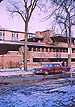 |
2) Robie House,
Chicago, Illinois, Exterior view 1966 (1906 - S.127). View of
the exterior of the Robie House from the Southwest. Designed
by Frank Lloyd Wright in 1906. Stamped on sleeve: "28. Feb
66." Printed on sleeve, verso: "Color Transparency." 35mm
Color slide. |
1679.28.0320 |
1966
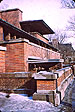 |
3) Robie House,
Chicago, Illinois, Exterior view 1966 (1906 - S.127). View of
the exterior of the Robie House from the West. Designed by
Frank Lloyd Wright in 1906. Stamped on sleeve: "21. Feb 66."
Printed on sleeve, verso: "Color Transparency." 35mm Color
slide. |
1679.29.0320 |
1966
 |
Nathan Rubin
Residence, Canton, Ohio, . Exterior 1966 (1951 - S.343). View
of the Southeast corner of the Hexagon shaped living area.
Three sets of floor to ceiling doors on both sides open
outward. The horizontal siding is redwood. One of three Wright
homes built in Canton Ohio, home of the Football Hall of Fame.
A Usonian house constructed of brick and horizontal redwood
siding. The design is laid out utilizing a 2 foot by 4 foot
module. Stamped on verso: “Jan 18 1966; Photo by William A
Wynne, Cleveland Plain Dealer.” Also: “The Plain Dealer
Library, Jan 24 1966.” Hand written on verso: “View of rear of
house of Dr. Nathan A Rubin. 518 44th St. N.W. , Canton, Ohio.
Designed by Frank Lloyd Wright.” Photographed by William A
Wynne. Acquired from the archives of the Plain Dealer.
Original 9 x 7 B&W photograph. |
1679.33.0724 |
1966
 |
Nathan Rubin Residence Interior
and Furniture 1966 (1951 - S.343). One of three Wright homes built in Canton
Ohio, home of the Football Hall of Fame. A Usonian house constructed of
brick and horizontal redwood siding. The design is laid out utilizing a 2
foot by 4 foot module. Origami Armchair: In 1946, Frank
Lloyd Wright designed the Origami Armchair for Taliesin West. The
Rubin armchair is a close adaptation with the addition if a carved design.
Variations of this design can be found at the Sturges Residence (1939) later
addition, Teater Studio (1952) added around 1987, Christian Residence
"Samara" (1954) and the Stromquist Residence (1958) constructed by Geoffrey
Fitzwilliam. Triangle side table: Two triangle side tables are very similar
to the triangle tables Frank Lloyd Wright designed
as part of the Heritage Henredon line of furniture, minus the decorative
design carved along the edges and legs of the table. Stamped on verso: "Jan
18 1966; Photo by William A Wynne, Cleveland Plain Dealer; The Plain Dealer
Library, Jan 24 1966." Hand written on verso: "Chairs & stool designed by
Frank Lloyd Wright. Home of Dr. Nathan A. Rubin,
518 44th St. N.W. , Canton, Ohio." Photographed by William A Wynne. Acquired
from the archives of the Plain Dealer. Original 9 x 7 B&W photograph. |
1679.15.0717 |
1966
 |
Staley Residence viewed from the
Southeast 1966 (1950 - S.335). Designed by Frank Lloyd Wright
in 1950. Constructed
of stone, the home parallels the shore of Lake Erie. An in-line Usonian
design. Stamped on verso: "Ray Matjasic, Chief Photographer, The Plain
Dealer, Cleveland, Ohio." Hand-written on verso: "Home designed by Frank
Lloyd Wright. 6363 N. Lake Road, North Madison, Ohio." Stamped on verso:
"Jan 26 1966." Photographed by Ray Matjasic. Acquired from the archives of
The Plain Dealer. Original 9 x 5.75 B&W photograph. |
1679.14.0717 |
1966
 |
S.C. Johnson Golden Rondelle
Theater 1966. The Golden Rondelle Theater was originally designed by
Lippincott and Margulies as the SC Johnson Pavilion for the New York World's
Fair in 1964-65. After the Worlds Fair the Golden Rondelle was dismantled
and reassembled on the SC Johnson campus. It was then re-designed in 1967 by
Taliesin Associated Architects as a permanent structure for the SC Johnson
campus where it continues to function as a theater for both company and
public events. 7.5 x 6 B&W photograph. |
1679.19.1117 |
1966
 |
Taliesin West, Scottsdale, AZ, 1966 (1937 - S.241). Set of
eight 35mm slides of Taliesin West. 1) Taliesin West Light
Tower and Entrance Gate. View of the Light Tower and Entrance
Gate from the South. Set of 8 color 35mm slides of Taliesin
West. Text on slide: "11. May 66 A4." Text on verso: "Kodachrome Transparency. Processed by Kodak." Photographer
unknown. Original 35mm color slide, and 8 x 5.5 high res
digital image.
|
1679.32.1023 (1-8) |
1966
 |
Wright's Oak Park
Studio (1897 S.004) 1966. Clipping on verso: " By Patricia
Dalton. The Clyde W. Nookers of Oak Park are not going to
fight it any more. For 20 years,
the Nookers have lived in the house at 951 Chicago Av., Oak Park, that
Frank
Lloyd Wright built
in 1895 for his own family. During that time, they say, the
doorbell and telephone almost never have stopped ringing.
People wanted to see the inside of the house where the master
himself once lived. Most of these requests
were... ...saw what the former tenants had done to the house. There were
layers of paint on the beautiful woods, the window frames in his former
drafting room were painted a garish red, some of the walls had flowered
wallpaper on them. Wright said, 'I hope you'll keep the old place from
falling apart.' Mr. Nooker told him that she thought the house should be
preserved. 'In Europe, it would be.' Wright replied." Stamped "Daily News,
July 5, 1966." Caption under photo on clipping "The Frank Lloyd Wright house
at 951 Chicago, Oak Park". Original 10.6 x 8.6 B&W Print. Acquired from the
archives of the Chicago Daily News. |
1679.04.0310 |
1966
 |
Wright's Oak Park
Home Playroom (1895 - S.003) 1966. Clipping on verso: "Frank Lloyd Wright
added this two-story playroom for his children to his Oak Park home in 1895.
The mural, painted by a commissioned artist following Wright's design, shows
the genie and fisherman from a story 'Thousand and One Nights'. " Stamped on
verso: "Aug 14 1966". Photographed before restoration. Shelves on either
side of the fireplace are missing the original glass doors. Acquired from
the archives of the Chicago Tribune. Original 10 x 8 B&W Print. |
1679.05.0112 |
1966
 |
Wright's Oak Park
Home & Studio Fireplace (1895 - S.003) 1966. View of Living Room inglenook
fireplace. Caption on verso: "Wright Fireplace - This fireplace greets
visitors as they enter the first Frank Lloyd Wright
home, built more than 70 years ago. The inscription reads, 'Truth is Life.'
The brick arrangement was later used in the frontage of another Wright
house." Clipping on verso: "Welcome - This fireplace greets visitors as they
enter the first Frank Lloyd Wright
home, built more than 70 years ago. The inscription reads, 'Truth is Life.'
The pattern of the arrangement was later used in the frontage of another
Wright home in Oak Park. Wright also designed the modernistic chair with its
striking use of vertical lines. These lines contract with the horizontal
woodwork design on the wall, and similar linear contrast are used thruout
the home." Stamped on verso: "Aug 14 1966". Acquired from the archives of
the Chicago Tribune. Original 10 x 8 B&W Print. |
1679.06.0512 |
1966
 |
United States Post
Office Publicity Photograph #1280 - 2c Frank Lloyd Wright
stamp. "This photograph may be reproduced for philatelic, educational,
historical and newsworthy purposes, in black and white, in any size. It may
not be used for advertising purposes, except philatelic advertising."ť
Glossy 3 x 4. (Two copies) |
1280.155.0701
1280.156.0406 |
1966
 |
Olgivanna Lloyd
Wright, 1966. Mrs. Frank Lloyd Wright at the issuing ceremony
of the 2-cent stamp
honoring he husband, Frank Lloyd Wright. Mrs. Wright, stands
next to an enlarged image of the 2-cent stamp honoring Wright.
Text on face: "6/8/66 - Spring Green, Wis: Mrs. Olgivanna
Lloyd Wright, widow of architect Frank Lloyd Wright, smiles at
ceremonies marking the issuing of a two-cent postage stamp
honoring her late famous husband. The stamp issuance came on
what would have been the architect's 97th birthday." Clipping
pasted to verso: "Mrs. Olgivanna Lloyd Wright, widow of
architect Frank Lloyd Wright, smiled Wednesday during
ceremonies marking the issuing of the 2c postage stamp
honoring her husband. The program was held in Spring Green."
Stamped on clipping: "Th Jun 9 1966. Sentinel." Acquired from
the archives of the Milwaukee Sentinel. Original 9 x 7 B&W
photograph. |
1679.23.0819 |
|
1967 |
1967
 |
Albert Adelman Residence, Fox Point, Wisconsin, 1967 (1948 -
S.308). Designed by Frank Lloyd Wright in 1948. Frank Lloyd
Wright modified his first design (Scheme 1), straightening out
the "L", and removing the Library/Balcony and Sun Deck above
the Living Room. Constructed of concrete block, cypress and
cedar shakes. This was the first completed Wright design for
the Adelman family. Frank Lloyd Wright designed a number of
different projects for the Adelman family. Adelman Laundry
Building (Project 1945), Albert Adelman House, Scheme #1
(Project 1946), Benjamin Adelman House (Project 1948), Albert
Adelman Residence, Fox Point, Wisconsin (1948 - S.308).
Benjamin Adelman House, Phoenix, AZ (1951 - S.344), Benjamin
Adelman House, Whitefish Bay, Wisconsin. (Project 1954). Text
handwritten on verso: "Adelman / Fox Pt." "1967." Also
handwritten: "(Frank Lloyd Wright - Homes Designed By Him.)"
Acquired from the archives of the Milwaukee Journal. Original
8 x 5 B&W photograph. |
1720.74.0821 |
1967
 |
American System-Built Homes, Arthur L. Richards Duplex
Apartments and Small House, 1967 (1915-1916 - S.201-202).
Viewed from the Southeast. The Arthur L. Richards Small House
(1915 - S.202) is in the foreground, the four Duplex
Apartments (1916 - S.201) are in the background. The original
front porch of the small house in the foreground, located at
2714 W. Burnham Street, has been enclosed, and the roof
extended forward. It has since been restored, removing the
windows and the roof extension. Arthur Richards built four
duplex in a row on this block. 2720-2734 W. Burnham Street,
Milwaukee, Wisconsin. Stamped on verso: "Dec 19 1967." Hand
Written on verso: "2714-32 Burnham, Milw. Burnham Clock.
(Frank Lloyd Wright - Homes Designed by Him.)" Acquired from
the archives of the Milwaukee Journal. Original 8 x 5 B&W
photograph. |
1720.69.0421 |
1967
 |
American System-Built Homes, Arthur L.
Richards Duplex Apartments and Small House, 1967 (1915-1916 -
S.201-202). Viewed from the Northwest. Most likely 2732-2734,
the duplex on the Northeast corner of 28th
and Burnham Streets. View of the rear (left) and West side
(right) of the Arthur L. Richards Duplex Apartments. It
appears that the upper open porch has been enclosed. It has
since been restored to an open porch. Arthur Richards built
four duplex in a row on this block. 2720-2734 W. Burnham
Street, Milwaukee, Wisconsin. Stamped on verso: "Dec 19 1967."
Hand Written on verso: "(Frank Lloyd Wright - Homes Designed
by Him.) 2714-32 W. Burnham St., Milw." Acquired from the
archives of the Milwaukee Journal. Original 8 x 5 B&W
photograph. |
1720.71.0621 |
1967
 |
Annunciation Greek Orthodox Church, Milwaukee, Wisconsin, 1967
(1956 - S.399). View of the entrance from the west. Designed
by Frank Lloyd Wright in 1956. Clipping pasted to verso: "The
Greek Orthodox Church of the Annunciation in Wauwatosa is a
familiar landmark..." Stamped on clipping: "Su Jan 22 1967."
Hand written on verso: "Annunciation Greek Orthodox Church."
Original 4 x 2 B&W photograph. Acquired from the archives of
the Milwaukee Sentinel. |
1720.80.1021 |
1967
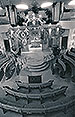 |
Annunciation Greek Orthodox Church, Milwaukee, Wisconsin,
1967 (1956 - S.399). View of the Chancel, Alter and Sanctuary
from the balcony. Designed by Frank Lloyd Wright in 1956.
Clipping pasted to verso: "Under the Orthodox dome, worshipers
gather close to the altar (right) amid furnishings that give a
Middle Eastern flavor. Wright died on Apr. 9, 1959, before the
church was completed. William Wesley Peters, his son-in-law,
now heads the architectural staff and continues to work Wright
began." Stamped on clipping: "Su Dec 10 1967." Hand written on
verso: "Annunciation Greek Orthodox Church." Acquired from the archives of the Milwaukee Sentinel.
Original 6.5 x 10 B&W photograph. |
1720.85.1121 |
1967
 |
E. Clark Arnold Residence, Columbus, Wisc. 1967 (1954 -
S.374). Viewed from the carport toward the front entrance.
Designed by Frank Lloyd Wright in 1954. About 20 miles
Northwest of Madison Wisconsin, the Arnold Residence is
constructed of native Wisconsin limestone, redwood board and
batten, and glass. Designed using a diamond shaped equilateral
parallelogram module, it is formed with 60-120 degree angles.
The four sides of the diamond module are four feet long. The
original design had two wings, the bedroom wing and the
living/dining wing, set at 120 degrees. In 1959, John Howe
(TAA) designed an additional wing, creating a footprint
forming a "Y". Mounted to gray board. Hand written on verso:
"Clark Arnold House. Frank Lloyd Wright. Milwaukee Journal.
Dec. 10 1967." Acquired from the archives of the Milwaukee
Journal Sentinel. Original 3.5 x 1.5 B&W photograph. |
1720.87.1221 |
1967
 |
Emil Bach Residence,
Chicago (1915 - S.193) 1967. Viewed from the street. Stamped on verso:
"Photo by Edmund Jarecki", and "Apr 4 1967." Acquired from the archives of
the Chicago Sun-Times. Original 10 x 8 B&W print. |
1720.12.0311 |
1967
 |
Frederick C. Bogk Residence, Milwaukee, Wisconsin 1967 (1916 -
S.196). View of the Bogk Residence from the street, the
Northwest elevation. The driveway and entrance to the house is
on the left side. The three sets of doors from the living room
on the lower level open outward to the walled terrace. Bogk
was a businessman and politician in Milwaukee, Wisconsin. He
commissioned and Wright designed his home in 1916, which was
completed in 1917. It is constructed of buff brick with cast
concrete ornaments. Clipping pasted to verso: "Journal Photo
by George Koshollek." Stamped on clipping: "Su Dec 10 1967."
Hand written on verso: "Frank Lloyd Wright. F. C. Bogk House."
Stamped on verso: "Dec 19 1967. Photographed by George
Koshollek. Acquired from the archives of the Milwaukee
Journal. Original 7 x 4 B&W photograph. |
1720.88.0122 |
1967
 |
Frederick C. Bogk Residence 1967 (1916 - S.196). Detailed view
of the cast concrete ornamental designs on the front
elevation. Designed by Frank Lloyd Wright in 1916. It is
constructed of buff brick with cast concrete. This design is
repeated four times, just under the roof overhang. Hand
written on verso: "Bogk / Elsner, Milwaukee. (Frank Lloyd
Wright - Homes Designed By Him)." Stamped on verso: "Dec 19
1967. Original 7.75 x 5 B&W photograph. |
1720.62.0820 |
1967
 |
Frederick C. Bogk Residence, Milwaukee, Wisconsin 1967 (1916 -
S.196). Window detail. These windows are on the front of the
house, upper level. Frank Lloyd Wright designed the Bogk
Residence in 1916. It is constructed of buff brick with cast
concrete ornaments. The horizontal joints are racked, while
the vertical joints are flush. Hand written on verso: "Bogk /
Elsner, Milwaukee. (Frank Lloyd Wright - Homes Designed By
Him)." Stamped on verso: "Dec 19 1967. Acquired from the
archives of the Milwaukee Journal. Original 7.75 x 5 B&W
photograph. |
1720.73.0721 |
1967
 |
Frederick C. Bogk Residence 1967 (1916 - S.196). View of the
Southwest elevation, the right side of the house, from the
Southwest. The Front of the house, facing the street is on the
left. The entrance is on the opposite side of the house. The
Living Room is on the left, the Dining Room is to the right,
the Garage is on the far right. Frank Lloyd Wright designed
the Bogk Residence in 1916. Hand written on verso: "Bogk /
Elsner, Milwaukee. (Frank Lloyd Wright - Homes Designed By
Him)." Stamped on verso: "Dec 19 1967. Original 7.75 x 5 B&W
photograph. |
1720.61.0820 |
1967
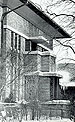 |
Frederick C. Bogk Residence, Milwaukee, Wisconsin Exterior
1967 (1916 - S.196). View of the Southwest elevation, the
right side of the house, from the Southwest. The Front of the
house, facing the street is to the left. The entrance is on
the opposite side of the house. The Living Room is in the
foreground, the Dining Room is in the background. Frank Lloyd
Wright designed the Bogk Residence in 1916. Hand written on
verso: "Bogk / Elsner, Milwaukee. (Frank Lloyd Wright - Homes
Designed By Him)." Stamped on verso: "Dec 19 1967. Acquired
from the archives of the Milwaukee Journal. Original 4.5 x
7.75 B&W photograph. |
1720.75.0821 |
1967
 |
Hotel Geneva, Lake Geneva, Wisc. 1967
(1911 - S.171). Part of a
set of six
photographs by Richard Nickel. Viewed from the Southeast. Designed by Frank
Lloyd Wright in 1911. Strong horizontal lines, low-pitched
roof, broad overhanging eaves, horizontal rows upon rows of
leaded glass windows. The Lobby is on the far left. The roof
line of the first floor is extend to the right covering a
large porch. There was an open covered galley, or walkway,
that ran the full length of the South or front elevation of
the first floor. It was lit by
outdoor light
fixtures. There is one to
the left of the entrance on the far right, and two between
each set of windows. They are also visible on the open balcony
that sets over the lobby. Photographed by Richard Nickel in
1967. Courtesy of the Library of Congress. 10 x 8 B&W
photograph. |
1720.77.1121 |
1967
 |
Hotel Geneva 1967.
Photograph published in the Milwaukee Journal, Sunday Picture Journal,
December 10, 1967, page 20. "Later owners have added such un-Wrightian
touches as Polynesian decorations inside an a swimming pool at the entrance.
Like Wright's Imperial Hotel in Tokyo, built a few years later, it may be
doomed. The present owner, former State Sen. George Borg, is considering
whether to tear it down or to remodel it. Wright students hope to save it."
Note: Name has been changed to "Geneva Inn". Photograph by Donald Nusbaum. 9
x 3 B&W Print, High Res image. (Additional
information about the Hotel Geneva.) |
1720.08.0410 |
1967
 |
Hotel Geneva, Lake Geneva, Wisc. 1967 (1911 - S.171). View of
the Hotel Geneva Art Glass window from the Lobby looking out
toward the pool. Lake Geneva can be seen in the background.
Designed by Fdrank Lloyd Wright in 1911. Hand written on
verso: "Camera looks thru window of bar to swim pool." Stamped
on verso: "George E. Kosholler." "1967, Jul 13." Hand written
on verso: "(Frank Lloyd Wright - Bldgs designed by him.) Lake
Geneva Inn." Acquired from the archives of the Milwaukee
Journal. Original 5 x 7 B&W photograph.
|
1720.76.0921 |
1967
 |
A. D. German Warehouse, Richland Center, Wisconsin, 1967 (1915
- S.183). Viewed from the Southeast. Designed by Frank Lloyd
Wright in 1915. Constructed of brick and concrete, it is
capped by a
poured-in-place
frieze on the fourth floor. Albert Delvino
German was a successful commodity wholesaler. But as costs
escalated, construction was halted in 1921. German lost the
building in 1932 due to unpaid taxes and bankruptcy, purchased
it back in 1935, but lost it again in 1937. Banner reads:
"This Frank Lloyd Wright Designed Building under new ownership
and management." Small sign on the door to the left: "Pine
River Gun Club." Clipping pasted to verso: "At Richland
Center, the A. D. German warehouse blends Japanese scale,
Mayan ornament and Wright's principles." Stamped on clipping:
"Su Dec 10 1967." Original 4 x 3.5 B&W photograph.
|
1720.58.0520 |
1967
 |
Dr. Maurice & Margaret Greenberg Residence, Dousman, Wisc.,
Exterior 1967 (1954 - S.372). View from the East looking
toward the balcony. Designed by Frank Lloyd Wright in 1954.
Constructed of brick, concrete and wood. A concrete balcony is
cantilevered on three sides. Clipping pasted to verso: "New
angles are also apparent in Dr. Maurice Greenberg's home neat
Dousman. Cantilevered near the top of a hill, the house was
designed when Wright was 88 but still very prolific. 'I just
shake designs out of my sleeve,' he told the Greenbergs." Hand
written on verso: "Dec. 1 1967. Milwaukee Journal. Maurice
Greenberg House. Frank Lloyd Wright." Acquired from the
archives of the Milwaukee Journal Sentinel. Original 6 x 4.5
B&W photograph. |
1720.86.1221 |
1967
 |
Guggenheim Museum
1959-1982 (1956 - S.400). Set of fifteen 35mm slides of the
interior and exterior of the Guggenheim Museum taken between
1959 and 1982 by the same photographer. The Guggenheim opened
on October 21, 1959.
12) Guggenheim Museum 1967 (1956 -
S.400). View of the interior of the Guggenheim Museum.
Alexander Calder's Red Lily Pads (1956) is on display. Printed
on sleeve: "Kodachrome
Transparency." Stamped on sleeve: "27. Sep 67" Acquired from a
private estate. 35mm color slide and high res digital scan.
|
1720.57.0420 |
1967
 |
Imperial Hotel (1915
- S.194) 1967. Typed on face: "Advance for AMS Friday, 6 March 1970. To go
with UPI dispatch by Leon Daniel. On 3/10 the new Imperial Hotel will be
opened officially here. It stands on the site of the former Imperial Hotel
(shown in this '67 photo) - which survived the great earthquake of 1928 and
World War II - designed by the late Frank Lloyd Wright."
The doors to the Frank Lloyd Wright
designed Imperial Hotel were closed on November
15, 1967. Demolition began shortly thereafter. Original 10 x 8.5 B&W
photograph. |
1720.23.1012 |
1967
 |
Imperial Hotel (1915
- S.194) 1967. The doors to the Frank Lloyd Wright
designed Imperial Hotel were closed on November 15, 1967. Demolition began
shortly thereafter. Label pasted to verso: "Demolition of Old Imperial
Hotel. (Keystone Tokyo) The demolition of the Imperial Hotel's old building,
designed by the late American architect, Frank Lloyd Wright,
began in peeling the bronze roof tiles off the south wing of the building.
The old Imperial was built in 1922 and one of the few buildings to survive
the Great Earthquake in 1923. Management plans to complete the demolition
before January 15 and to build a new 17-story hotel building in time for
Expo '70. As a result of the 'Save the Imperial' campaign, at least the
main lobby section may be moved to a new location for reconstruction. Photo
Shows: The front gate of the Imperial Hotel's old building." Stamped on
verso: "Keystone Tokyo". "Keystone Press, New York". Original 8.5 x 5.75 B&W
photograph. |
1720.25.0413 |
1967
 |
Imperial
Hotel, Tokyo, Japan, Circa 1967 (1915 - S.194). Frank Lloyd
Wright was commissioned and began designs in 1915. Early
preliminary drawings are dated 1913. Construction began in
1917 and on July 4, 1922 the first section of Wright„˘s
Imperial Hotel opened. In August 1923 the hotel was complete.
On September 1, 1923 a major earthquake destroyed Tokyo. The
Imperial Hotel stood. A Tribute to Wright. On November 15,
1967 the doors were closed. Demolition began shortly
thereafter and Wright's Imperial Hotel was demolished. Text of
face: “3/10/70 - Tokyo: This is the Frank Lloyd
Wright-designed Imperial Hotel which survived tremendous
earthquake of 1928 (sic), but fell beneath the wheels of
progress and modernity. The new, 17-story Imperial Hotel,
built on the same site, opens officially here 3/10.ť Stamped
on verso: :Mar 11 1970.ť This photograph taken around the same
time period as S#1720.23 and 1720.25. Original 10 x 8 B&W
photograph. |
1720.98.0923 |
1967
 |
Imperial Hotel (1915
- S.194) 1967. View of main entrance. Stamped on verso: "Tokyo, Japan:
Imperial Hotel. 377-247." "Nov 5 1967." Clipping pasted to verso: "A view of
the entrance of Tokyo's famed and now to old Imperial Hotel." Acquired from
the archives of the Baltimore Sun. Original 7 x 5 7 B&W photograph. |
1720.28.0913 |
1967
 |
Imperial Hotel (1915
- S.194) 1967. View of Main Lobby. Entrance Lobby is to the left (out of
picture), Dining Room is to the right past the curtain. Label taped to
verso: "Demolition of Old Imperial Hotel: The demolition of the Imperial
Hotel's old building, designed by the late American architect, Frank Lloyd
Wright, began in peeling the bronze roof tiles off the south wing of the
building. The old Imperial was built in 1922 and one of the few buildings to
survive in 1922 and one of the few buildings to survive the Great Earthquake
in 1923. Management plans to complete the demolition before January 15 and
to build a new 17-story hotel building in time for Expo '70. As a result of
the "Save the Imperial" campaign, at least the main lobby section may be
moved to a new location for reconstruction. Photo shows: The main lobby
which will almost certainly be moved to Meiji Village in Nagoya where the
historical building from the Meiji era are being relocated and preserved."
Stamped on verso: "Keystone Tokyo". "Keystone Press, New York". Original 8.5
x 5.75 B&W photograph. |
1720.27.1013 |
1967
 |
Imperial Hotel (1915 - S.194)
1967. Olgivanna Lloyd Wright in front of the entrance to the Imperial Hotel,
October 22, 1967. Reflecting pool is to her right. Text on face: "10/22/67 -
Tokyo: The widow of architect Frank Lloyd Wright
looks over Tokyo's Imperial Hotel, designed by her husband, after she
arrived in Tokyo 10/22 in an effort to save the 44-year-old structure from
demolition. The owners plan to start razing the hotel this year to make way
for a modern skyscraper hotel. Although she had never seen the hotel before,
she was familiar with it through drawings and old photographs and
immediately noticed that 'there are some parts missing.' " Original 9.75 x
8.25 B&W photograph. |
1720.31.0414 |
1967
 |
Imperial Hotel 1967
(1915 - S.194). Demolition of Frank Lloyd Wright Imperial
Hotel. View of the Imperial Hotel Entrance from across the
pool. Text on face. (Advance for Wednesday PMS, Dec, 13, with
Imperial Hotel Story by Bob Poos.) (NY3-Dec.9) - less than
Imperial Hotel - Main building and central garden of the old
Imperial Hotel in Tokyo, under demolition to make way for new
building, now looks less than imperial. The old landmark,
completed in 1923 and designed by Frank Lloyd Wright, is
coming down in spite of attempts to save it by architects,
politicians and people who loved it. 1967." Stamped on verso:
"Dec 13 1967," and :States-Item." Original 8 x 10 B&W
photograph. |
1720.56.1119 |
1967
 |
Imperial Hotel
Demolition (1915
- S.194) 1967. The doors to the Frank Lloyd Wright
designed Imperial Hotel were closed on November 15, 1967. Demolition began
shortly thereafter. Label pasted to verso: "Demolition on Imperial Hotel.
(Keystone Tokyo) After they began their demolition on the Imperial Hotel's
old building, an American architect, Frank Lloyd Wright's
controversial masterpiece, on December 1st, the works are all
going well. Only the main lobby section is still kept untouched for the
further replacement to the other place for preservation. Photo shows: The
Imperial Hotel's old building now under the demolition." Stamped on verso:
"Keystone Tokyo". "Keystone Press, New York". Original 8.5 x 5.75 B&W
photograph. |
1720.26.0313 |
1967
 |
Imperial Hotel
Demolition (1915
- S.194) 1967. The doors to the Frank Lloyd Wright designed Imperial Hotel were closed on November
15, 1967. Demolition began shortly thereafter. Label pasted to verso:
"Demolition on Imperial Hotel. (Keystone Tokyo) After they began their
demolition on the Imperial Hotel's old building, and American architect,
Frank Lloyd Wright's
controversial masterpiece, on December 1st, the works are all
going well. Only the main lobby section is still kept untouched for the
further replacement to the other place for preservation. Photo shows: The
Imperial Hotel's old building now under the demolition." Stamped on verso:
"Keystone Tokyo". "Keystone Press, New York". Original 5.75 x 8.25 B&W
photograph. |
1720.22.1212 |
1967
 |
Imperial Hotel
Demolition (1915 - S.194) 1967. View during the demolition of the Imperial
Hotel. Label taped to verso: "Hotel Demolished. Tokyo: The famed Imperial
Hotel, the 45-year-old landmark designed by the late Frank Lloyd Wright,
is 70 per cent demolished in this Dec. 27 photo. Demolition began Dec 22 and
is expected to be completed by mid-January. 12/27/67." Original 10 x 8 B&W
photograph. |
1720.29.0214 |
1967
 |
Arnold & Lora
Jackson Residence, Madison, Wisconsin, 1967 (1957 - S.407.1)
(Marshall Erdman Prefab #1) Frank Lloyd Wright created three
prefabricated home designs for Marshall Erdman. Of the three
designs, two were constructed. Nine Prefab #1 homes were
completed: Van Tamelen (1956 - S.406);
Jackson (1957 - S.407.1);
Duncan (1957 - S.407.2); Iber (1957 - S.408);
Post (1957 - S.409.1);
Cass (1959 - S.409.2);
Zaferiou (1961 - S.410); Molloca (1958 - S.411.1); LaFond
(1960 - S.411.2). Hand written on verso: "Jackson / Madison -
prefab." Stamped on verso: Dec 19 1967." Hand written on
verso: "Frank Lloyd Wright - Homes designed by him." This
house was moved in February 1985, 54 miles from Madison to
Beaver Dam, Wisconsin. Original 8 x 5 B&W photograph. |
1720.66.0321 |
1967
 |
Arnold & Lora
Jackson Residence 1967, Madison/Beaver Dam, Wisconsin (1957 -
S.407.1) (Marshall Erdman Prefab #1). Frank Lloyd Wright
created three prefabricated home designs for Marshall Erdman.
Of the three designs, two were constructed. Nine Prefab #1
homes were completed: Van Tamelen (1956 - S.406);
Jackson (1957 - S.407.1);
Duncan (1957 - S.407.2); Iber (1957 - S.408);
Post (1957 - S.409.1);
Cass (1959 - S.409.2);
Zaferiou (1961 - S.410); Molloca (1958 - S.411.1); LaFond
(1960 - S.411.2). Hand written on verso: "Jackson Madison -
prefab." Stamped on verso: Dec 19 1967." Hand written on
verso: "Frank Lloyd Wright - Homes designed by him." Clipping
taped to verso: "Christopher Fecht and Paul Drennan bought
Frank Lloyd Wright's Skyview house for one silver dollar."
Stamped on clipping: "Su Jan 13 1985." With threats of
demolition in 1985, the Jackson House was sold to Christopher
Fecht and his grandfather Paul Drennan for $1, on the
condition that it be moved. It was moved 54 miles from Madison
to Beaver Dam, Wisconsin. Original 8 x 5 B&W photograph. |
1720.53.0819 |
1967
 |
Herbert & Katherine
Jacobs I Residence, Madison, Wisconsin 1967 (1936 - S.234).
View of the Jacobs I Residence from the Southeast. Designed by
Frank Lloyd Wright in 1936. Herbert and Katherine Jacobs First
House, commonly referred to as Jacobs I, is the first Usonian
home designed by Frank Lloyd Wright and was constructed in
1937. Clipping pasted to verso: "The first (Jacobs) was built
near Madison for newspaperman Herbert Jacobs. It cost $5500,
including Wright's $450 fee, in 1937 and was bought 12 years
ago by the present owner, Leonard Sweet, for $18,500." Stamped
on clipping "Dec 10, 1967." Hand written on verso: "Frank
Lloyd Wright." Acquired from the archives of the Milwaukee
Journal. Original 7 x 4 B&W photograph. |
1720.84.1121 |
1967
 |
Herbert & Katherine Jacobs
I Residence, Madison, Wisconsin 1967 (1936 - S.234). View of the Jacobs
Residence and Living Room from the Southwest, view from the sidewalk. The
Carport is to the left. Designed in 1936, this was the first home Frank
Lloyd Wright designed for the Jacobs Family, and is considered Wright's
first Usonian House. Other than a row of horizontal windows that runs just
below the roof line, there are no windows with a view of the street.
However, light floods the interior of the home with floor to ceiling windows
and doors which open to the back yard. Stamped on verso: "Filed Dec 19
1967." Hand written on verso: "Frank Lloyd Wright - Homes designed by him.
Jacobs I, Madison. Looking... toward car port." Original 10 x 8 B&W
photograph. |
1720.45.0219 |
1967
 |
Herbert & Katherine
Jacobs II Residence, Middleton, Wisc 1967 (1944 - S.283). View
of the Jacobs II Residence from the Southwest. Designed by
Frank Lloyd Wright in 1944. Text accompanying the photograph:
"Eleven years after he built the modest home for Herbert
Jacobs, Wright designed a second house for the newsman. They
are invariably called Jacobs I and Jacobs II. Jacobs II, now
onwed by William Taylor, is vastly different from the earlier
house. On a hill near Middleton, it is in the form of a
semicircle. The lower floor is one big room, 17 feet wide and
100 feet along the curve of the back wall. Wright called it a
'solar house' and during the winter the 48 foot long concave
window wall lets the sun heat the living room and bedrooms
hung over it. Summers, the roof projection keeps the house
cool." Also: "The Milwaukee Journal, Sunday, December 10,
1967." Hand written on verso: "(Frank Lloyd Wright - Homes
Designed by Him." Stamped on verso: "Su Dec 10 1967." Acquired
from the archives of the Milwaukee Journal. Original 5 x 3 B&W
photograph. |
1720.79.1021 |
1967
 |
Margaret and
Patrick Kinney Residence, Lancaster, Wisconsin 1967 (1951 -
S.342). View of the interior of the hexagon shaped living
room. Designed in 1951, Patrick Kinney coordinated the
construction of the home. The main living portion of the house
is a hexagon with a bedroom wing on the south side.
Constructed of limestone on the interior and exterior that
Kinney quarried himself. When Margaret was in college she
worked for Wright's sister, Jane Porter (1907 - S.134).
Margaret's uncle was Robert Moses. In 1942, Moses was
appointed to the New York City Planning Commission. When Frank
Lloyd Wright was commissioned to design the Guggenheim Museum,
he was also tasked with finding the location. Wright sought
the help of his second cousin, Robert Moses. "Public Works"
Moses, 1970. Hand written on verso: "Triangular.
Kinney/Lancaster. (Frank Lloyd Wright - Homes Designed by
Him.) Stamped on verso: "Dec 19 1967." Original 10 x 8 B&W
photograph. |
1720.49.0619 |
1967
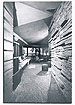 |
Margaret and Patrick Kinney Residence, Lancaster, Wisconsin
1967 (1951 - S.342). View from the Entryway toward the hexagon
shaped living room. Designed in 1951, Patrick Kinney
coordinated the construction of the home. The main living
portion of the house is a hexagon with a bedroom wing on the
south side, to the left. Constructed of limestone on the
interior and exterior that Kinney quarried himself. When
Margaret was in college she worked for Wright's sister, Jane
Porter (1907 - S.134). Margaret's uncle was Robert Moses. In
1942, Moses was appointed to the New York City Planning
Commission. When Frank Lloyd Wright was commissioned to design
the Guggenheim Museum, he was also tasked with finding the
location. Wright sought the help of his second cousin, Robert
Moses. "Public Works" Moses, 1970. Hand written on verso:
"Kinney/Lancaster. (Frank Lloyd Wright - Homes Designed by
Him.) Stamped on verso: "Dec 19 1967." Original 10 x 8 B&W
photograph. |
1720.52.0619 |
1967
 |
Margaret and Patrick Kinney Residence, Lancaster, Wisconsin
1967 (1951 - S.342). View of a perforated light screen on the
East elevation bedroom window. Designed in 1951, Patrick
Kinney coordinated the construction of the home. Constructed
of limestone on the interior and exterior that Kinney quarried
himself. When Margaret was in college she worked for Wright's
sister, Jane Porter (1907 - S.134). Margaret's uncle was
Robert Moses. In 1942, Moses was appointed to the New York
City Planning Commission. When Frank Lloyd Wright was
commissioned to design the Guggenheim Museum, he was also
tasked with finding the location. Wright sought the help of
his second cousin, Robert Moses. "Public Works" Moses, 1970.
Hand written on verso: "Kinney/Lancaster. (Frank Lloyd Wright
- Homes Designed by Him.) Stamped on verso: "Dec 19 1967."
Original 10 x 8 B&W photograph. |
1720.54.1019 |
1967
 |
William Everett
Martin Residence (1902 - S.061), 1967, viewed from East Avenue. William
Everett Martin was born in Bouckville, New York in 1863. He moved to Chicago
in 1882 and formed Martin & Barton with his brother-in-law George F. Barton
(1903 - S.103) which manufactured stove polish. He eventually established a
partnership with his brother Darwin D. and formed the Martin & Martin, Inc.
They manufactured polish under the brand E-Z polish for both stoves and
shoes. William Martin first met Frank Lloyd Wright in late 1902 when he was
searching for an architect to build his home in Oak Park, Illinois. Darwin
D. Martin was so impressed with Wright and his brother's home that he
commissioned Wright to the design the Larkin Company Administration Building
(1903 - S.093) and his own home (1904 - S.100). William Martin would
commission Wright again in 1909 to design a Pergola. Clipping pasted to
verso: "This tree-shaded home at 636 N. East Av. Is one of 25 buildings in
the village designed by famed architect
Frank Lloyd Wright,
who lived and worked there for many years." Stamped on verso: "Daily News,
May 4 1967". Acquired from the archives of the Chicago Daily News. Original
10.75 x 8.25 B&W photograph. |
1720.24.0113 |
1967
 |
Joseph Mollica Residence, Bayside,
Wisconsin, 1967 (1958 - S.411.1) (Marshall Erdman Prefab #1)
Frank Lloyd Wright created three prefabricated home designs
for Marshall Erdman. Of the three designs, two were
constructed. Nine Prefab #1 homes were completed: Van Tamelen
(1956 - S.406); Jackson (1957
- S.407.1); Duncan (1957 - S.407.2); Iber (1957 - S.408);
Post (1957 - S.409.1);
Cass
(1959 - S.409.2); Zaferiou (1961 - S.410);
Mollica (1958 - S.411.1);
LaFond (1960 - S.411.2). Stamped on verso: "Dec 19 1967." Hand
written on verso: "(Frank Lloyd Wright - Homes designed by
him.) 1001 W. Jonathan Ln., Bayside." Acquired from the
archives of the Milwaukee Journal. Original 7.5 x 4.55 B&W
photograph. |
1720.67.0321 |
1967
 |
Joseph Mollica Residence, Bayside,
Wisconsin, 1967 (1958 - S.411.1) (Marshall Erdman Prefab #1).
View of the Mollica Residence from the North. The garage is on
the right. Frank Lloyd Wright created three prefabricated home
designs for Marshall Erdman. Of the three designs, two were
constructed. Nine Prefab #1 homes were completed: Van Tamelen
(1956 - S.406); Jackson (1957
- S.407.1); Duncan (1957 - S.407.2); Iber (1957 - S.408);
Post (1957 - S.409.1);
Cass (1959 - S.409.2);
Zaferiou (1961 - S.410);
Mollica (1958 - S.411.1);
LaFond (1960 - S.411.2). Stamped on verso: "Dec 19 1967." Hand
written on verso: "(Frank Lloyd Wright - Homes designed by
him.) 1001 W. Jonathan Ln., Bayside." Acquired from the
archives of the Milwaukee Journal. Original 8 x 5 B&W
photograph. |
1720.70.0621 |
1967
 |
Nathan G. Moore
Residence Stairway and balcony (1895/1923 - S.034) 1967. Originally designed
in 1895, the home was destroyed by fire in 1922. It was redesigned by Wright
in 1923. View of stairway and balcony. Clipping pasted to verso: "A
3-Story-High stairwell rises from what Wright called the 'great hall' of the
house. An open mezzanine library and a third-floor balcony overlook the
cathedral-like structure." Stamped on clipping: "Apr 9, 1967". See
Monogram 4, pages
248-256, for additional views. Original 8.75 x 11.25 B&W photograph. |
1720.13.0811 |
1967
 |
Nathan G. Moore
Residence Fireplace (1895/1923 - S.034) 1967. Originally designed in 1895,
the home was destroyed by fire in 1922. It was redesigned by Frank Lloyd Wright in 1923.
View of stairway and balcony. Clipping pasted to verso: "Frank Lloyd
Wright's distinctive architectural signature is apparent in the design of
the fireplace in the front living room. There are 8 fireplaces in the
22-room house, ranging in design from early American to English gothic.."
Stamped on clipping: "Apr 9, 1967". See Monogram 4, pages 248-256, for
additional views. Acquired from the archives of the Chicago Tribune.
Original 10.25 x 8.5 B&W photograph. |
1720.19.0312 |
1967
 |
John Clarence Pew
Residence, Shorewood Hills, Wisc., 1967 (1938 - S.273). View
of the Pew Residence from the South. Designed by Frank Lloyd
Wright in 1938. The house is perched above the shore of Lake
Mendota near Madison, Wisconsin and is constructed of cypress
and limestone. Stamped on verso: "Dec 19 1967." Hand written
on verso: "Pew / Madison. (Frank Lloyd Wright - Homes Designed
by Him.)" Acquired from the archives of the Milwaukee Journal.
Original 5 x 7 B&W photograph. |
1720.65.1020 |
1967
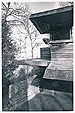 |
John Clarence Pew Residence, Shorewood Hills, Wisc., 1967
(1938 - S.273). View of the Pew Residence from the Southwest.
Designed by Frank Lloyd Wright in 1938. The house is perched
above the shore of Lake Mendota near Madison, Wisconsin and is
constructed of cypress and limestone. The carport is at the
bottom right. The entrance is to the lower center. Stamped on
verso: "Dec 19 1967." Hand written on verso: "Pew / Madison.
(Frank Lloyd Wright - Homes Designed by Him.)" Acquired from
the archives of the Milwaukee Journal. Original 5 x 7 B&W
photograph. |
1720.78.1021 |
1967
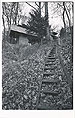 |
John Clarence Pew Residence, Shorewood Hills, Wisc., 1967
(1938 - S.273). View of the Pew Residence from the North
looking up. Designed by Frank Lloyd Wright in 1938. The house
is perched above the shore of Lake Mendota near Madison,
Wisconsin and is constructed of cypress and limestone. Stamped
on verso: "Dec 19 1967." Hand written on verso: "Pew /
Madison. (Frank Lloyd Wright - Homes Designed by Him.)"
Original 5 x 7 B&W photograph. |
1720.64.0820 |
1967
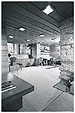 |
John Clarence Pew
Residence, Shorewood Hills, Wisc., 1967 (1938 - S.273). View
of the Pew Residence Dining Room from the Living Room looking
South. The Living Rom is behind the camera, the fireplace is
to the right. Designed by Frank Lloyd Wright in 1938. The
house is perched above the shore of Lake Mendota near Madison,
Wisconsin and is constructed of cypress and limestone. Stamped
on verso: "Dec 19 1967." Hand written on verso: "Pew /
Madison. (Frank Lloyd Wright - Homes Designed by Him.)"
Acquired from the archives of the Milwaukee Journal. Original
5 x 7 B&W photograph. See
additional Wright furniture. |
1720.72.0721 |
1967
 |
Andrew Porter Residence Tanyderi
1967 (1907 - S.134). Designed by Frank Lloyd Wright in 1907 for his sister
and brother-in-law Jane and Andrew T. Porter. They moved to Taliesin when he
became headmaster of Hillside Home School. Wright called it Tanyderi,
meaning "Under the Oaks" in Welch. Stamped on verso: "Filed Dec 19 1967."
Hand written on verso: "Frank Lloyd Wright - Homes Designed By Him.)
Tany-Deri House. Porter House 1907 Taliesin." Original 10 x 8 B&W
Photograph. |
1720.46.0319 |
1967
 |
Riverview Terrace
Restaurant 1967 (1953 - S.367). Six sided gift shop under
construction. The Riverview Terrace Restaurant was the only
restaurant (not including those in the Imperial Hotel, Midway
gardens, etc.) designed by Frank Lloyd Wright.
Originally designed in 1943, modified in 1953, construction
began in 1957, but was halted upon Mr. Wright's death. It was
resurrected again in 1967 as part of The
Spring Green Resort
complex, modified and completed by the Taliesin Associated
Architects, headed by William
Wesley Peters. Plans even included resurrecting the original
Nakoma Clubhouse,
which never came to fruition. Attached, but raised above the
main level is this hexagonal room, which was used as a gift
shop for the restaurant. Clipping taped to verso: "The
restaurant gift shop will be installed in this six sided
sheltered terrace, a part of the restaurant building." Stamped
on clipping: "Sentinel." Stamped on verso: "John W. Ahlhauser"
and "1967 Sep 6." The restaurant opened in October 1967.
Photographed by John W. Ahlhauser. Acquired from the archives
of the Milwaukee Sentinel. Original 8 x 10 B&W photograph.
|
1720.48.0619 |
C
1967
 |
Riverview Terrace
Restaurant Circa 1967 (1953 - S.367). The Riverview Terrace Restaurant was the
only restaurant (not including those in the Imperial Hotel, Midway gardens,
etc.) designed by Frank Lloyd Wright.
Originally designed in 1943, modified in 1953, construction began in 1957,
but was halted upon Mr. Wright's death. It was resurrected again in 1967 as
part of The
Spring Green Resort
complex, Modified and completed by the Taliesin Associated Architects,
headed by William
Wesley Peters. Plans even included
resurrecting the original
Nakoma Clubhouse,
which never came to fruition. To support the restaurant's 300 foot length,
steel trusses were salvaged from the flight deck of the Ranger aircraft
carrier training ship which was used on the Great Lakes during WWII. The
restaurant opened in October 1967. Published in
Frank Lloyd Wright Monograph 1951-1959.
Courtesy of The Frank Lloyd Wright
Foundation. Copy 10 x 8 B&W photograph. |
1720.37.0617 |
1967
 |
Robie House,
designed by Frank Lloyd Wright (1906
S.127) 1967. Stamped on Verso: "Oct 1967. Field Enterprises, Inc." Original
10 x 7.75 B&W photograph. Acquired from the archives of the Chicago Daily
News. |
1720.06.0310 |
C 1967
 |
Robie House, circa
1967 (1906 - S.127). Viewed from the Southeast. Restoration of the Robie
House took place between 1965 and 1967. A new tile roof, heating system,
electrical wiring, painting, and exterior window frames. Windows have been
restored and uncovered. Similar view on the cover of
"The Prairie School
Review," 4th Quarter, 1967. Hand written on verso: "View of South
side of house." Original 11 x 8.5 B&W photograph. |
1720.33.0216 |
C 1967
 |
Robie House, circa
1967 (1906 - S.127). Viewed of the Entrance Court from the Northwest.
Restoration of the Robie House took place between 1965 and 1967. A new tile
roof, heating system, electrical wiring, painting, and exterior window
frames. Windows have been restored and uncovered. Hand written on verso:
"View of North main Entrance - showing guest bedroom balcony and flower
urn." Original 11 x 8.5 B&W photograph. |
1720.34.0216 |
C 1967
 |
Robie House, Living
Room circa 1967 (1906 - S.127). Viewed from the West, looking toward the
fireplace. Restoration of the Robie House took place between 1965 and 1967.
A new tile roof, heating system, electrical wiring, painting, and exterior
window frames. Windows have been restored and uncovered. (See similar view
S#1757.09). Hand written on verso: "View of main living room - view towards
fireplace from Prow." Original 11 x 8.5 B&W photograph. |
1720.35.0216 |
1967
 |
Rookery Building Interior Stair
Tower 1967 (1905 - S.113). The Rookery building was designed by Burnham and
Root in 1888. Edward C. Waller, a client of Wright's, managed the Rookery
Building in 1905 and retained Wright in 1905 to remodel the Entryway and
Lobby. Wright's offices were located in the building from 1898-1899.
Photographed in the Summer, 1967 by Philip Turner. Courtesy of the Library
of Congress. Original 8 x 10 B&W photograph. |
1720.42.0219 |
1967
 |
Bernard Schwartz
Residence, Two Rivers, Wisconsin 1967 (1939 - S.271). View of
the Schwartz Residence from the Southeast.
Life Magazine
published Frank Lloyd Wrights design "For a Family of
$5000-$6000 Income" in the September 26, 1938 issue. "We call
the style Usonian meaning 'of these United States'. If the
house seems a little open for your Northwest, that openness
has been taken care of by building the house upon a paved
concrete mat itself heated by steam pipes laid under it in the
gravel filling beneath. This insures comfort no matter how
cold outside and there are no radiators in sight. What looks
like them in the drawings are really the folding screens
between the several paces opening into the central or general
space -- a kind of enclosed patio..." Frank Lloyd Wright, Life
Magazine, p.60-61. One year later, the home was built for
Bernard Schwartz . Wright designed a Dining Room and Workspace
(kitchen), but named the Living Room the "Recreation Room."
Hand written on face: "Schwarz / Two Rivers." Hand Written on
verso: "Frank Lloyd Wright - homes Designed By Him." Stamped
on verso: "Dec 19 1967." Original 10 x 8 B&W photograph. |
1720.51.0619 |
1967
 |
Herbert F. Johnson
Residence, Wingspread, Wind Point, Wisc., 1967 (1937 - S.239).
View of the home from the South. The swimming pool is in the
foreground, the center of the home with the tower is in the
background. Designed by Frank Lloyd Wright in 1937. H.F.
Johnson commissioned Frank Lloyd Wright to design his home in
Wind Point, Wisconsin. Hand written on verso: "Dec 10 1967.
Milwaukee Journal. Wingspread. Frank Lloyd Wright." Acquired
from the archives of the Milwaukee Journal. Original 5 x 4.5
B&W photograph. |
1720.83.1221 |
1967
 |
Herbert F. Johnson
Residence, Wingspread, Wind Point, Wisc., 1967 (1937 - S.239).
View of the cantilevered master bedroom frm the Northeast.
Designed by Frank Lloyd Wright in 1937. H.F. Johnson
commissioned Frank Lloyd Wright to design his home in Wind
Point, Wisconsin. "At the center of four zones forming a
cross, a spacious wigwam of a Living Room stands. A tall
central brick chimney stack with five fireplaces on four sides
divides this large vertical central living space into four
areas for the various domestic functions: Entrance, Family
Living, Library and Dining Room. Extending from this great,
dignified central wigwam are the four wings. This extended
zoned-wing-plan lies, very much at home, quiet and integral
with the prairie landscape which is, through it, made more
significant and beautiful." Frank Lloyd Wright, An
Autobiography, 1943, p.476. Clipping pasted to verso: A
bedroom wing at Wingspread ends in a cantilevered porch."
Stamped on clipping: "Dec 10 1967." Acquired from the archives
of the Milwaukee Journal. Original 4 x 3.5 B&W photograph. |
1720.82.1121 |
1967
 |
Herbert F. Johnson
Residence, Wingspread, Wind Point, Wisc., 1967 (1937 - S.239).
View of the interior Dining Room fireplace and stairway.
Designed by Frank Lloyd Wright in 1937. The circular tower
stairway is on the right. Clerestory windows allow indirect
light to fill the Living and Dining Rooms. Hand written on
verso: "Wingspread LR (?) W/stairway to tower. Wingspread
stairway to tower. (Frank Lloyd Wright - Homes Designed By
Him.)" Stamped on verso: "Dec 19 1967.) Acquired from the
archives of the Milwaukee Journal. Original 4.75 x 7.75 B&W
photograph. |
1720.68.0421 |
1967
 |
S.C. Johnson Golden Rondelle
Theater 1967. Viewed from the North, the Research Tower is in the
background. The Golden Rondelle Theater was originally designed by
Lippincott and Margulies as the SC Johnson Pavilion for the New York World's
Fair in 1964-65. After the Worlds Fair the Golden Rondelle was dismantled
and reassembled on the SC Johnson campus. It was then re-designed in 1967 by
Taliesin Associated Architects as a permanent structure for the SC Johnson
campus where it continues to function as a theater for both company and
public events. Clipping pasted to verso: "The new Johnson Wax Golden
Rondelle theater at Racine will be dedicated Thursday. Stamped on clipping:
"Jul 22 1967." Original 10 x 6.5 B&W photograph. |
1720.41.1117 |
1967
 |
S.C. Johnson & Son Administration
Building 1967 (1944 - S.238). View of the West side of the Administration
Building 1939 from the Northeast. Exterior of the great workroom. Designed
in 1936, the official opening of the SC Johnson Administration Building
spanned three days, April 22-24, 1939. It has been called the greatest
contribution to business housing since the design of the skyscraper. Stamped
on verso: "Neg 3838." "Dec 19 1967." Original 8 x 10 B&W photograph.
|
1720.40.0917 |
1967
 |
S.C. Johnson &
Son Administration Greenhouse, Exhibition Dwelling and Advertising
Department 1967 (1944 - S.238). On the second floor, the Greenhouse is on
the left, the Exhibition Dwelling is to the right. In the foreground, out of
view is the Formal garden over the Research Tower carport. Caption, "Frank Lloyd Wright and the Johnson Wax Buildings,"
Lipman, 1986, page 172, figure 150: "Wright designed this small formal
garden with a stone surface and a shallow pool. A greenhouse is at the left
and the advertising department is located above the exhibition dwelling."
The Advertising department is on the third floor. The ornate dome of glass
tubing is above the reception area. Stamped on verso: "Dec 19 1967."
Original 8 x 10 B&W photograph. |
1720.39.0917 |
1967
 |
S.C. Johnson &
Son Administration Pilot Laboratory 1967 (1944 - S.238). The Research Tower
and the addition surrounding it was designed by Frank Lloyd Wright in 1944,
construction began in 1947 and the opening ceremony was held on November 17,
1950. The Pilot Laboratory is in the Southwest corner of the ground floor of
the new section. Additional view is published in
Frank Lloyd Wright and the Johnson Wax Buildings,
Lipman, 1986, p.168. Stamped on verso: "Dec 19 1967." Original 8 x 10 B&W
photograph. |
1720.38.0717 |
1967
 |
Richard and Berenice Smith House, Jefferson, Wisconsin, 1967
(1950 - S.337). View of the Southwest corner of the Living
Room. Possibly Berenice Smith working at the desk. Designed by
Frank Lloyd Wright in 1950. Constructed of Limestone, cypress,
plaster and cedar shingles. Hand written on verso: "Jefferson,
Wisconsin. Richard Smith House. Frank Lloyd Wright." Stamped
on verso: "Su Dec 10 1967." Acquired from the archives of the
Milwaukee Journal. Original 5.25 x 4.25 B&W photograph. |
1720.60.0720 |
1967
 |
Taliesin, Spring Green, Midway Barns 1967
(1938 - S.246). Exterior view of the Midway Barns from the
Southwest. Designed by Frank Lloyd Wright in 1938. Caption
taped to verso: "A Blend with Nature. Spring Green, Wisc: No
farm on earth looks like the farmstead designed by Frank Lloyd
Wright, who believed in wedding architecture to its
surroundings. This artistic result can be seen at the late
famed architect's longtime home 'Taliesin' located near Spring
Green, Wisconsin. 2/3/67." Original 10 x 6.25 B&W photograph. |
1720.32.0723 |
1967
 |
Taliesin, Spring
Green, Romeo and Juliet
Windmill, Taliesin, Spring Green 1967 (1896/1938 - S.037).
Designed in 1896 for Wright's two aunts Ellen and Jane
Lloyd-Jones and the Hillside Home School, it was completed in
1897. "...The reservoir finished, the Aunts intended to erect
a windmill over it. This was decided upon by a family
gathering which the clan usually held to make such decisions
concerning the school or important affairs of their own. Said
Aunt Nell, managerial mind of the school: "Why not a pretty
windmill tower in keeping with our school building instead of
an ugly steel tower or, for that matter, the timber ones I
have seen? I am going to ask Frank for a design."
An Autobiography,
Wright, 1932, page 130. Wright's 60 foot tall structure
functioned as a windmill and a belvedere. The design combined
a diamond-shaped column wedged into an octagonal structure,
symbolizing the embrace of Shakespeare's lovers. The original
windmill was covered in shingles, and in 1938 it was
resurfaced in board and batten siding. Clipping pasted to
verso: "The Romeo and Juliet Windmill Survives its Builders. -
Ray Barth Photo." Hand written on clipping: "Spring Green,
Wis." Stamped on clipping: "Tu Apr 4 1967. Sentinel." Hand
written on verso: "(Frank Lloyd Wright - Buildings designed...
Continue... |
1720.55.1119 |
1967
 |
Taliesin, Spring
Green 1967 (Taliesin III 1925 - S.218). View of the Garden
Room and pool from the Northwest. Stamped on verso: "Dec 19
1967." Clipping pasted to verso: "Taliesin, Which Frank Lloyd
Wright designed for himself, will be open to visitors this
season." Stamped on clipping: "Su May 3 - 1992." Clipping
pasted to verso: "A special compound: This is a courtyard view
of Taliesin taken in 1967. The home of architect Frank Lloyd
Wright is to be named one of America's most endangered
historic places." Stamped on clipping: "We Jun 15 1994."
Acquired from the archives of the Milwaukee Sentinel. Original
10 x 8 B&W photograph. |
1720.50.0619 |
1967
 |
Taliesin West,
Scottsdale, AZ, 1967 (1937 - S.241). Set of nine - 110 slides
of Taliesin West, taken in 1967. View of the Pergola from the
Northwest. The walkway on the Northeast side of the Drafting
Room is covered by a wooden Pergola. Text on slide: “Apr 67.
10.” Text on verso: “Kodachrome Transparency. Processed by
Kodak.” Photographer unknown. Original 110 color transparency
and high res 10 x 10 digital image.
|
1720.100.0224 (1-9) |
1967
 |
Unity Temple (1904 -
S.096), Oak Park 1967. Viewed from Southwest, Unity Temple is on the left,
Unity House is on the right, the Entrance is not visible in this image.
Photographed in June 1967 by Philip Turner. Courtesy of The Library of
Congress. Original 8 x10 B&W photograph. |
1720.14.0112 |
1967
 |
Unity Temple (1904 -
S.096), Oak Park 1967. Viewed from West, Unity Temple is on the left, Unity
House is on the right, the Entrance is in the center. Lake Street is on the
left, North Kenilworth Avenue in the foreground. Photographed in June 1967
by Philip Turner. Courtesy of The Library of Congress. Original 8 x10 B&W
photograph. |
1720.15.0112 |
1967
 |
Unity Temple (1904 -
S.096), Oak Park 1967. Viewed from North, the exterior of Unity Temple's
main sanctuary. Lake Street is in he foreground, North Kenilworth Avenue is
on the right. Reader board reads: "Unitarian Universalist Church. Sunday
Service June 18, Sermon, Man's vision of Nature and Himself. Robert M. Rice,
Minister." Photographed in June 1967 by Philip Turner. Courtesy of The
Library of Congress. Original 8 x10 B&W photograph. |
1720.16.0112 |
1967
 |
Unity Temple (1904 -
S.096), Oak Park 1967. View of the interior of Unity Temple's sanctuary.
Both Unity Temple and Unity House are lit mainly from the top through large
skylights, filtered through art glass. A band of horizontal windows, just
beneath the ceiling adds additional light to the Temple. The lower portion
of the Temple is unbroken by doors and windows. The walls are poured
concrete, Wright's first use of the material. Photographed in June 1967 by
Philip Turner. Courtesy of The Library of Congress. Original 10 x 8 B&W
photograph. |
1720.17.0112 |
1967
 |
Unity Temple (1904 -
S.096), Oak Park 1967. View of the interior of Unity House. Unity House
consisted of meeting and class rooms. Both Unity Temple and Unity House are
lit mainly from the top through large skylights, filtered through art glass.
The walls are poured concrete, Wright's first use of the material. Of note
are the six chairs in this photograph. Four matching chairs in the center,
two matching chairs on the left and right. Variations of the slant back
chair appeared in buildings during this time period. Unity Temple, the
Larkin Building, 1903 (Quinan,
p83), Wright's Home (Circa 1904,
Hanks, p38), and Robie House in
1916 (Hoffman p81). The two matching chairs, left and right, originated with
the Browne's Bookstore. Designed by Wright for
Browne's Bookstore in 1907, they moved from the seventh floor to the first
floor in September 1911, and were donated to Unity Temple shortly after
that. Photographed in June 1967 by Philip Turner. Courtesy of The Library of
Congress. Original 10 x 8 B&W photograph. |
1720.18.0112 |
1967
 |
Design for the Vigo
Sundt House (Project 1941). Caption on verso: "Frank Lloyd Wright used the Hexagon
in his design of the Vigo Sundt House in Madison, Wis. This utilization of
geometry in 1941 was because Wright believed 60-degree angles were 'more
suited' to humans." Stamped n Verso: "Sep 24 1967." The first home Wright
designed and built utilizing the hexagonal "honeycomb" design was the Hanna
Residence (S.235 1936). This was a year after Fallingwater, the same year
Wright designed the Herbert Jacobs Residence, his first Usonian home, and
the S.C. Johnson & Son Administration Building. Other homes utilizing the
hexagon design included the Sidney Bazett Residence (S.259 1939), the
Stevens Residence (Auldbrass, S.256 1940), and the Stuart Richardson
Residence (S.282 1940). Others were designed, but were never completed. This
home is very similar to the Richardson Residence. Obtained from the archives
of the Chicago Sun-Times. Original B&W 8 x 10 print. |
1720.09.0510 |
1967
 |
Duey Wright
Residence, Wausau, Wisconsin 1967 (1956 - S.420). View of the
Duey Wright Residence from the Southeast. Designed by Frank
Lloyd Wright in 1956. Duey Wright owned Wright's Music Store
in Wausau. The circular Living Room is on the left, and could
comfortably seat over 100 people. Duey Wright was not related
to Frank Lloyd Wright. Clipping pasted to verso: "The Duey
Wright home, shaped like a music note." Stamped on verso: "Dec
10 1967." Original 4.25 x 2 B&W photograph. |
1720.63.0820 |
1967
 |
Birthplace
of Frank Lloyd Wright, Richland Center, Wisconsin, 1967. Frank
Lloyd Wright was born in Richland Center, Wisconsin on June 8,
1867. J.P. Kelly identified this house as Frank Lloyd Wright’s
birthplace. Joseph William Koelsch photographed this house in
1967. It was demolished in the late 1980s. The photograph
shows a very dilapidated house. It has fake brick veneer
siding. There is one window in the front of the house, and a
front porch on the right corner. The front door leads into the
house, and a window behind the screen door. There is also a
window to the right. There appears to be a second porch on the
left side of the front of the house. The railing is missing a
number of balusters are missing from the railing. The house
number above the porch reads “774". There are three windows on
the right side of the house, the last in what appears to be an
addition to the house.
Milwaukee Sentinel clipping affixed to the back: “The Frank
Lloyd Wright Birthplace, Discovered in Richland Center
(Richland County). - J. W. Koelsch Photos.” Stamped on
clipping: “Mo Jun 12 1967 (Star) 2. Sentinel.” Stamped on
verso: “Sentinel Copy.” Also stamped: “J.W. Koelsch 480 E. 7th
St. Richland Center, Wis.” Photographed by Joseph...
Continue... |
1720.101.0925 |
1967
 |
1)
Frank Lloyd Wright Home and Studio, Oak Park, 1967 (1889/1897
- S.002, 003, 004). Set of seven photographs of the Frank
Lloyd Wright Home and Studio. View of Frank Lloyd Wright Home
and Studio from the North. Wright designed the Home in 1889,
the Playroom in 1895 and the Studio in 1897. The Studio is on
the left, the entrance is in the center and the Library is on
the right. The Home can be seen in the background on the
right. One of seven photographs taken in May, 1967 by Philip
Turner for the Historic American Building Survey. Courtesy of
The Library of Congress. Original 8 x 12 B&W photograph.
|
1720.90.1222
-
1720.96.1222 |
1967
 |
Wyoming Valley
Grammar School, Wyoming Valley, Wisc. 1967 (1956 - S.401).
View of the Wyoming Valley Grammar School from the South.
Designed by Frank Lloyd Wright in 1956. The Wyoming School
District was formed to consolidate six one-room schoolhouses
in the Spring Green area. The school board members approach
Mr. Wright about designing a school building to serve the
students of the Spring Green area. This two room school also
included an assembly room that doubled as a cafeteria. It was
built to Wright's design without any alterations. When he was
told they couldn't afford his fee, he donated his time. When
he was told they couldn't afford the building, he made a
donation in his Mother's name. It is the only elementary
school built from a Wright design. Clipping taped to verso:
"...plans, among them the long delayed auditorium for Madison.
Concerts are held in the theater. Wright designed and helped
pay for the Wyoming Valley grade school near Dodgeville in
1957 because, he said, he wanted to do something for the
county." Stamped on clipping" Su Dec 10, 1967." Acquired from
the archives of The Milwaukee Journal. Original 5.25 x 5.75
B&W Photograph. |
1720.81.1021 |
|
1968 |
C 1968
 |
1) Benjamin Adelman
Residence viewed from the North, circa 1968 (1951 - S.344). Benjamin Adelman
Residence viewed from the North, circa 1968. The landscaping is very mature,
17 years old. The large trees on the left are overtaking the Living Room.
The Living Room is on the far left. The Dining area is to the left and
behind the bush next to the small pool. The tall Workspace is seen in the
center background. The covered walkway runs from the Dining area glass doors
on the left, to the Guest House on the right. The Walkway has not yet been
enclosed. The perforated block wall on the right side of the walkway is left
unglazed with glass. The Master Bath that was enlarged in the 1957 remodel
can be seen threw the perforated blocks as can the carport to its right. The
Terrace, which used to end at the middle of the small pool (Parker 1953 #6),
has been enlarged to the North approximately 20 feet. A sculpture on a
pedestal has been added. The Guest Wing is on the right. The perforated
blocks of the Gallery are glazed. The sitting room, which was used as a
bedroom is on the far right. Two planter boxes on the left side of the
covered walkway are still there. Photographed by William Storrer, Courtesy
of the Oak Park Public Library. 10 x 6 B&W photograph.
For more information on the Adelman Residence see our
Wright study. |
1757.14-0415 1 |
C 1968
 |
2) Benjamin Adelman
Residence Fireplace and Dining Area, circa 1968 (1951 - S.344). Benjamin
Adelman Residence Fireplace and Dining area, circa 1968. The Living Room
fireplace was designed by Eugene Masselink. The original coffered block
ceiling, with 1 foot x 2 foot embedded blocks, has been covered with
mahogany plywood. The trim follows a two foot square pattern. The Dining
table appears to be designed by Frank Lloyd Wright. The chair seats and
backs are a red vinyl. A note written on the plans for the 1957 remodel
read: "Note: Cover all inside faces of all exterior walls and ceilings with
3/8" waterproof finish plywood, veneered on exposed face with ribbor-striped
Philippine mahogany..." Storrer indicated that furniture and the Wright
designed chandelier was sold in the late 1980s. Photographed by William
Storrer, Courtesy of the Oak Park Public Library. 10 x 6 B&W photograph.
For more information on the Adelman Residence see our
Wright study. |
1757.14-0415 2 |
C
1968
 |
3) Benjamin Adelman
Residence Workspace, circa 1968 (1951 - S.344). View of the Workspace, from
the South, circa 1968. Lower mahogany cabinets appear to be recovered with a
laminate. Upper cabinets have been added. Glazed perforated blocks offer an
abundance of light to the workspace. The dining Room and Terrace are through
the doorway in the background on the right. Photographed by William Storrer,
Courtesy of the Oak Park Public Library. 10 x 6 B&W photograph.
For more information on the Adelman Residence see our
Wright study. |
1757.14-0415 3 |
C
1968
 |
City National Bank and Park Inn Hotel,
Mason City, Iowa, Perspective Circa 1968 (1909 - S.155). Set
of 10 - 35mm slides. 1) View of the Park Inn Hotel from the
Northeast. Designed by Frank Lloyd Wright in 1909. Text on
sleeve: "Wright, F. L. - City National Bank, 4-1. City
National Bank Building and Hotel. Ext., hotel facade. Mason
City, IA, USA, 1909. Wright, Frank Lloyd. U of Virginia FAIC."
Acquired from the archives of the University of Virginia. 35mm
Color slide, sandwiched between glass, plastic mount.
|
1757.27.0520 -
1757.36.0520 |
C 1968
 |
Florida Southern
College Aerial view circa 1968. Viewed from the West. Frank Lloyd Wright
buildings include the: Annie Pfeiffer Chapel (1938 - S.251); E. T. Roux
Library (1941 - S.252); Seminars Buildings (3): Cora Carter, Isabel
Walbridge, Charles W. Hawkins (1941 - S.253.1 -.3); Ordway Industrial Arts
Building (1950 - S.254); Administration Buildings (1946 - S.255): Emile E.
Watson, Benjamin Fine; Edgar Wall Water Dome; Polk County Science Building
(1953 - S.256) (Cosmography Building & Planetarium); The Esplanades (1946 -
S.257), various completion times; William H. Danforth Minor Chapel (1954 -
S.258). Also included is the new Roux Library Building, far left. Original
10 x 8 B&W photograph. |
1757.13.0514 |
C
1968
 |
1) Grady Gammage Memorial Auditorium 1968 (1959 - S.432). View
of the Grady Gammage Memorial Auditorium from the East. Frank
Lloyd Wright designed the Grady Gammage Auditorium in 1959.
After Wright’s death in April 1959, the Frank Lloyd Wrought
Foundation, under the direction of William Wesley Peters,
completed the project. Construction began on May 23, 1962. ASU
celebrated its grand opening on September 18, 1964. Stamped on
sleeve: “5. Dec 68 N6.” Printed on verso of slide: “Kodachrome
Transparency.” Original 35mm Color Transparency Slide. |
1757.55.0225 -1 |
C
1968
 |
2) Grady Gammage Memorial Auditorium 1968 (1959 -
S.432). View of the Grady Gammage Memorial Auditorium from the
South. Frank Lloyd Wright designed the Grady Gammage
Auditorium in 1959. After Wright’s death in April 1959, the
Frank Lloyd Wrought Foundation, under the direction of William
Wesley Peters, completed the project. Construction began on
May 23, 1962. ASU celebrated its grand opening on September
18, 1964. Stamped on sleeve: “6. Dec 68 N6.” Printed on verso
of slide: “Kodachrome Transparency.” Original 35mm Color
Transparency Slide. |
1757.55.0225 -2 |
C
1968
 |
Guggenheim Museum, New York, New York, Circa 1968 (1956 -
S.400). View of the Guggenheim Museum from the Northwest. The
four story tower on the left was designed by William Wesley
Peters, Taliesin Architects, and completed in 1968. The
Guggenheim Museum was designed by Frank Lloyd Wright in1956.
Acquired from the Brown Brothers Photo Archives. Original 10 x
8 B&W photograph, Image 9.5 x 6.
|
1757.56.0625 |
1968
 |
Guggenheim Museum
1959-1982 (1956 - S.400). Set of fifteen 35mm slides of the
interior and exterior of the Guggenheim Museum taken between
1959 and 1982 by the same photographer. The Guggenheim opened
on October 21, 1959.
13) Guggenheim Museum 1968 (1956 -
S.400). View of the interior of the Guggenheim Museum.
Abstract exhibition. Printed on sleeve: "Kodachrome
Transparency." Stamped on sleeve: "22. May 68" Acquired from a
private estate. 35mm color slide and high res digital scan.
|
1757.26.0420 |
C 1968
 |
1) Hillside Home
School, Taliesin Fellowship Complex, Spring Green Wisconsin,
Circa 1968 (1932 - S.228). Not Dated. View of the Taliesin
Fellowship Complex from the Southwest. Originally designed by
Frank Lloyd Wright in 1902. When Wright began the Taliesin
Fellowship in 1932, he began restoring and remodeling the
dilapidated Hillside Home School building. In the Spring of
1952, a fire devastated the Theater on the west end (left) of
the facility and the two story section in the center of the
complex. Wright completely changed the Theatre that was
destroyed, retaining the masonry walls, but lowering the
height of the roof. He lowered the center section, lowering it
to a single story. Text on sleeve: "Wright, F. L. - Hillside
Home School II, 4-3. Hillside Home School II. Ext., general
view. Spring Green, WI, USA. 1903. Wright, Frank Lloyd. U of
Virginia FAIC." Acquired from the archives of the University
of Virginia. 35mm B&W slide, sandwiched between glass, plastic
mount. |
1757.37.0720 |
C 1968
 |
2) Hillside Home
School, Taliesin Fellowship Complex, Spring Green Wisconsin,
Circa 1968 (1932 - S.228). Not Dated. View of the Taliesin
Fellowship Complex from the South. Originally designed by
Frank Lloyd Wright in 1902. When Wright began the Taliesin
Fellowship in 1932, he began restoring and remodeling the
dilapidated Hillside Home School building. In the Spring of
1952, a fire devastated the Theater on the west end (left) of
the facility and the two story section in the center of the
complex. Wright completely changed the Theatre that was
destroyed, retaining the masonry walls, but lowering the
height of the roof. He lowered the center section, lowering it
to a single story. Text on sleeve: "Wright, F. L. - Hillside
Home School II, 4-4. Hillside Home School II. Ext., general
view. Spring Green, WI, USA. 1903. Wright, Frank Lloyd. U of
Virginia FAIC." Acquired from the archives of the University
of Virginia. 35mm Color slide, sandwiched between glass,
plastic mount. |
1757.38.0720 |
1968
 |
Imperial Hotel
Demolition 1968 (1915 - S.194). View during the demolition of the Imperial
Hotel. Label taped to verso: "End of a Landmark. Tokyo: A huge derrick goes
to work on the famed Imperial Hotel which is more than 70 per cent
demolished. The 45-year-old landmark designed by the late Frank Lloyd Wright,
is being razed to make room for a new 17-story hotel building. 1/5/68."
Wrecking ball is being swung into building. Original 8 x 10 B&W photograph. |
1720.30.0214 |
1968
 |
Imperial Hotel,
Tokyo Japan, 1968 (1915 - S.194). View during the demolition
of the Imperial Hotel. Label taped to verso: "End of a
Landmark. Tokyo: Workmen begin to demolish the famed Imperial
Hotel, the 45-year-old landmark designed by the late Frank
Lloyd Wright. The work is expected to be completed by
mid-January. It will done in such a way that the main lobby
section of the building will be kept untouched for as long as
possible in view of possibilities it may be moved t some other
place for preservation. 1/5/68." Original 10 x 8 B&W
photograph. |
1757.52.0522 |
1968
 |
Imperial Hotel 1968 (1915 - S.194). View of the Imperial Hotel during demolition. Frank Lloyd Wright
designed the Imperial Hotel in 1915. Portions of the Imperial Hotel were
salvaged and reconstructed at the Meiji Mura Architecture Museum in Nagoya.
Text stamped on sleeve: "Feb 68." Original 35mm Ektachrome slide
transparency and high res 5" x 8" digital color image. |
1757.23.0319 |
C 1968
 |
Aime and Norman
Lykes Residence Garden Court and Terrace, Circa 1968 (1959 - S.433). Lykes
Residence Garden Court and Terrace viewed from the North from the exterior
side of the Garden Court wall. The fountain is on the left, the Living Room
is in the center, the Workspace is on the right. The Terrace is in the
foreground. Photographed by William Storrer. 10 x 6.75 Color photograph.
Courtesy of the Oak Park Public Library. |
1757.15.0715 |
C 1968
 |
Aime and Norman
Lykes Residence Living Room, Circa 1968 (1959 - S.433). Lykes Residence
Living Room viewed from the South. John Rattenbury worked with Wright on the
initial plans for the home. According to Rattenbury, a few days before his
death, Wright sketched out the plans for the home, set them aside, but never
was able to returned to them, due to his death. Rattenbury completed the
working drawings and specifications in 1966. Construction took place on the
home for the next two years. He designed the furniture and built-ins,
adapted from the original plans created by Wright before his death. The
bi-fold doors on the left leads to the workspace which is located behind the
fireplace. The doors on the right leads to the Garden Court. The table and
hassock/chairs are on the right. Appears to be taken before curtains were
installed in the Living Room, visible in the 1970 image. Photographed by
William Storrer. 10 x 6.75 B&W photograph. Courtesy of the Oak Park Public
Library. |
1757.16.0715 |
C 1968
 |
Aime and Norman
Lykes Residence Workspace (Kitchen), Circa 1968 (1959 - S.433). Lykes
Residence Workspace. John Rattenbury worked with Wright on the initial plans
for the home. According to Rattenbury, a few days before his death, Wright
sketched out the plans for the home, set them aside, but never was able to
returned to them, due to his death. Rattenbury completed the working
drawings and specifications in 1966. Construction took place on the home for
the next two years. He designed the built-ins, adapted from the original
plans created by Wright before his death. Cabinets are constructed of
Philippine mahogany. Photographed by William Storrer. 10 x 6.75 B&W
photograph. Courtesy of the Oak Park Public Library. |
1757.17.0715 |
C 1968
 |
Aime and Norman
Lykes Residence Master Bath, Circa 1968 (1959 - S.433). Lykes Residence
Master Bath. John Rattenbury worked with Wright on the initial plans for the
home. According to Rattenbury, a few days before his death, Wright sketched
out the plans for the home, set them aside, but never was able to returned
to them, due to his death. Rattenbury completed the working drawings and
specifications in 1966. Construction took place on the home for the next two
years. He designed the built-ins, adapted from the original plans created by
Wright before his death. Walls are covered with, and the cabinets are
constructed of, Philippine mahogany. Photographed by William Storrer. 10 x
6.75 B&W photograph. Courtesy of the Oak Park Public Library. |
1757.18.0715 |
C 1968
 |
Price Tower,
Bartlesville, Oklahoma, Circa 1968 (1952 - S.355). Not dated.
Set of 12 - 35mm slides. View of the Price Tower from the
East. Designed by Frank Lloyd Wright in 1952. Text on sleeve:
"Mod: Arch: Am: Wright, F. L.: Bartlesville, OK: Bus: Price
Tower: Ext: General View: 1953. Universal SQ 160620.504A/02.
087870. Holy Cross." Acquired from the archives of the
University of Virginia. 35mm Color slide, sandwiched between
glass, plastic mount.
|
1757.39.0720
-
1757.50.0720 |
1968
 |
Robie House Living
Room 1968. Verso: "Living room of the Robie House provides a handsome
background for dinner." Black tie event held in the Robie House living room.
Photographed by Bill Kelly, January 9, 1968. This photograph used and
published on January 10, 1968. Original B&W photograph, 10 x 8. |
1757.09.1209 |
1968
 |
Taliesin,
Spring Green 1968 (Taliesin III 1925 - S.218). View from the East of the
garage on the Northeast side of Taliesin. One of two Chinese Foo Dogs is
seen on the right. Stamped on verso: "May 16 1968." Hand written on verso:
"Frank Lloyd Wright Bldgs. Taliesin." Original 10 x 8 B&W photograph.
|
1757.21.0918 |
|
1969 |
1969
 |
Cheney Residence 1969 (1903 -
S.104). Viewed from the sidewalk, looking Northeast. The walled Terrace
is in the foreground on the left. The sidewalk on the right leads past
the Terrace and gardens to the Entrance on the South side of the house.
Label pasted to verso: "Chicago Tribune. Date: 6/18/69. Subject:
Frank Lloyd Wright
Homes. Photographer: Jim Mayo. General Caption: Muskox. Story on
Frank Lloyd Wright
Homes by S. Wolfe. This Home, 520 N. East Ave., Oak Park." Stamped on
verso: "Jun 23 1969." Photographed by Jim Mayo. Acquired from the
archives of the Chicago Tribune. Original 10 x 6.75 B&W photograph. |
1803.21.1116 |
1969
 |
Mrs. Thomas Gale
Residence (1904 S.098) 1969. Stamped on verso: "Daily News,
Jun 12 1969. Article on verso: "By Susan Root. Living in a
Frank Lloyd Wright house these days requires a little
suffering for the sake of art. But many feel the experience is
worth it. Among them is Chicago architect Howard A.
Rosenwinkel, who lives with his wife and four children in a
home at 6 Elizabeth Court, Oak Park, that has been called
"Wright's solution to the small house." ¶ Some of the
sacrifices they are making to maintain architectural "purity"
include living with sloping floors and settled window panels
of lovely leaded glass that leave a quarter-inch opening for
winter winds to whistle through. Then there are the
radiators hidden behind grates that look attractive but five
little heat in the living room, a single bathroom for a family
of six and total lack of insulation. What makes it worth
it is the architect's pleasure in living in a house of such
prefect scale and proportions. "The flow of space and the detailing in this house are
unique." explains Mrs. Rosenwinkel. Acquired from the archives of the
Chicago Daily News. Original 10 x 8 B&W print. |
1803.05.0310 |
1969
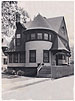 |
Walter H. Gale
Residence, Oak Park (1893 - S.020) 1969. Label on verso: "Date: June 17,
1969. Location: 1031 Chicago Avenue - Oak Park. Photographer: J. Mayo.
Caption: Frank Lloyd Wright
home in Oak Park." Stamped on verso: "June 23 1969". Clipping pasted to
Verso: "Frank's places. Has the weather given you spring fever in January?
If it holds out for the weekend, take advantage of it. Soak up some
architecture too. Sunday at 2, there's a walking tour of 20 Frank Lloyd Wright
homes in Oak Park. Meet at Unity Church, Lake and Kenilworth Avenues. Tour 2
˝ hours. $2." Stamped on clipping: "Jan 19 1973". Acquired from the archives
of the Chicago Tribune. Original 7.5 x 10 B&W Photograph. |
1803.09.0112 |
1969
 |
Marin County Civic Center Hall of
Justice Circa 1969 (S.417 - 1957). Viewed from the North. Designed by Frank
Lloyd Wright in 1957, ground was broken on May 25, 1966. The Hall of Justice
(phase two) was completed December 9, 1969. Work appears to be complete, but
fresh dirt is still evident on the far right end of the building. The water
feature can be seen at the far end of the lagoon. Stamped on verso: "Dandelet
Photographs" Original 10 x 8 B&W photograph. |
1803.22.0217 |
1969
 |
Marin County Civic Center Hall of
Justice Circa 1969 (S.417 - 1957). Viewed from the North. Designed by Frank
Lloyd Wright in 1957, ground was broken on May 25, 1966. The Hall of Justice
(phase two) was completed December 9, 1969. The water feature is in the
foreground, the Marin County Hall of Justice can be seen in the background.
Stamped on verso: "Dandelet Photographs" Original 10 x 8 B&W photograph.
|
1803.23.0217 |
1969
 |
Pope-Leighey
House, 1969. Set of twelve photographs of the Pope-Leighey House. Frank
Lloyd Wright designed this house, which was built in 1940 for Loren B.
Pope. Mr. And Mrs. Robert A. Leighey purchased the home in 1946. In
December 1963 Mrs. Leighey was notified that her home was in danger of
demolition for a highway right-of-way in Falls Church, Fairfax County.
In July 1964, she signed an agreement with the National Trust to save
the home... For more information see our Wright Study on the
Pope-Leighey House.
|
1803.15.0715
(1-12) |
1969
 |
Scoville Park
Fountain, Oak Park (1903 S.094) 1969. Originally constructed in 1909. In
1969 the badly deteriorated original fountain was reconstructed and the
replica placed in the southeast corner of Scoville Park at the corner of
Oak Park Drive and Lake Street in Oak Park. Caption reads "World
Horizons - Advance for AMS Sunday, 8/17/69. To go with UPI Dispatch by
Barney Seibert. 8/16/69 - Oak Park, ILL.: This is the reconditioned
horse trough made into a fountain and dedicated on 6/8 in honor of
architect Frank Lloyd Wright on what folks in the old home own thought
was the 100th anniversary of his birth. The long-delayed
tribute also happened to coincide with the year of Oak Park's
centennial. But the date of his birth is subject to argument. He might
have shaved two years from his age around 1920. UPI Telephoto -hgr-. 7 x
9.5 Print. High res digital image. |
1803.06.0310 |
1969
 |
Taliesin, Spring Green 1969 (Taliesin III 1925 - S.218).
View of Mr. Wright's Bedroom Study from the Southwest. Built-in planters are
on either exterior corner of the room. The left planter is visible. The
stairs lead down to a small pool on the far left hidden by the bush on the
left. Hand written on verso: "Filed 69 - 12/10. Residence of Mrs. Frank
Lloyd Wright. (Frank Lloyd Wright - Homes of Taliesin.)" Original 8 x 10 B&W
photograph. |
1803.28.0619 |
1969
 |
Taliesin, Spring
Green (Taliesin III 1925 - S.218) August 1969. View of the south corner
of the Dining room at Taliesin. Three captions pasted to verso. 1) "Home
of architect Frank Lloyd Wright at Spring Green, Wisconsin." 2) Stamped
Aug 24 1969. "Taliesen (sp) East, Frank Lloyd Wright's home in Spring
Green, Wis., integrates masses of stone and wood with the natural
landscape without precedent from a previous style of architecture." 3)
Stamped Apr 22 1978. "Frank Lloyd Wright's home in Spring Green Wis.,
sometimes referred to as Taliesen (sp) East." Original 9 x 7 B&W
photograph. |
1803.07.0111 |
1969
 |
Taliesin West 1969 (1937 - S.241). Set of
25 color 35mm slides of Taliesin West. 1) Sign directing visitors to
Taliesin West. Frank Lloyd Wright
incorporated the symbol found carved into one of the
rocks found in the desert at Taliesin West. Text on slide: "6. Sep 69 HII."
Text on verso: "Ektachrome Transparency. Processed by Kodak." Original 35mm
color slide, and 8 x 5.5 high res digital image.
|
1803.26.0418 (1-25) |
1969
 |
Wright Home and
Studio, Oak Park (1897 - S.004), 1969. Photographed from across the street
on Chicago Ave close to the corner of Forest Ave. Exterior view of the
drafting room is on the far left, the Reception Hall in the center, the
Library is on the right and the Home is in the background on the right.
Label pasted on verso: "Date: June 3, 1969. Photographer: Mayo. Caption:
Frank Lloyd Wright home, Oak Park at 951 Chicago Ave." Acquired from the
archives of the Chicago Tribune. Original 10 x 7 B&W photograph. |
1803.10.0212 |
1969
 |
William H.
Winslow House (1894 - S.024) Exterior 1969. Stamped on verso: "Hedrich-Blessing,
Chicago" and "Daily News, Jun 21 1969". Caption pasted on verso: "The
Winslow home designed by Frank Lloyd Wright, will be open to the public
for the first time tomorrow on a walking tour of the architect's work in
Oak Park and River Forest." Acquired from the archives of the Chicago
Daily News. Original 10 x 8 B&W print. |
1803.08.0311 |
|
| |
|
1950-1959
BACK TO TOP
1970-1979 |
|
|
|
|